Magazine / Magazine
Reporting damage: the first three hours decide
Make safe, document, report, in that order. Repair only after the insurer has seen it, or the basis for assessment is gone.
12 June 20267 min readNAMMERT Assekuradeur GmbH
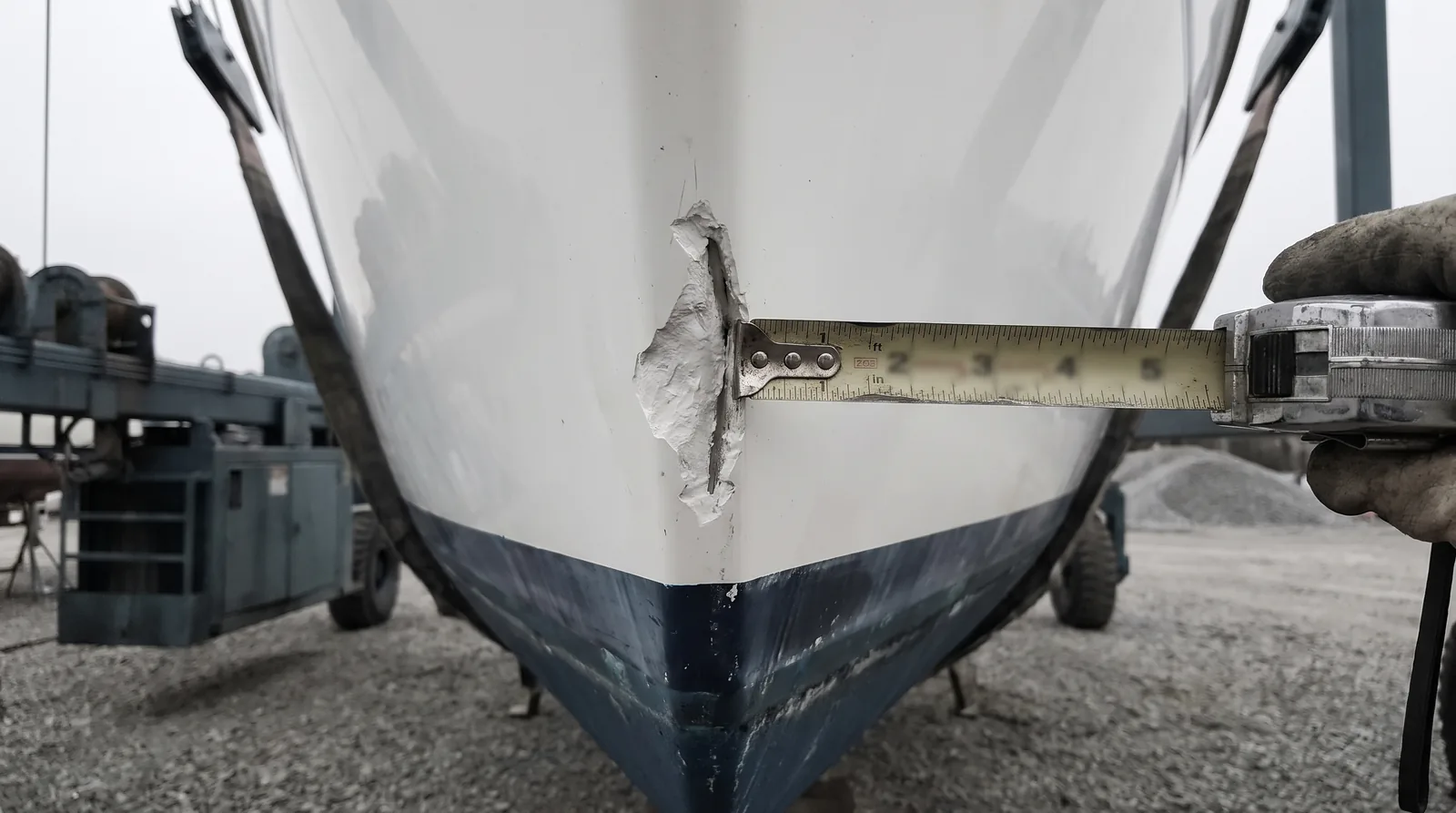
The most common mistake after damage is not a late report. It is a fast repair. Filling a gouge overnight takes away the surveyor’s chance to judge cause and extent, and takes away your own basis for being paid.
The order never changes. First remove the danger: people to safety, then the boat protected from further harm. With water coming in, pump, and if there is no other option put her on the bottom in shallow water rather than let her sink in deep. Most European policy law treats this as a duty on the insured, and treats the cost of doing it as recoverable even when the attempt fails. The German statute says so explicitly; check the corresponding clause in your own wording, because the ceiling on those costs differs.
Then document. Photographs from several distances, including the surroundings. Position, time, weather, witnesses. With another vessel involved, her name, owner and insurer. For theft, a report to the local police: without it, settlement anywhere in Europe becomes difficult and in some countries impossible.
Only then the notification. Ours goes to +49 3375 566 75 05 during office hours and to +49 3375 29 28 95 outside them. If you are insured elsewhere, find the number before you need it and keep it somewhere that is not the boat.
Two points that catch crews far from home. A translated statement is not a substitute for the original document, so keep every piece of paper a harbourmaster or police station hands you, even if you cannot read it. And a repair quote from a yard in a high-cost cruising area is not automatically accepted as the measure of the loss, which is another reason not to have the work started before anyone has seen the damage.
The three mistakes that cost the most money: a full repair without agreement, no photographs of the state of things before the clean-up, and the attempt to make a loss look smaller than it is in order to protect a no-claims discount. The third is the expensive one, because it puts the credibility of the whole report in question.
Worth checking
Common questions
How quickly do I have to report?
Without undue delay once you know about it. There is rarely a fixed number of hours; what matters is that no avoidable delay occurs.
May I repair before the insurer has seen it?
Emergency measures to limit the loss, yes, and they are normally recoverable. A full repair should wait until it has been agreed.
What if the other party cannot be identified?
Then it is a question for your own hull cover, and whether you have it. Third party liability of an unknown party helps nobody.
Related