Magazine / Magazine
Laying up: what actually matters in October
Drain, unload, cover, document. Frost damage is maintenance almost everywhere; a storm in the yard is a different matter.
due 15 September 2026announcedNAMMERT Assekuradeur GmbH
Most boat damage does not happen afloat. It happens ashore, in the months when nobody is looking. Laying up is therefore not the end of one season but the beginning of the next, and the order of work is what decides how the spring goes.
Water first. Cooling circuit, fresh water system, calorifier, heads, bilge: everything that holds water has to be empty or filled with antifreeze. A cracked heat exchanger costs more than ten winters of antifreeze, and it only shows itself in spring. If the boat winters inland or above a few hundred metres, work to the coldest night you can plausibly expect, not to the regional average.
Then unload. Electronics, cushions, textiles and anything that draws moisture belong ashore. Personal effects are often insured on board in some form, but a theft from a winter yard is avoidable if nothing worth taking is left aboard.
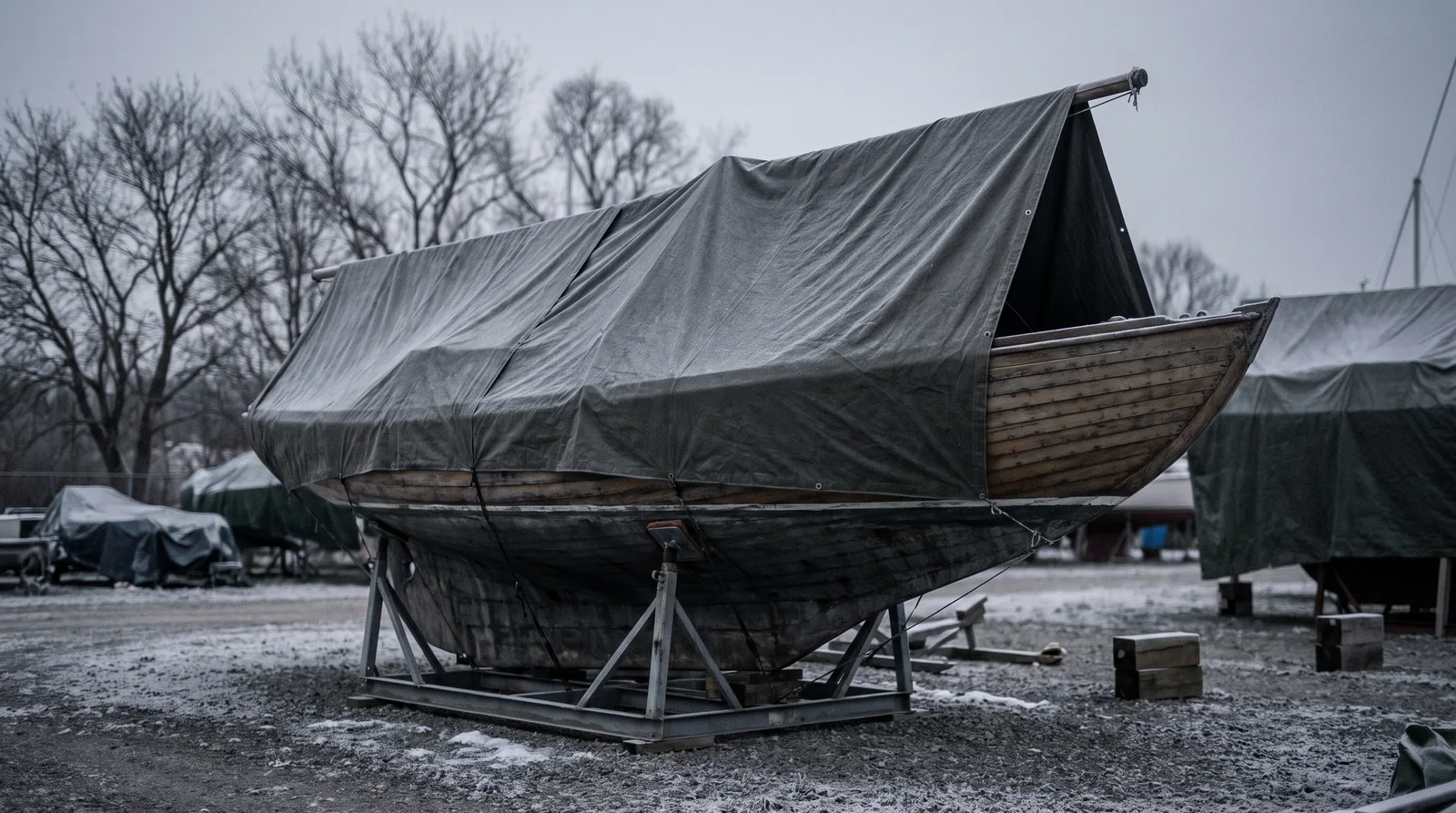
Then cover, in such a way that snow slides off and air circulates. A taut cover with no fall collects snow load until the frame gives way. That is the classic winter loss, and it raises the question of gross negligence whenever a published warning was ignored, which is a reason to keep a note of what the forecast said and what you did.
Finally document: photographs of the state of the boat as she goes into the yard, engine hours, work carried out. Ten minutes, and it is the basis of every later argument about where damage ends and wear begins. This is the single cheapest thing on the list and the one most often skipped.
On the insurance side, two questions are worth putting to whoever holds your contract before the boat comes out. Does cover continue unchanged during lay-up, yard work, craning and launching, and does it continue under a seasonal contract that only charges for the months afloat? And is frost damage treated as an insured event or as maintenance? In most European wordings frost is ordinary weather and therefore maintenance, while consequential damage from an insured event is treated differently. Get the answer in writing while there is still time to act on it.
Worth checking
Common questions
Is a boat insured while ashore for the winter?
That depends entirely on the wording. Ask specifically about lay-up, yard periods, craning and launching, and ask whether a seasonal contract changes the answer.
Is frost damage covered?
Usually not. Frost counts as ordinary weather and therefore as maintenance in most wordings. Consequential damage arising from an insured event is a separate question.
Related