Magazine / Magazine
Trailering and launching: the underrated hours
A trailer uncoupled on a slope is nobody else’s liability. That is where the gap in most arrangements sits.
18 March 20266 min readNAMMERT Assekuradeur GmbH
The riskiest hours of the boating year are not afloat. They are on the road and on the ramp. Trailering brings together three things that are each manageable alone and rarely practised together: a tall outfit, a wet ramp and time pressure before a booked crane slot.
On the towing vehicle the towing capacity decides, not the wish. An outfit of one and a half tonnes on a ramp with a twelve per cent gradient asks for roughly a hundred and eighty kilograms of tractive effort, and on algae-covered concrete for more than a front-wheel-drive car can produce with its driven wheels already in the water.
The licence and weight rules are a national matter and they differ more than people expect. Within the EU the categories are harmonised on paper, but the combined weight at which a separate entitlement begins, the speed limits for an outfit, and the tolls that apply above three and a half tonnes are not the same in any two neighbouring countries. Check the country you are driving through, not only the one you live in.
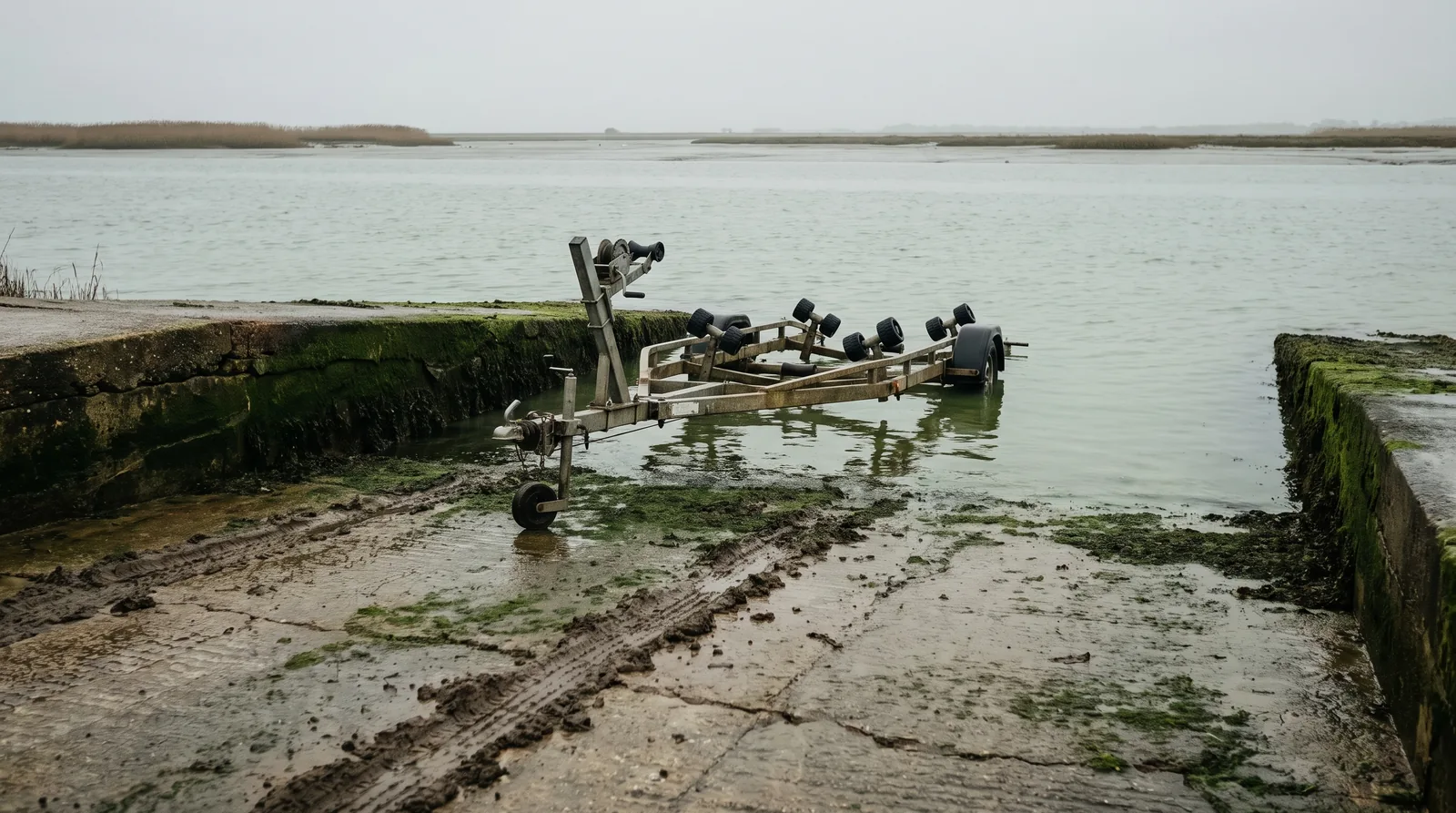
The point most often misunderstood is liability while the trailer is not coupled. Under tow, the motor insurance of the towing vehicle answers for damage to third parties. It says nothing about who replaces the trailer if it is stolen, and it does not help when an uncoupled trailer rolls away on a slope. In that moment you are personally liable, and the gap is a real one in most arrangements.
So it is worth establishing two things in writing before the season: whether the trailer is insured against theft and damage at all, and whether liability for it extends to the times when it is standing uncoupled, being manoeuvred by hand, or parked in a winter yard. Both answers come from the wording, not from the brochure.
For the day itself: take chocks, plan a second person, immerse the trailer only as far as the rollers require, and release the strops only once the boat is afloat. Most launching damage happens because one of those four was missing.
Worth checking
Common questions
Do I need separate trailer insurance?
It depends on the wording. Some boat policies include the trailer in liability and can insure it against damage; many do not mention it at all. Ask before you assume.
What happens if the trailer rolls away on its own?
No towing vehicle is involved, so its motor insurance does not answer. Unless something covers the uncoupled trailer, the liability is yours personally.
Related