Oil tank liability insurance in Germany: liability without a ceiling
If you run a heating oil tank in Germany, section 89 of the Federal Water Act (WHG) makes you liable for any water pollution it causes, without fault and without an upper limit. Personal liability insurance often leaves larger tanks out. Oil tank liability insurance, called Gewässerschadenhaftpflicht, closes that gap, for a tank in the basement as well as one buried in the garden.
Usually yes. It is not compulsory, but under section 89 WHG the operator of a tank is liable for pollution of groundwater and surface water regardless of fault and without limit. Many personal liability policies cover only small containers; some include above ground tanks up to roughly 3,000 to 5,000 litres. Underground tanks and larger systems nearly always need a policy of their own. Check the wording of your personal liability policy first.
Section 89 WHG: why your own conduct hardly matters
The German Federal Water Act distinguishes two cases. Whoever puts substances into water is liable for that act. Whoever operates an installation from which substances escape into water is liable as its operator, even without any fault. A heating oil tank is such an installation. If it corrodes unnoticed or a pipe bursts during delivery, you answer for the consequences.
Groundwater counts as water under the Act. A few litres of oil in the soil can trigger a clean up, and if the local water supplier has to close a well, the bill comes to you. There is no legal ceiling on these costs, and remediation easily reaches six figures.
Above ground or buried: what the difference means
Tanks in a basement usually sit in a bunded room or have double walls, so a leak shows early. Buried tanks are harder to watch, and a leak often reaches the soil before anyone notices. That is why they cost more to insure and why the AwSV ordinance requires them to be inspected by an expert, as a rule every five years and more often in water protection zones.
For above ground tanks the inspection duty depends on size and location; the lower water authority of your district (untere Wasserbehörde) can tell you which intervals apply. Flood zones carry extra requirements because a tank can float and leak in high water. Keep the inspection reports with your policy documents, since missed inspections can lead to disputes with the insurer.
What matters in the small print
The consumer magazine Finanztest compared policies without a general deductible in issue 8/2024. Cover amounts ranged from 2 to 50 million euros, and premiums for the same tank differed several times over. Price says little about quality.
Three points matter most: damage to your own property, meaning soil and walls, even before groundwater is at risk; emergency costs paid to prevent an imminent loss; and no cuts for minor lapses. No liability policy replaces the tank itself.
What is covered
Compensation to third parties when heating oil pollutes groundwater, wells or watercourses
Clean up of soil and groundwater ordered by the authorities
Emergency costs to prevent an imminent loss
Damage to your own land, such as soil and walls, depending on the policy
Defence against unjustified claims, including in court
Spills during delivery, where you are liable as the operator
Oil damage after a flood, depending on the policy
What is not covered
The tank itself, its pipes and the repair of the system
Deliberate breaches of inspection and maintenance duties
Gradual damage, where the policy excludes it
Commercial installations that have not been declared
Tanks larger than stated in the policy
Fines and penalties
Who needs it
Every owner of a buried tank, whatever its size
Owners of an above ground tank that personal liability does not include
Landlords who run oil heating for their tenants
Owners' associations with a shared tank
Owners of a decommissioned tank that still holds residual oil
Who does not need it
People who only store small containers, such as a can for the lawnmower: personal liability usually covers that
Owners whose tank has been cleaned and properly decommissioned
Wheel of misfortune
Spin the wheel of bad luck
Six things that really happen. The wheel picks yours and shows who pays.
Cost:
Budget policy Strong policy
See all six cases
Tank corrodes, oil in groundwater, five to six figures for clean up and experts. Budget policy: pays, Strong policy: pays. The classic case under section 89 WHG. Every oil tank liability policy pays up to its limit.
Pipe leaks into your own basement, four to five figures for disposal and repair. Budget policy: pays in part, Strong policy: pays. If groundwater is not yet at risk, weak policies often refuse. Good ones always include damage to soil and walls.
Tank overfilled during delivery, four to five figures. Budget policy: pays, Strong policy: pays. You are liable to third parties as the operator. Your insurer pays and recovers from the supplier if the supplier was at fault.
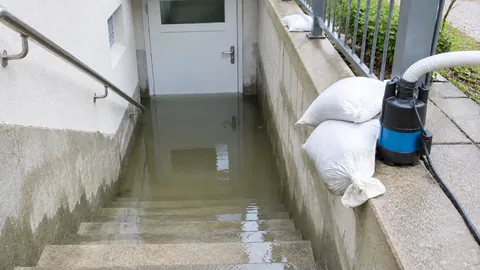
Flood lifts the tank, five to six figures, next door too. Budget policy: does not pay, Strong policy: pays. Some basic policies exclude flood. Strong ones include it, but the duties in a flood zone still apply.
Pumping out before the loss, about three to four figures. Budget policy: pays in part, Strong policy: pays. Good policies expressly pay emergency costs incurred before the actual loss. Acting early prevents the big clean up.
New tank after the leak, four to five figures. Budget policy: does not pay, Strong policy: does not pay. No liability policy replaces the installation itself. The tank, pipes and repair are your cost.
What it costs
Oil tank liability insurance is inexpensive, but prices vary widely between insurers. Buried tanks cost more than above ground ones, large tanks more than small ones.
Example
Typical range
Above ground tank, 3,000 litres
about 20 to over 90 € a year
Tank holding 10,000 litres
about 29 to 191 € a year
What drives the premium
Capacity in litres
Location: inside the building, outdoors or underground
Construction, such as double walls or a drip tray
Cover amount and deductible
Extras such as damage to your own land
Ranges from the Finanztest comparison, issue 8/2024, for policies without a general deductible. Your premium is fixed only in the quote.
The policy levels on the market
01
Basic
Cover in the low millions, damage to your own land only when groundwater is at risk. A floor for small above ground tanks.
02
Standard
Several million euros, emergency costs and damage to soil and walls included. Suits most oil heating systems.
03
Premium
High cover, flood included, no cuts for minor lapses, several tanks in one policy. For buried tanks and large systems.
How to recognise a good policy
Criterion
Minimum standard
Strong policy
Why it matters
Cover amount
2 million €
10 million € or more
Liability under section 89 WHG has no limit, and wells and soil clean up quickly cost six figures.
Damage to your own land
only if groundwater is at risk
soil and walls always included
The most common loss hits your own basement and garden first.
Emergency costs
after the loss has occurred
also to prevent an imminent loss
Pumping out early prevents the big loss, and you should not pay for that yourself.
Deductible
250 € or more
none
Even a small spill in the basement means disposal and an expert's fee.
Flood
excluded
included
Floating tanks are a typical cause of loss in floods.
Inspection duties
benefit cut for any lapse
cut only for gross negligence
A missed deadline should not cost you all of your cover.
Several tanks
one tank per policy
all tanks on the property up to the stated total
Battery tanks and extra containers otherwise slip through.
Insurers on the German market
Many German property insurers offer oil tank liability as a policy of its own or as an add-on to personal or property owner's liability. We include direct insurers that do not work with brokers so you know the market.
Insurer
Background
Haftpflichtkasse
mutual insurer specialised in liability, sells through brokers
VHV
broker-focused insurer with a wide liability range
Allianz
agents and brokers
ERGO
agents and brokers
R+V
cooperative group, sells through cooperative banks
Zurich
agents and brokers
Gothaer
agents and brokers
InterRisk
broker insurer, part of Vienna Insurance Group
SV SparkassenVersicherung
public insurer in south west Germany, sells through savings banks
HUK-COBURG
sells through its own network, does not work with brokers