01
Fire only
Fire, lightning and explosion. Often the minimum a lender requires, but water and storm stay uninsured.
Home / Insurance broker / Business
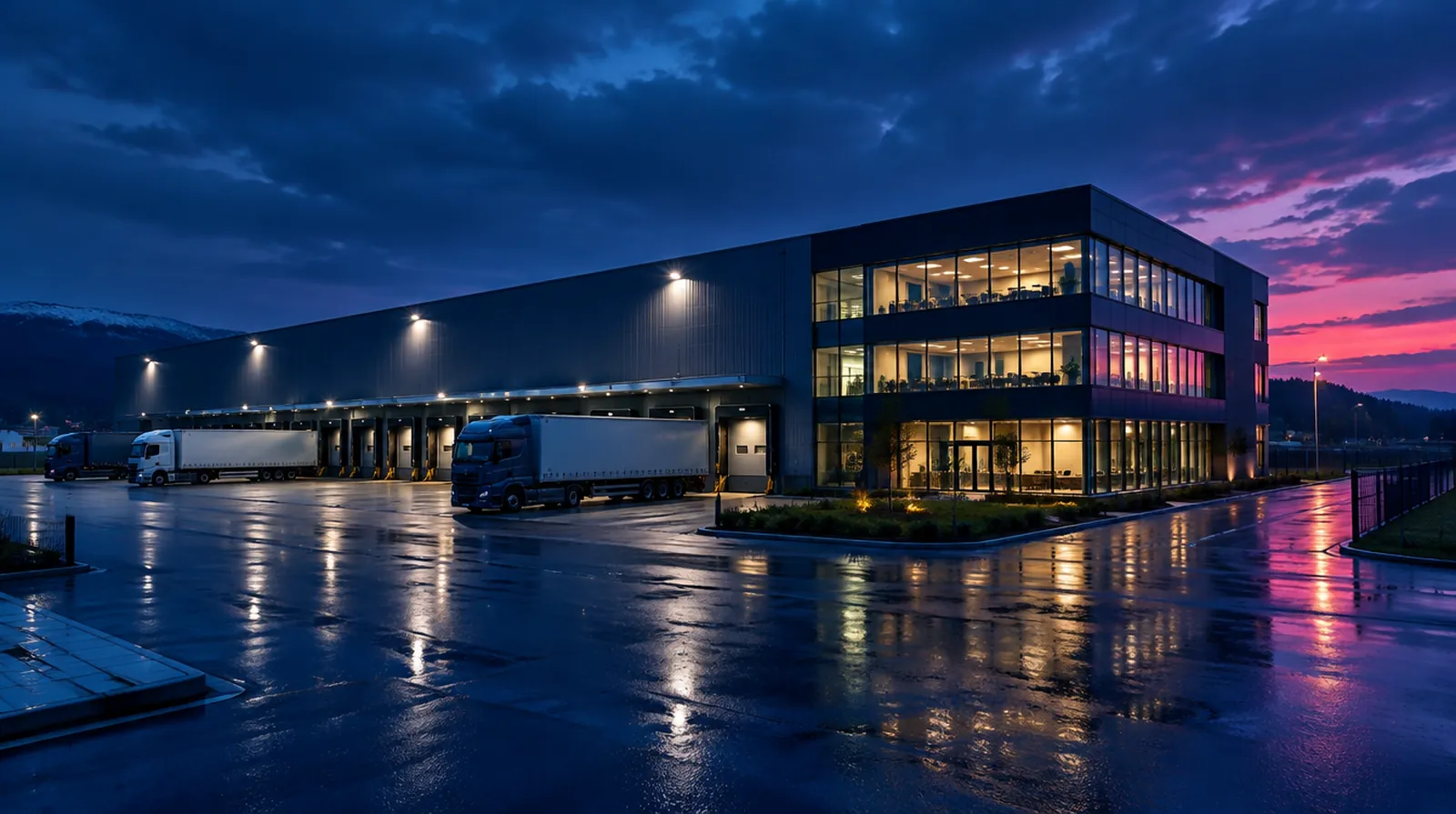
If your company owns its premises in Germany, or you invest in a commercial property, the building needs its own insurance. German buildings cover is based on rebuilding cost, not market value, and it treats a change of use by a tenant as a change of risk you must report. Flood is an optional extra.
The question almost everyone asks first
There is no legal obligation, but any bank financing the purchase will require fire insurance and register its interest with the insurer. Without cover, the owner pays for demolition, rebuilding and lost rent after a fire. Tenants insure only their own contents, so if you own the building, nobody else covers it.
Investors from the UK or US often use the purchase price as a guide. In Germany the sum insured reflects what it costs to rebuild a comparable building today, including demolition, planning and current building regulations, but excluding land. A cheap warehouse in a weak market can cost far more to rebuild than it cost to buy.
If the sum is too low, § 75 of the Insurance Contract Act reduces every claim in proportion. Some insurers offer indexed rebuilding value based on the 1914 value (Wert 1914) for smaller buildings, which adjusts automatically to construction prices. For larger properties a professional valuation linked to an underinsurance waiver is the safer route.
Premiums depend on the most hazardous use in the building. If an office tenant leaves and a joinery or restaurant moves in, the fire risk rises. German law treats that as an increase in risk (§ 23 VVG) which the owner must report. Keeping quiet can reduce or remove the claim payment.
Vacancy and major refurbishment also need to be reported. Empty buildings attract arson and vandalism, and a water leak can go unnoticed for weeks. During construction work, a separate contractors' all risks policy is usually needed.
Loss of rent cover pays the rent tenants no longer owe while the space is unusable, or the rental value if you use the building yourself. Twelve months is common, better policies offer 24, which matters because rebuilding with permits often takes longer than a year.
Look also at cover for extra costs caused by authorities, such as new fire safety or energy requirements that apply to a rebuild. These are often limited or excluded in basic wordings.
Wheel of misfortune
Six things that really happen. The wheel picks yours and shows who pays.
Cost:
The premium is a rate applied to the sum insured. Use, construction and fire protection move it most, then location. There are no reliable published price ranges for commercial buildings in Germany.
We do not publish typical prices, as properties differ too much. Your premium is known once we have a quote.
01
Fire, lightning and explosion. Often the minimum a lender requires, but water and storm stay uninsured.
02
Fire, water, storm and hail with loss of rent and cost extensions. The standard choice for most owners.
03
Everything not excluded, plus flood and similar perils, higher limits and loss of rent up to 24 months.
| Criterion | Minimum standard | Strong policy | Why it matters |
|---|---|---|---|
| Underinsurance waiver | none | waiver after valuation or indexed rebuilding value | Construction costs rise faster than owners update sums. |
| Loss of rent | 6 months | 24 months, including commercial tenants | Permits and rebuilding often take more than a year. |
| Official requirements | excluded | included with its own limit | A rebuild must meet today's regulations, which costs more. |
| Change of tenant | report before move-in | provisional cover with later notification | Owners often learn late what a tenant actually does. |
| Gross negligence | payment may be reduced | no reduction up to the sum insured | Forgetting to drain pipes in an empty unit is a classic case. |
| Natural hazards | not included | included with a reasonable deductible | Heavy rain causes losses far from any river. |
Commercial buildings in Germany are insured by the large property insurers and by regional public insurers. Larger properties are often shared between several insurers. This list is a market overview.
| Insurer | Background |
|---|---|
| Allianz | commercial property through agents and brokers |
| AXA | commercial buildings and property portfolios |
| HDI | Talanx group, commercial customers |
| R+V | cooperative banking group, mid-sized firms |
| Zurich | commercial and industrial risks, mainly brokers |
| Provinzial | regional public insurer |
| Alte Leipziger | broker distribution |
| Württembergische | part of the W&W group |
From the BaFin register
155
155 insurers supervised by BaFin, the German regulator, are licensed for this class of insurance. (Feuer, Sturm, Hagel-, Frost- und sonstige Sachschäden)
Source: BaFin company database, retrieved 18 September 2026. Insurers from other EU countries selling through a branch or without a German office are not included.
The core cover required for financing, sometimes as a standalone policy.
Fire, water, storm and hail with cost extensions and loss of rent.
Covers unnamed perils too, typical for larger properties.
Flood, backflow, earthquake, subsidence, landslide, snow load and avalanche, usually with a deductible.
Myth or truth
Five things people say about this insurance. Guess first, then see the answer.
Buildings insurance is compulsory in Germany.
This is false.
No, there is no general legal duty. In practice every lender requires it and asks the insurer for a Sicherungsschein.
If you buy a building in Germany, the seller's policy passes to you.
This is true.
Yes, under § 95 of the Insurance Contract Act the buyer steps into the existing contract. You can cancel it within one month of registration in the land register and choose your own cover.
A German buildings policy also covers the value of the land.
This is false.
No, land does not burn. The sum insured covers rebuilding, demolition and fees, which is why it can be far below or above the purchase price.
When a delivery truck hits your gate, the driver's motor insurance pays first.
This is true.
Right, the vehicle's liability insurance is responsible. Your own building policy only matters if the driver is unknown and vehicle impact is included.
Snow crushing the roof counts as storm damage.
This is false.
No, German wordings treat snow load as a natural hazard. Without the Elementar add-on it is not covered, even far from any river.
Questions and answers
The owner insures the building. Tenants insure their own contents and fit-out. German commercial leases often allow the landlord to pass the premium on to tenants as a service charge, if the lease says so.
A German valuation method that expresses the rebuilding cost in 1914 prices and scales it with a construction price index. It keeps the sum insured up to date automatically and is mainly used for residential and smaller commercial buildings.
It is a confirmation from the insurer that the policy exists and that payments after a total loss go to the bank first. The insurer also informs the bank if premiums are unpaid or the policy ends.
Sometimes against fire and storm as part of the building, but not against technical breakdown, theft or lost feed-in income. Larger systems usually get their own solar panel policy.
Yes, if the policy requires it, and most commercial wordings do after a certain period. Vacancy is an increase in risk under German law, and not reporting it can cost you the claim.
Only with natural hazards cover. Water entering from outside after heavy rain or a river flooding is neither pipe water nor storm under German wordings.
Yes. A blanket clause can balance underinsurance on one building against overinsurance on another. This is useful for companies with several buildings on one site.
Only if an insured peril such as fire or water caused the damage. A breakdown without an external cause is a matter for machinery insurance.
NAMMERT insurance broker
We obtain quotes and come back with a comparison. Free of charge and without obligation: the insurer pays our commission. You can write in English.
We will be in touch within one working day. If it is urgent: +49 3375 29 12 77.
Is business contents insurance required in Germany?
What does business interruption insurance pay in Germany?
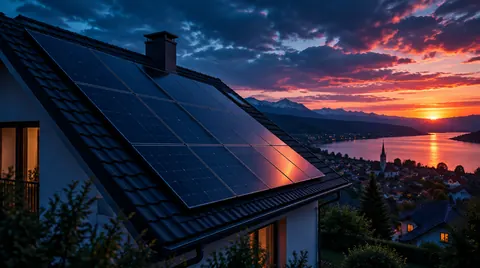
Does my German buildings insurance cover my solar panels?
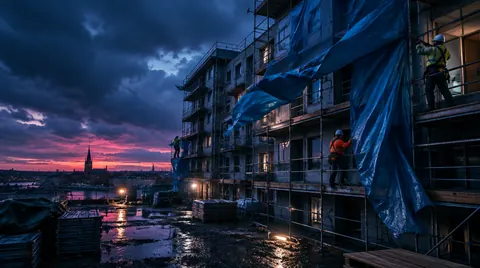
Do I need my own contractors all risks policy if the client already has one?
Is business liability insurance compulsory in Germany?
Ten life situations, sorted honestly
Find your case, see which policy pays
What we would talk you out of
Boat or yacht? Here we are not the broker but the underwriting agency, with our own policies and our own claims handling.
Boat insuranceNAMMERT Assekuradeur GmbH, insurance broker licensed under section 34d(1) of the German Trade Regulation Act, broker register no. D-C08Q-TOSD4-37. For boat and yacht insurance we act as underwriting agency, not as broker. Statutory disclosure (German) · Updated