Business liability
Farm liability includes keeper's liability for your livestock and should include environmental damage from slurry, silage and diesel.
Insurance broker / Business types / Farming and nature
One disease outbreak on a neighbouring farm is enough to put yours inside a restricted zone: piglets cannot leave, milk cannot be sold, and the costs keep running. Add barn fires, failed ventilation and cattle standing on the road at night. This page shows what livestock farmers in Germany should insure and what the Tierseuchenkasse, the state animal disease fund, does not pay.
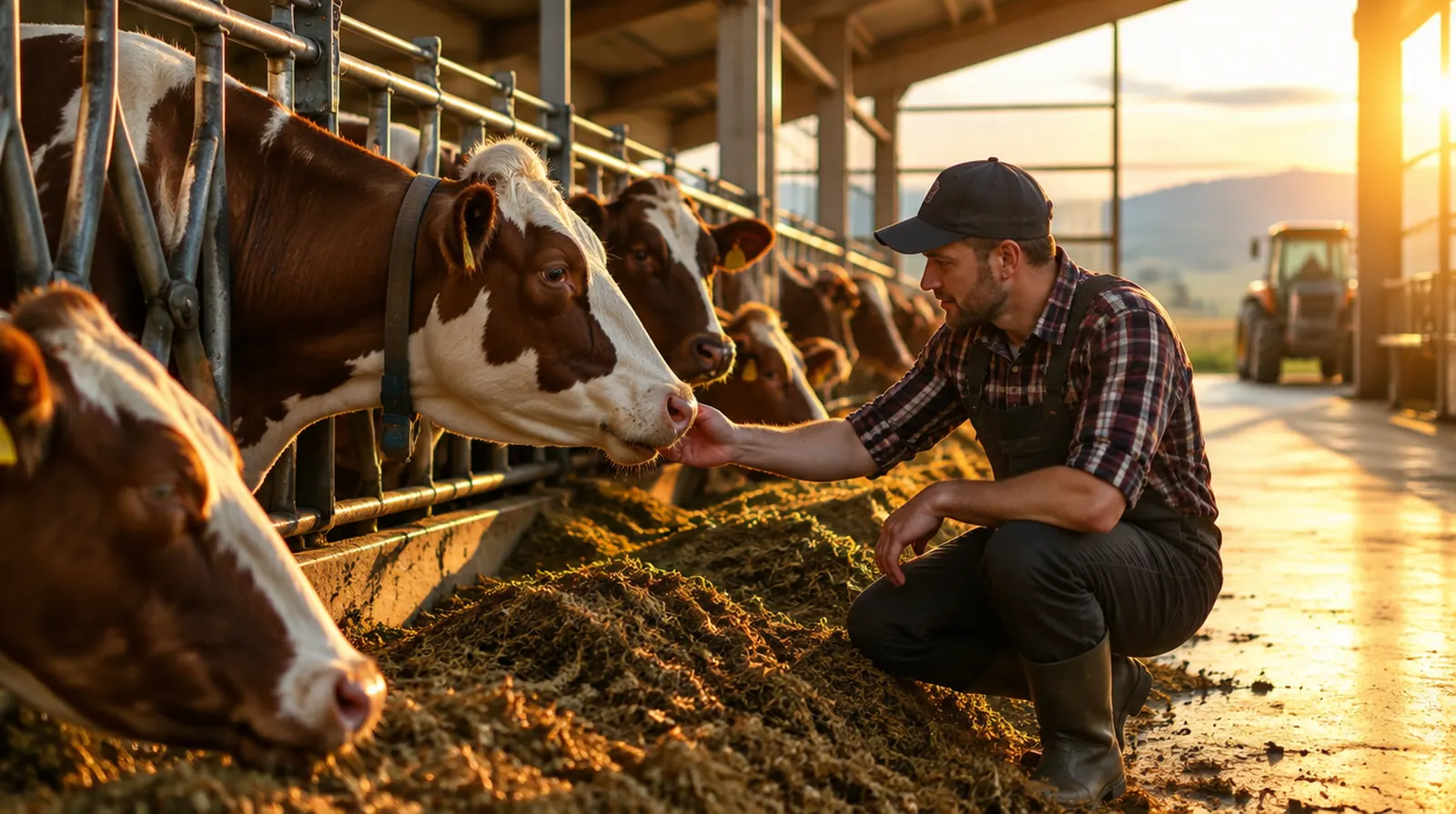
The question almost everyone asks first
For notifiable diseases the Tierseuchenkasse essentially compensates the value of the animals that have to be culled. It does not pay the loss of income afterwards: empty barns, marketing bans in the restricted zone, feed and loans that keep running. Only loss of income insurance (Ertragsschadenversicherung) covers that, with many providers for up to 24 months. Since African swine fever and bluetongue, this has become decisive for many farms.
African swine fever, avian influenza, bluetongue: culling, restricted zones and marketing bans also hit farms without a case of their own.
Wiring, heat lamps and hay stores are the most common causes of fire. Barn fires cost animals, buildings and often years.
If the ventilation in a pig barn stops for an hour in summer, animals suffocate. Milking robots and feeding systems are critical too.
One broken pasture fence, and cattle or horses are standing on the county road at night. Accidents with injuries follow.
A leaking slurry tank or silage effluent in the stream kills fish and causes costly environmental damage.
Kicks, crushing and falls in the barn are among the most frequent accidents in farming.
Compared with other trades, 1 low to 5 high.
Essential
Farm liability includes keeper's liability for your livestock and should include environmental damage from slurry, silage and diesel.
As loss of income insurance it pays for losses after animal disease, restricted zones and equipment failure that the animal disease fund does not carry.
Barns, sheds and slurry tanks against fire, lightning, storm and hail, at index linked new value.
Compulsory for tractors, yard loaders and feed mixer wagons on public roads.
Strongly advised
Insures livestock, feed, straw and fittings against fire, lightning, storm and burglary.
For ventilation controls, milking robots, feeding computers and alarm systems that fail through power surges or defects.
Depends on the business
Barn roofs often carry large solar installations whose fire and income risk should be covered separately.
Adds to the limited benefits of the SVLFG for you and family members working on the farm.
In livestock farming, premiums depend on species, herd size, barn construction and equipment. For disease and loss of income, insurers calculate per animal place or on the basis of the contribution margin.
| Insurance | Example | Typical range |
|---|---|---|
| Business liability | Dairy farm with 80 cows and grazing | around €300 to €900 a year |
| Business interruption | Loss of income after animal disease and equipment failure, pig fattening with 1,500 places | around €1,500 to €4,500 a year |
| Commercial buildings | Barns and sheds with a new value of €1.5 million | around €2,500 to €6,000 a year |
| Business contents | Livestock and feed worth €400,000 against fire and storm | around €600 to €1,800 a year |
| Electronic equipment | Two milking robots and ventilation controls with a new value of €350,000 | around €1,800 to €4,500 a year |
For comparison: Liability and loss of income insurance for a pig fattening farm cost roughly as much a year as the proceeds from 15 to 25 finished pigs.
Guide figures excluding German insurance tax, as of September 2026, from our own quoting. On top comes the compulsory contribution to the animal disease fund; in Lower Saxony in 2026 around €9.40 per head of cattle, €1.00 per pig and €4.00 per sheep. We obtain the exact quote from several insurers.
01
For: Small part time holdings with suckler cows, sheep or horses
Together around €700 to €2,000 a year
Request this package02
For: Full time dairy, pig or poultry farms
Together around €5,000 to €14,000 a year
Request this package03
For: Farms with milking robots, automatic feeding and solar
Together around €10,000 to €25,000 a year
Request this packageSix things that really happen to livestock farmers, put together on one hot day in August. Tap through and see who pays.
Three cattle have got through the damaged pasture fence onto the county road. A car hits one of them.
Lightning overnight has destroyed the milking robot's controls. Milking by hand, repair and technician.
Because of swine fever in wild boar, the veterinary office sets up a restricted zone. Your fattening pigs cannot be sold for two months.
The ventilation in the fattening barn fails at 34 degrees and the alarm comes too late. 90 pigs die.
Slurry runs from a crack in the slurry tank into the ditch and on into the stream.
Spontaneous combustion in the hay store. Barn and feed stocks burn down.
Which package would you have had?
Illustrative amounts before any excess. Whether and how much is paid depends on the policy terms.
The gap between the value of the animals and the loss of income is large. As a broker we compare loss of income policies from several providers and their terms on restricted zones.
In boat insurance we are an underwriting agency and settle claims ourselves. We know how loss adjusters calculate contribution margins and what matters when you report a loss.
We look after the business, farmhouse, vehicles, accident cover and pensions with one contact who can explain German rules in English.
We know what a family business means. Our work costs you nothing; the insurer pays our commission.
Questions and answers
For notifiable diseases it essentially compensates the value of culled animals and contributes to the cost of control. It does not pay the loss of income afterwards.
That depends on species, herd and indemnity period. In our experience, for a pig fattening farm with 1,500 places it is usually between €1,500 and €4,500 a year.
Only if the loss of income insurance expressly includes restricted zones. Look closely at this clause.
You, as the keeper. Farm liability pays if keeper's liability for livestock is included.
Yes, if livestock is listed in your contents or farm inventory insurance. Death from illness is not covered there.
It differs by federal state. In Lower Saxony in 2026 it is €9.40 per head of cattle, €1.00 per pig and €4.00 per sheep or goat.
NAMMERT insurance broker
The recommended covers are already ticked. Change what does not fit; we obtain quotes and come back with a comparison. You can write in English.
We will be in touch within one working day. If it is urgent: +49 3375 29 12 77.
Is hail or multi peril crop insurance worth it for my farm?
Who pays if a livery horse is injured in our paddock?
Who pays if the cold room breaks down over the weekend?
This page covers the following classes of the German WZ 2025 (identical to NACE at four digits):
Source: Federal Statistical Office of Germany (Destatis), WZ 2025. All business types
Boat or yacht? Here we are not the broker but the underwriting agency, with our own policies and our own claims handling.
Boat insuranceNAMMERT Assekuradeur GmbH, insurance broker licensed under section 34d(1) of the German Trade Regulation Act, broker register no. D-C08Q-TOSD4-37. For boat and yacht insurance we act as underwriting agency, not as broker. Statutory disclosure (German) · Updated