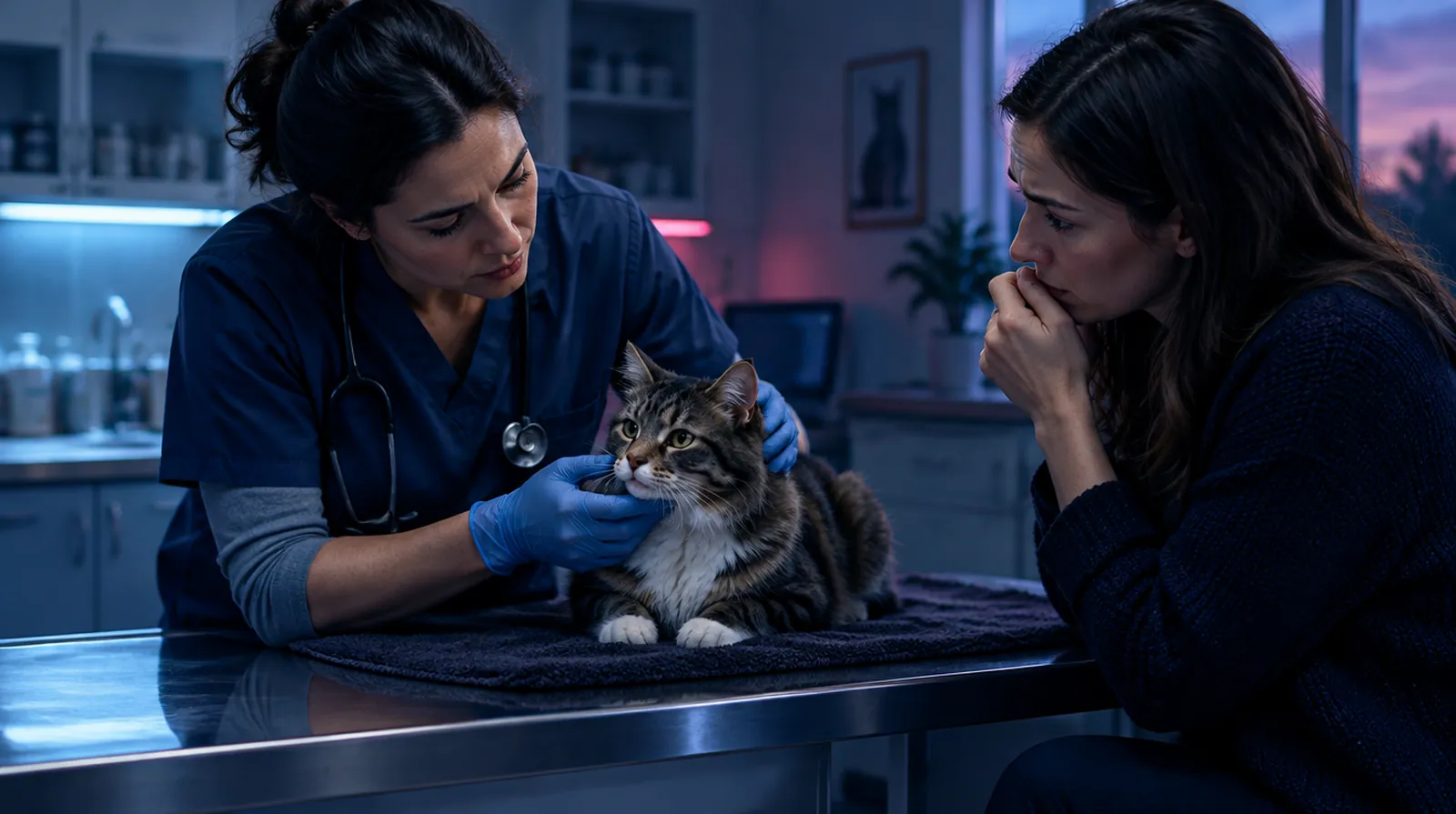
Pet health insurance in Germany: how vet bills work and what to insure
German vets charge according to a statutory fee scale, the GOT, which was raised substantially in November 2022. Emergency visits cost at least double the standard rate plus a flat fee. Pet health insurance pays for surgery or also for routine treatment, and the most important detail is how much of the fee scale it covers.
Surgery cover is worth it for most dog and cat owners, because a single operation with a clinic stay easily costs several thousand euros under the German fee scale. Full cover, which also pays for check-ups, vaccinations and medication, costs much more and pays off mainly for breeds with known health problems. If you have savings to absorb a large bill, you can also set money aside yourself.
The GOT: why German vet bills look the way they do
Unlike in the UK or US, German vets do not set their prices freely. They bill according to the Gebührenordnung für Tierärzte (GOT), a federal fee scale. Since 22 November 2022 a revised version with much higher fees applies. Depending on effort, a vet may charge one to three times the listed base rate.
For emergencies at night, at weekends and on public holidays, the vet must charge at least twice and may charge up to four times the base rate, plus an emergency fee of 50 euros. A policy that reimburses only up to twice the rate leaves you paying part of exactly the most expensive bills. Good policies reimburse up to four times.
Surgery cover or full cover
Surgery cover (OP-Versicherung) pays for operations under anaesthetic, including examinations beforehand, aftercare and the clinic stay. It covers the risk that really hurts: a torn cruciate ligament, a twisted stomach, a swallowed object, tumour removal.
Full cover (Krankenvollversicherung) also pays outpatient treatment and medication and often includes a budget for preventive care. It costs a multiple of surgery cover. For breeds prone to skin, joint or ear problems it can pay off; for a young indoor cat it usually does not.
Moving to Germany with a pet
A policy from your home country usually ends or stops paying once you are resident in Germany, and German insurers treat conditions diagnosed abroad as pre-existing. Bring your pet's veterinary records, ideally translated, so the new insurer can assess them.
Pet health insurance in Germany is indemnity insurance, so after a claim both sides may cancel the contract, including the insurer after an expensive operation. Good policies expressly waive this right. Premiums usually rise as your pet gets older, and many insurers only accept animals up to a certain age.
What is covered
Operations under anaesthetic, including pre-op examinations and aftercare
Clinic stays and boarding at the vet
Emergency treatment, up to the fee multiple stated in the policy
Outpatient treatment and medication under full cover
Diagnostics such as X-ray, ultrasound and lab tests linked to treatment
A preventive care budget for vaccinations and dental cleaning, in some policies
Treatment abroad for a limited time
Physiotherapy after surgery, depending on the policy
What is not covered
Conditions known before the policy started, including those diagnosed abroad
Neutering without a medical reason, in many policies
Treatment during the waiting period
Congenital and breed-specific conditions in basic policies
Food, grooming products and supplements
Damage caused by another animal, where its owner's liability insurance pays
Who needs it
Owners who could not pay a vet bill of several thousand euros from savings
Owners of young animals without pre-existing conditions
Owners of breeds with known health weaknesses
Owners of outdoor cats and active dogs
Who does not need it
Owners with enough savings who set money aside every month
Owners of older animals with many pre-existing conditions
Wheel of misfortune
Spin the wheel of bad luck
Six things that really happen. The wheel picks yours and shows who pays.
Cost:
Budget policy Strong policy
See all six cases
Dog swallows a sock: bowel surgery, around 1,500 to 4,000 €, more out of hours. Budget policy: pays in part, Strong policy: pays. Simple surgery cover pays, but often only up to twice the GOT rate. Anything above is yours; strong policies pay up to the maximum rate.
Cat falls from a balcony, around 1,000 to 5,000 € for fractures. Budget policy: pays, Strong policy: pays. Fractures after a fall usually need surgery. This is exactly the risk that even basic surgery cover is built for.
Sunday night vet visit for vomiting, around 150 to 400 €. Budget policy: does not pay, Strong policy: pays. Surgery cover pays nothing without an operation. Full cover includes outpatient and emergency visits.
Dental work under anaesthetic, around 300 to 1,000 €. Budget policy: does not pay, Strong policy: pays in part. Dental treatment is excluded or capped in many German policies. Strong ones pay what is medically needed, routine scaling rarely.
Hip dysplasia in a young Labrador, several thousand € per hip. Budget policy: does not pay, Strong policy: pays in part. Hereditary conditions are often excluded in basic cover. Good policies pay if the condition is first diagnosed after cover starts.
Allergy diagnosed before you moved, a few hundred € a year, ongoing. Budget policy: does not pay, Strong policy: does not pay. Conditions known before the policy starts are excluded everywhere. That includes diagnoses from your vet back home.
What it costs
Premiums depend mainly on species, breed, age and level of cover. Full cover costs several times as much as surgery cover, and premiums usually rise with age.
Example
Typical range
Young small dog, surgery cover
about 160 to 550 € a year
What drives the premium
Dog or cat, breed and size
Age at entry and later
Surgery cover or full cover
Reimbursement up to two, three or four times the GOT rate
Deductible and annual maximum
Range from the Stiftung Warentest comparison of dog surgery policies. We give no guide prices for cats or full cover. Your premium is fixed only in the quote.
The policy levels on the market
01
Surgery cover
Operations with pre- and aftercare, often up to two or three times the GOT rate. Covers the big risk at a moderate premium.
02
Premium surgery cover
Up to four times the rate, including emergencies, no annual limit, physiotherapy included. For owners who want the cost of surgery fully covered.
03
Full cover
Adds outpatient treatment, medication and preventive care. For animals likely to need frequent vet visits.
How to recognise a good policy
Criterion
Minimum standard
Strong policy
Why it matters
GOT multiple
up to twice the rate
up to four times, including emergencies
Emergency visits are billed at no less than twice the rate plus a flat fee.
Annual limit
low yearly cap
no limit
Two operations in one year can exhaust a small limit.
Cancellation after a claim
insurer may cancel
insurer waives its right to cancel
Otherwise you may lose cover just when your pet needs it most.
Breed-specific conditions
excluded
included, such as hip dysplasia
These conditions cause the highest costs in pedigree dogs.
Waiting period
several months for surgery
short, accidents covered from day one
You pay premiums without cover while it runs.
Deductible
percentage of each bill
none or a fixed yearly amount
A percentage becomes expensive on large bills.
Insurers on the German market
Specialist pet insurers and several large German property insurers offer pet health cover. Policies differ mainly in the fee multiple they reimburse and in cancellation after a claim.
Insurer
Background
AGILA
pet insurance specialist in the Talanx group
Uelzener
mutual insurer focused on animal insurance
Allianz
dog and cat health cover, agents and brokers
Barmenia
pet health and surgery policies, agents and brokers
DFV
listed insurer selling mainly online
Helvetia
German company of the Swiss Helvetia Baloise group
Operations only, with pre- and aftercare. The most popular choice.
Full cover (Krankenvollversicherung)
Operations and outpatient treatment, often with a preventive care budget.
Accident-only surgery cover
Pays only for operations after accidents. Cheap, but no cover for illness.
Combined with liability
Some insurers bundle dog liability and health cover in one contract.
Myth or truth
True or false?
Five things people say about this insurance. Guess first, then see the answer.
German vets usually expect you to pay on the spot, not your insurer.
This is true.
True: in Germany you normally pay the vet and then claim the money back. Some insurers offer direct billing with the practice. Keep a little buffer for large bills.
Pet health insurance in Germany also covers damage my dog causes to others.
This is false.
False: damage to other people is a matter for dog liability insurance (Hundehaftpflicht). That is a separate policy and compulsory in some states. A few providers sell both as a bundle.
An indoor cat never needs more than vaccinations.
This is false.
False: indoor cats get bladder stones, dental disease and injuries from falling out of windows. An operation costs the same as for an outdoor cat. Only the traffic risk is lower.
Some German policies pay towards euthanasia and cremation.
This is true.
True: a number of policies include a fixed amount for putting an animal to sleep and sometimes for cremation. It is an extra, not standard. Ask for it if it matters to you.
Pet health insurance is compulsory for dogs in Germany.
This is false.
False: no German state requires health insurance for pets. What some states do require is liability insurance for dogs. Vet costs are your own risk unless you insure them.
Common mistakes
Waiting until your pet is already ill
Choosing a policy that pays only up to twice the GOT rate
Overlooking the cancellation clause after a claim
Arriving without your pet's veterinary records from abroad
Ignoring how premiums develop as the animal ages
Frequently asked questions
Questions and answers
Frequently asked
What is the difference between surgery cover and full cover?
Surgery cover pays only for operations with pre- and aftercare.
Full cover also pays outpatient treatment and medication, often preventive care too,
and costs more.
What does an emergency vet visit cost in Germany?
Under the GOT, emergency treatment is billed at between two and four times the base rate,
plus a 50 euro emergency fee and VAT.
Insurance pays only up to the multiple stated in your policy.
Will my insurance from home still cover my pet in Germany?
Usually not once you live here.
Check the terms of your old policy.
German insurers will treat conditions already diagnosed as pre-existing,
so take out a German policy early.
Can I insure an older cat?
Often yes, but many insurers have a maximum entry age and exclude known conditions.
The older the animal, the less remains covered and the higher the premium.
Can the insurer cancel after an expensive operation?
In many policies, yes, because both sides may cancel after a claim.
Good policies waive the insurer's right.
Look for this clause before signing.
Is neutering covered?
Neutering without a medical reason is usually not covered.
If it is medically necessary, surgery cover normally pays.
Is there a waiting period?
Usually yes, a few weeks to a few months for illness and surgery.
Accidents are often covered from the first day.
Who pays if another dog injures mine?
The other owner's pet liability insurance.
Under German law, treatment costs for an animal may exceed its market value.
Your own pet insurance may pay first and recover the money.
Why use a broker?
The real differences are in a few clauses: fee multiple, cancellation after a claim,
breed-specific conditions.
We compare them for you in English; the insurer pays our fee.
NAMMERT insurance broker
Request quotes for Pet health insurance
We obtain quotes and come back with a comparison, free of charge.
You can write in English.
Thank you, we have your request.
We will be in touch within one working day. If it is urgent: +49 3375 29 12 77.