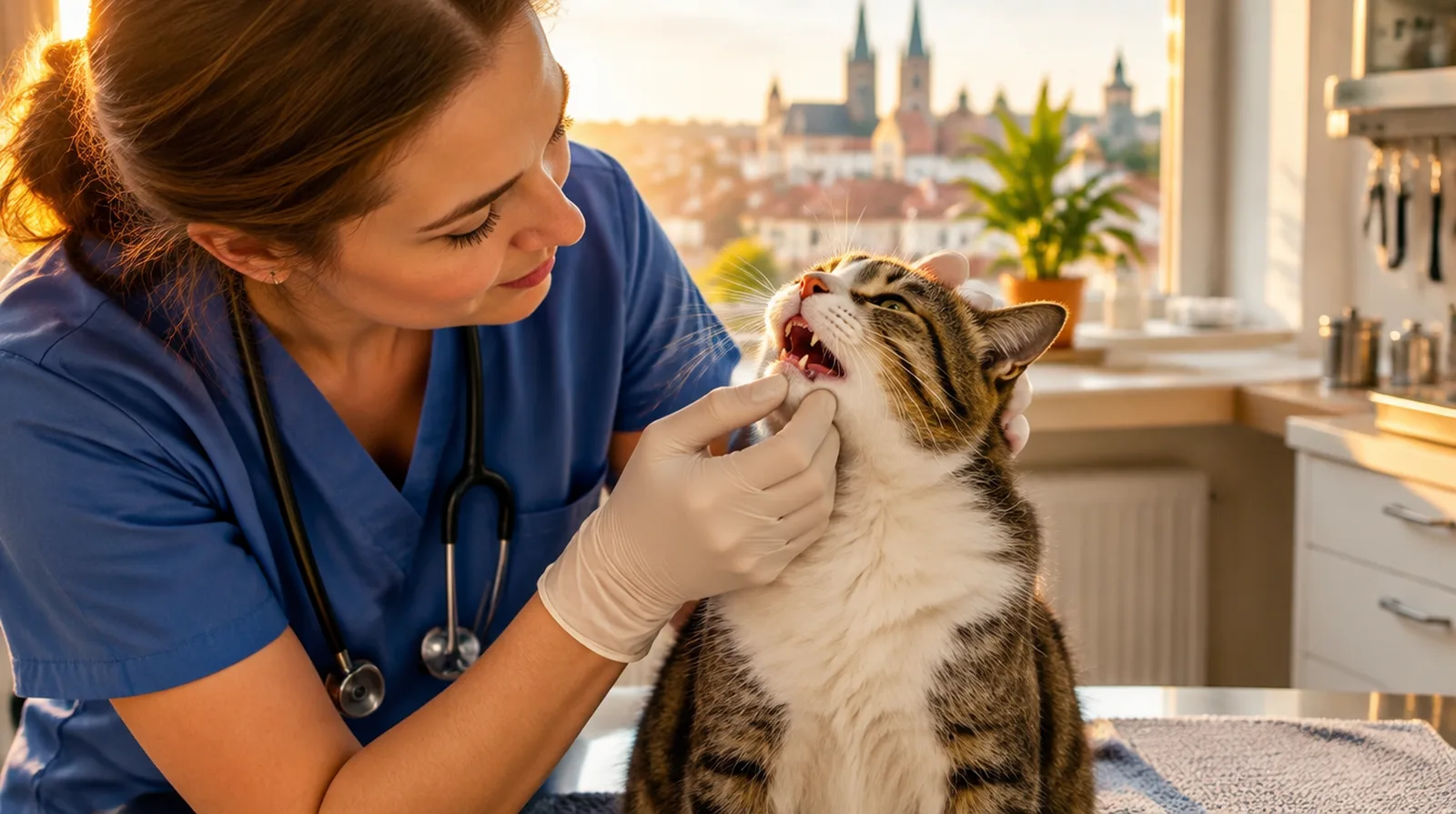
Does cat insurance pay for FORL and other dental treatment in Germany?
In short
German cat insurance only pays for FORL and other dental treatment if the tariff includes dental care or you have a dental add-on, often with its own budget, for example EUR 500 a year. Many tariffs exclude or cap dental treatment, and teeth often have waiting periods of 6 to 18 months. A dental procedure under anaesthesia costs about EUR 300 to 2,000.
A tariff that excludes dental treatment would have paid nothing. The budget covers a typical treatment to a large part, but not a second one in the same year.
Why FORL is a special case for cat insurance
FORL stands for feline odontoclastic resorptive lesions, a disease in which a cat's tooth substance is broken down. Treatment usually means extracting the affected teeth under anaesthesia after a dental X-ray. Medically it is treatment of an illness, but many tariffs put teeth under separate rules.
A guide to cat tariffs in Germany sums it up: medically necessary extractions, FORL treatment, tartar removal and pure prevention can be handled differently in each tariff. Whether your cat insurance pays for FORL is therefore only found in your own conditions.
Dental treatment for a cat
Surgery cover
Full cover without dental add-on
With dental add-on
Extracting a FORL tooth under anaesthesia
depends on the tariff
depends on the tariff, often capped
yes, up to the budget
Tartar removal
depends on the tariff
depends, often treated as prevention
often yes, up to the budget
Root canal, filling
no
not automatically
depends on the add-on
Dental problems known before the policy started
no
no
no
What FORL and other dental treatment cost
The German vet fee scale (GOT) sets EUR 10.26 net for a simple extraction and EUR 41.04 for a complicated one, each up to triple rate. Which item applies is decided by the practice based on the X-ray.
Examination, anaesthesia, monitoring, dental X-rays and medicines come on top. A dental procedure under anaesthesia therefore costs about EUR 300 to 2,000 in total. With several FORL teeth and X-rays, the bill soon reaches the middle of that range.
What to check in the tariff for teeth
Search your conditions for the word Zahn (tooth). Check whether dental treatment is excluded, whether there is a separate yearly budget and which waiting period applies. A dental add-on with EUR 500 a year covers a typical FORL treatment to a large part, but not every procedure.
Also check reimbursement up to triple the GOT rate. If the tariff only pays double, part of a complicated extraction stays with you.
When a dental add-on does not help your cat
If the vet has already found FORL, gum disease or tartar, a new contract will not cover those teeth. A dental add-on is therefore worth it mainly for young cats without findings. For an older cat with known dental problems, savings for the next procedure are often more honest than an expensive add-on.
Step by step
Search your conditions for dental terms and note the exclusions.
Check budget, waiting period and reimbursement rate for teeth.
Before the procedure, send the cost estimate and ask for approval.
Submit the invoice with the diagnosis FORL and the GOT items.
For a young cat without findings, add the dental add-on early.
Checklist
Dental treatment not excluded in the tariff
Dental add-on budget in euros known
Waiting period for teeth over
Reimbursement up to triple the GOT rate
No dental findings in the records before the policy began
Common mistakes
Assuming full cover pays for every dental treatment
Adding dental cover only after FORL has been diagnosed
Overlooking the waiting period for teeth
Treating tartar removal and FORL treatment as the same thing
Questions and answers
Frequently asked
Is FORL covered by cat insurance?
Only if the tariff includes dental treatment or has a dental add-on,
and only after the waiting period.
Many tariffs treat teeth separately.
Does surgery cover pay for tooth extraction?
It depends on the tariff.
Some count extraction under anaesthesia as surgery, others exclude dental treatment altogether.
What does FORL treatment cost for a cat?
A dental procedure under anaesthesia costs about EUR 300 to 2,000,
depending on the number of teeth, X-rays and fee rate.
Can I still insure my cat after a FORL diagnosis?
Yes, but the teeth are then usually excluded.
Other illnesses remain insurable.
Does insurance pay for dental cleaning?
Only with a dental add-on or prevention allowance.
Pure tartar removal often counts as prevention.
How long is the waiting period for teeth?
Special waiting periods of 6 to 18 months are common for teeth, usually none for accidents.