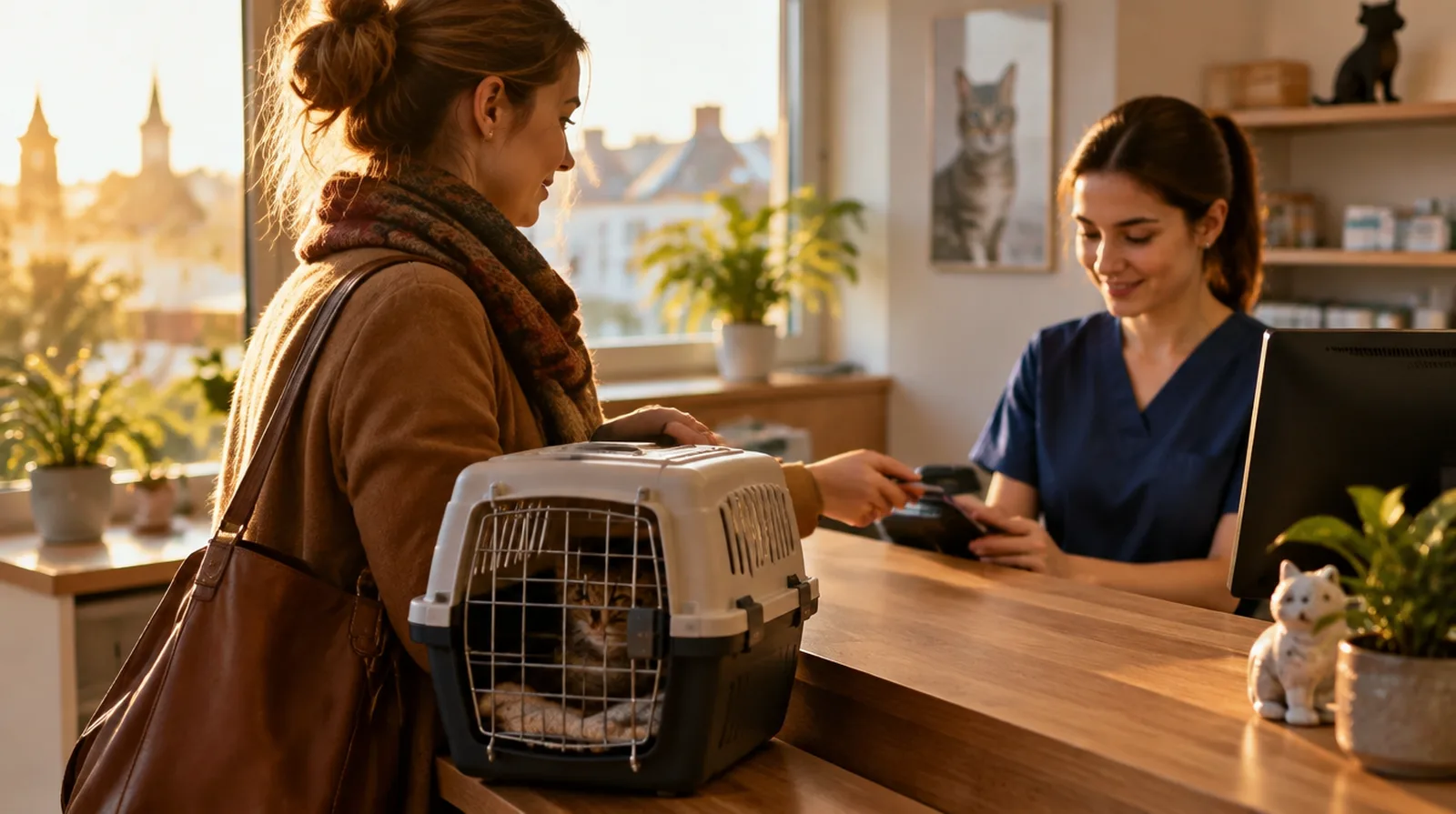
Can the vet bill the insurance directly in Germany?
In short
Only in exceptions. The rule in Germany: you pay the vet and then send the invoice to your insurer, which reimburses you. Some insurers offer direct billing (Direktabrechnung), but only once the practice and the insurer have agreed it. For a EUR 3,500 operation it pays to submit the cost estimate in advance and ask whether direct billing is possible.
What you advance for typical bills and what remains with you after reimbursement. Guide values from published cost lists and tariff overviews.
Example
Typical range
Cruciate ligament tear with diagnostics, surgery and aftercare
about EUR 2,500 to 4,500
Foreign body in stomach or gut, surgery
about EUR 1,500 to 3,500
Emergency service fee per case
EUR 50.00 net, EUR 59.50 with VAT
Usual reimbursement
mostly 80 percent, so 20 percent your share
October 2026.
The emergency fee is official; other values are guide values from published cost lists.
That an advance approval makes a practice more open to payment in parts is a guide value from our
quoting practice.
Norman Nammert, as an insurance broker,
clarifies with you before signing which insurer offers direct billing.
Worked example
Cruciate ligament surgery for EUR 3,500
A dog with full cover, 80 percent reimbursement, up to triple the fee scale rate.
Practice cost estimate
EUR 3,500
Insurer's approval before surgery
80 percent, so EUR 2,800
Without direct billing: you advance
EUR 3,500, reimbursed after checking
With direct billing: you pay
EUR 700 own share
Your own share is EUR 700 either way. Direct billing only saves you advancing EUR 2,800.
Why the vet usually does not bill the insurance directly
Your treatment contract is with the vet practice; the insurer is not part of it. So the practice sends the invoice to you. Whether and how much the insurer pays is only decided once it has checked the invoice and the diagnosis.
For a practice, billing every insurer directly would mean extra work and risk: if the insurer refused, the practice would still have to collect from you. That is why reimbursement to the keeper remains the normal route in Germany.
Route
How it works
Suitable for
Reimbursement
you pay, submit, get money back
the normal case with all tariffs
Direct billing
practice bills the insurer, you pay only your share
only where insurer and practice agreed it
Approval before treatment
insurer checks the cost estimate in advance
planned operations
Instalments at the practice
practice lets you pay in parts
only by arrangement with the practice
How to ask about direct billing with your insurer
First ask your insurer whether it offers direct billing and which practices take part. Then ask your vet. Only when both agree can the vet bill the insurance directly. Do not rely on it working automatically before treatment.
At the emergency service there is rarely time for this. Expect to pay the bill yourself there and keep savings ready for it.
Big bill, little cash: what you can do
For a planned operation, send the practice's cost estimate to your insurer in advance. With written approval you know what will be reimbursed, and practices are often more open to payment in parts or after the reimbursement arrives.
Submit the invoice straight after treatment, complete with diagnosis and the individual items of the German vet fee scale (GOT). The more complete your documents, the faster the money comes.
What direct billing does not change
Even when the vet bills the insurance directly, you still carry your excess and everything the tariff does not cover. If a tariff only reimburses up to double the fee scale rate while the practice charges triple, the difference stays with you. Direct billing saves you advancing the money, not your own share.
Step by step
Ask your insurer whether it offers direct billing and which practices take part.
Ask your vet whether the practice joins in.
Before planned operations, send the cost estimate and ask for approval.
Submit the invoice with diagnosis right after treatment.
Plan for your excess and anything above the reimbursed rate.
Checklist
Invoice with diagnosis and GOT items
Reimbursement rate and excess known
Cost estimate submitted before planned operations
Savings for emergencies and advancing money
App or customer portal set up for submitting
Common mistakes
Assuming the practice always bills the insurer directly
Going into surgery without approval and facing a gap
Leaving the invoice lying around for weeks
Believing direct billing removes the excess
Questions and answers
Frequently asked
Do I have to pay the vet bill myself first?
Usually yes.
The invoice goes to you, the insurer then reimburses its share.
Which insurers bill the vet directly?
Some offer it, but only after agreement with the practice.
Ask before you sign.
How fast does pet insurance reimburse?
That depends on the insurer.
Complete documents with diagnosis speed up the check.
Can I pay the vet in instalments?
Only if the practice agrees.
Written approval from the insurer makes that conversation easier.
Does direct billing work at the emergency service?
Do not rely on it, because the agreement takes time.
Expect to pay yourself at the emergency service.
Can a broker help with reimbursement?
A broker can clarify before you sign which tariff offers direct billing and quick reimbursement.