All about this insurance: Pet health insurance
Is pet insurance worth it in Germany?
Insurance broker / Insurance questions / Pet health insurance
In short
Surgery insurance for your horse is worth it in Germany if a bill of EUR 5,000 to 10,000 would be hard to pay at short notice, because that is what colic surgery can cost. Cover (OP-Versicherung) costs roughly EUR 200 to 2,000 a year. Look at the limit per operation first: a cheap plan paying at most EUR 1,500 barely helps with colic.
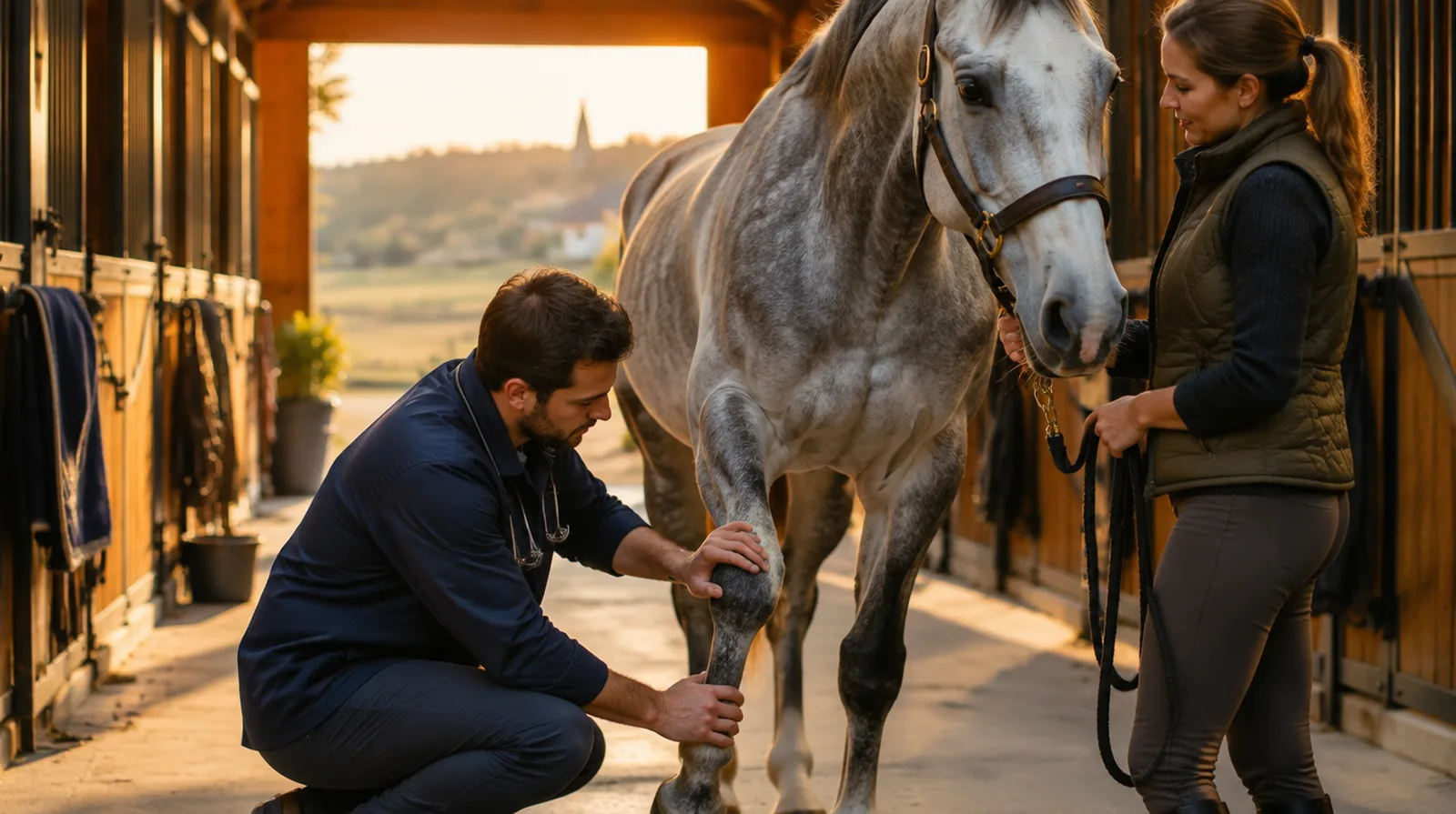
Premiums, limits and treatment costs from published plans, product sheets and guides, as of October 2026.
| Example | Typical range |
|---|---|
| Horse surgery insurance, usual range | about EUR 200 to 2,000 a year |
| Published plan, basic tier, up to EUR 1,500 per operation | from EUR 21.71 a month |
| Published plan, middle tier, colic unlimited | from EUR 58.05 a month |
| Published plan, top tier, unlimited | from EUR 103.14 a month |
| Colic surgery, operation only | about EUR 3,000 to 6,000 |
| Colic surgery with clinic stay and aftercare | about EUR 6,000 to 10,000 |
| Joint surgery, such as chip removal | about EUR 1,500 to 4,000 |
| Usual deductible | EUR 250 to 1,000 |
Guide figures as of October 2026 from publicly stated plans and cost information.
The savings calculation is our own rough estimate without interest.
Your premium depends on age, use, limit and deductible; we obtain the exact quote for you.
Worked example
The clinic bill comes to EUR 7,000. We compare the basic and middle tier of the published plan with simply saving the money yourself.
| Bill for colic surgery with clinic and aftercare | EUR 7,000 |
| Basic tier, about EUR 260 a year | pays at most EUR 1,500, you pay EUR 5,500 |
| Middle tier, about EUR 697 a year | colic without limit, you pay only the deductible and anything above the reimbursed fee rate |
| Saving EUR 58 a month, after three years | about EUR 2,090, you pay about EUR 4,910 |
| Saving EUR 58 a month, after ten years | about EUR 6,960, almost the whole bill |
The basic tier looks like protection but leaves you with most of a colic bill. The middle tier pays, yet costs almost as much as you could save yourself. If you would not build the reserve with discipline, or the surgery comes in the first years, insurance is the better choice.
Most owners buy horse surgery insurance for one scenario: a colic that does not respond to medication. The horse has to go to an equine clinic for abdominal surgery, often at night or at the weekend. Published figures put the operation itself at EUR 3,000 to 6,000 and the full bill with stay and aftercare at EUR 6,000 to 10,000.
German vets charge according to an official fee schedule, the Gebührenordnung für Tierärzte (GOT). In emergency service they may not bill below twice the base rate and can go up to four times. A plan that only reimburses the single or double rate leaves part of the bill with you, so ask for cover up to the fourfold rate, at least for emergencies.
Three things drive the price: the limit per operation or per year, the deductible (Selbstbeteiligung) and your horse's age. Limits range from EUR 2,500 per operation or EUR 7,500 a year to unlimited. One published plan pays at most EUR 1,500 per operation in its cheapest tier, colic surgery without limit in the middle tier and everything without limit in the top tier.
There are also colic-only policies (Kolik-OP-Versicherung). They pay only abdominal surgery for colic and are cheaper in return. One such plan reimburses up to twice the fee rate, up to four times in emergency service, with no limit per operation and aftercare for up to 14 days.
| Feature | Basic tier | Middle tier | Top tier |
|---|---|---|---|
| Monthly premium, published example | from about EUR 22 | from about EUR 58 | from about EUR 103 |
| Annual premium | from about EUR 260 | from about EUR 697 | from about EUR 1,238 |
| Limit per operation | up to EUR 1,500 | colic unlimited, other up to EUR 4,000 | unlimited |
| Waiting period colic | 5 days | 5 days | 5 days |
| Waiting period accident | 3 months | 3 months | none |
| Chip surgery in a joint | not covered | not covered | after 12 months |
| Aftercare and clinic stay | up to 15 days | up to 15 days | up to 15 days |
It pays the operation with diagnostics, anaesthesia, clinic stay and a short aftercare period, usually 10 to 15 days. Everything else is yours: lameness treated with injections and rest, sweet itch, laminitis without surgery, teeth, vaccinations. If the clinic examines the horse and then decides not to operate, some plans do not even pay for the examination.
Read the exclusions before you sign. Pre-existing conditions and findings from the pre-purchase vetting (Ankaufsuntersuchung) are usually excluded. Chip surgery, which removes loose fragments of cartilage or bone from a joint, is often not covered in cheap tiers. Transport to the clinic is excluded in many plans.
It is worth it if a five-figure bill would force a decision you do not want to make. That is the honest core: without insurance, your bank balance often decides whether a colic horse is operated on at 2 am. For young and middle-aged horses the premium is still moderate.
It is less worth it if you have EUR 10,000 set aside for the horse. Putting the middle-tier premium of about EUR 58 aside every month gives you almost EUR 7,000 after ten years, with no exclusions and no waiting period. The risk then sits in the early years before the reserve exists. For older horses premiums rise sharply, and some insurers stop accepting new contracts above a maximum age.
On a tight budget, a colic-only policy without a limit is often more useful than a surgery plan with a low limit. It covers the most common expensive emergency in full instead of many operations only in part.
Full health insurance for horses (Pferdekrankenversicherung), which also pays treatment without surgery, exists as well. It costs considerably more and mainly pays off for valuable sport horses that see the vet often.
Questions and answers
About EUR 200 to 2,000 a year. One published plan starts at around EUR 22 a month with a low limit; unlimited cover starts at around EUR 103 a month.
About EUR 3,000 to 6,000 for the operation, and often EUR 6,000 to 10,000 including clinic stay and aftercare.
Usually yes, up to three months for ordinary operations. Many plans shorten it to a few days for colic and drop it partly for accidents.
On a tight budget, often yes. It covers colic surgery only, but frequently without a limit and for less than a full surgery plan.
Often yes, but the premium rises clearly with age and some insurers stop taking new contracts above a maximum age. Ask before you apply.
Usually not. Terms and claim letters are in German, and the German wording counts in a claim. Have the limits and exclusions explained to you before you sign.
Surgery cover pays only operations with a short period before and after. Health insurance also pays treatment without surgery and costs accordingly more.
NAMMERT insurance broker
We compare insurers and come back to you, in English. Free; the insurer pays our fee.
Thank you, we have your request.
We will be in touch within one working day. If it is urgent: +49 3375 29 12 77.
All about this insurance: Pet health insurance
Is pet insurance worth it in Germany?
Surgery cover or full cover for your dog or cat?
Surgery-only cover (OP-Schutz) is cheap and pays only when your pet is operated on, but then …
What does the GOT mean for vet costs in Germany?
The GOT (Gebührenordnung für Tierärzte) is a federal regulation that sets a single rate for e …
Does pet health insurance in Germany have waiting periods?
Yes, and the differences are what matter. Illness usually has a general waiting period (Warte …
Does pet insurance get more expensive as my pet ages in Germany?
Yes, almost always: the premium rises as your pet ages. Many German policies use age bands (A …
NAMMERT Assekuradeur GmbH, broker licensed under section 34d(1) of the German Trade Regulation Act.
Broker register no. D-C08Q-TOSD4-37.
For boat and yacht insurance we act as underwriting agency, not as broker.
Statutory disclosure (German) · Updated
Was this useful?