Magazine / Magazine
Water in the boat at the berth: keep the hose that failed
After a flooding, the clean-up comes first and the argument later. Keep the burst hose, the clips and the invoices, and the surveyor has something to examine.
13 September 20267 min readNAMMERT Assekuradeur GmbH
There is one loss that runs the same way again and again. A sailing yacht or a motor boat sits on her berth over a quiet weekend with nobody aboard, and on Monday the marina calls: she is low in the water, hanging on her lines, or already resting on the bottom. No storm, no collision, no witness. Just water inside the hull and the question of how it got there.
For the claim, that question is everything. Hull cover that includes accidental damage responds when there was an event: a cooling water hose that bursts, a through-hull fitting that shears off. It normally does not respond when water has seeped in for months through a tired stuffing box or a weeping seacock. The line is not drawn between a lot of water and a little, but between sudden and gradual.
So the place to look in the wording is the wear and tear exclusion, and above all how far it reaches. Some wordings exclude only the worn or defective part itself and leave the damage that follows its failure inside the cover: the old hose is not replaced, the boat that fills through it is. Others exclude any loss arising from wear, which can take the sinking out as well. Next to it usually sit exclusions for lack of maintenance, rust and corrosion, and that is where the surveyor starts.
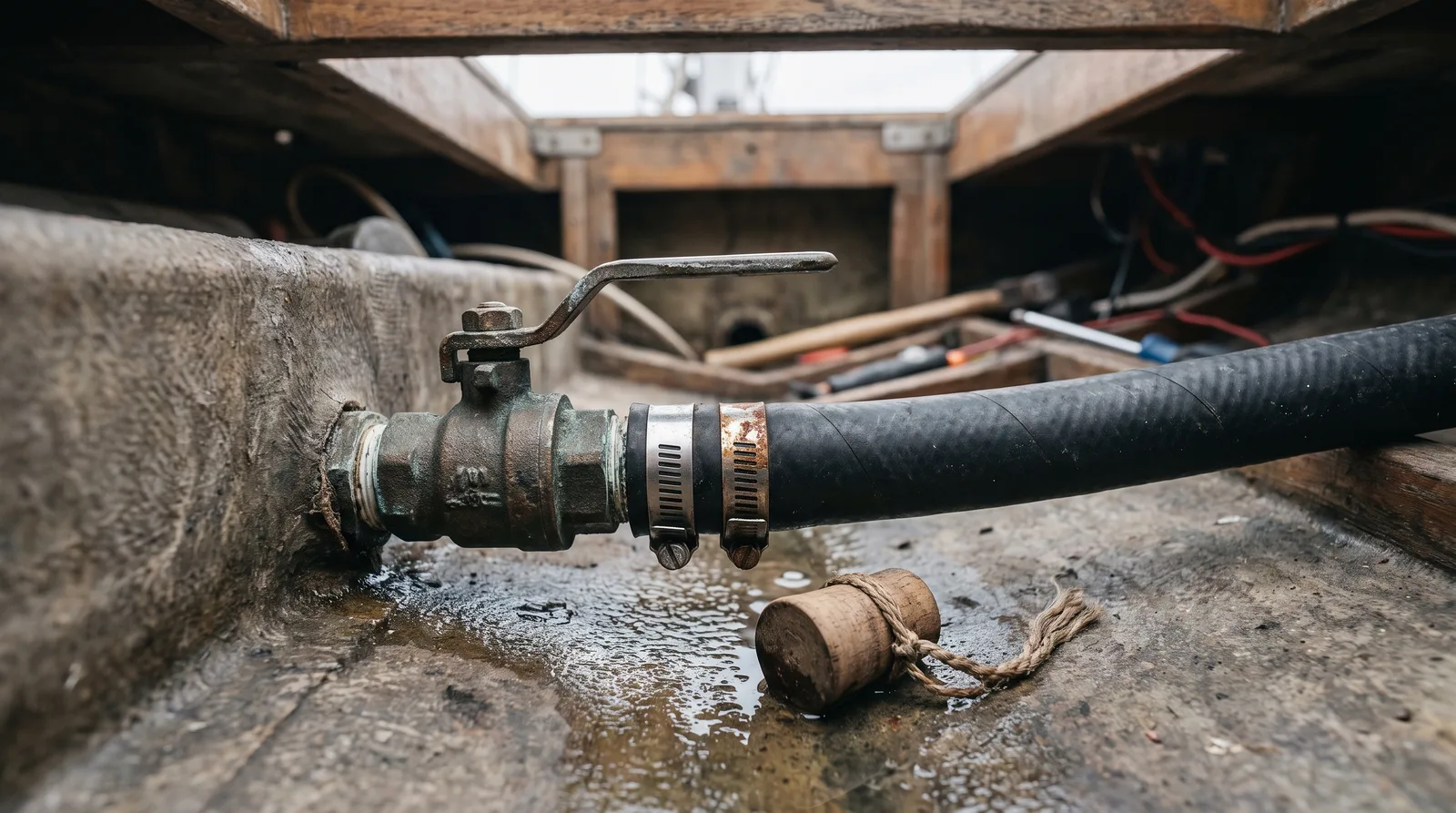
And that is where the claim is often lost before anyone has looked at it. The boat is raised and pumped, the bilge is washed out, the yard replaces the hose and bins the old one because it is obviously broken. With it goes the only piece of evidence. Whether the clip had rusted through, whether the hose had gone hard inside or had torn cleanly, nobody can establish afterwards. Most wordings give the insurer the right to inspect before repairs start, and the duty to allow that sits with the owner.
The second piece of evidence is paper. An invoice for replaced hoses, an entry in the maintenance log, a photograph from laying up that shows the seacocks: in a survey report this is what separates a sudden failure from neglect. Without any of it the owner is not automatically left without cover, but has to argue against the presumption that every old part carries with it. That weighs more heavily on classic boats and older cruising yachts, where hoses and seacocks reach the end of their life after many seasons.
Raising the boat is a bill of its own. Costs spent to prevent or reduce a covered loss are usually recoverable even if the attempt fails, although wordings put different ceilings on them. Where a harbour authority orders the wreck removed, check whether removal has its own limit and how high it is. And look up how the wording treats gross negligence, because a seacock left open when leaving the boat can be judged that way: some wordings reduce the settlement in proportion to the fault, others refuse it altogether.
Worth checking
Common questions
My boat sank at her berth. Is that a claim?
It depends on the cause, not the place. A sudden event such as a burst hose is usually treated differently from a leak that developed over a long time, which most wordings class as wear.
The yard has already thrown the old hose away. What now?
Then photographs, invoices and the yard's account have to carry the case. Say so openly, and ask the yard for a short written description of how the part looked when it came out.
What should I look for in the wording?
The wear and tear exclusion and whether it also excludes the damage that results, the limit for salvage and wreck removal, and how gross negligence is handled.
Related