01
Basic
A short list centred on cancer, heart attack and stroke, strict definitions, no partial benefits. Cheap, but it only pays for the most severe forms of the most common diagnoses.
Personal
Personal liability Contents insurance Buildings insurance Natural hazard cover Solar panel insurance Self-build insurance Car insurance Bicycle and e-bike Travel insurance Drone insurance Dog liability Pet health insurance Legal expenses insurance Accident insurance Occupational disability Term life insurance Funeral insurance Private pension Private health insurance Supplementary health Dental insurance Long-term care Property owner liability Oil tank liability Hunting liability Horse liability insurance Glass insurance Gadget insurance Motorcycle insurance Motorhome insurance Travel medical Horse surgery insurance Basic abilities Child disability Classic car insurance E-scooter insurance Critical illness insurance Sick pay Rent default Instrument insurance Art and valuablesBusiness
Business liability Professional indemnity D&O insurance Business legal expenses Business contents Commercial buildings Business interruption Electronic equipment Machinery breakdown Contractors all risks Cargo insurance Fleet insurance Club and association liability Event liability Surety bonds Cyber insurance Trade credit insurance Company pension (bAV) Company health insurance Group accident insurance By type of businessGuides
Which insurance do I need? Who pays for the damage? Insurance you may not need Cancellation deadlines Insurance questions Compare the wordings of all tariffsInsurers
German insurers A to Z Austrian insurers Spanish insurers Complaints rankingContact
+49 3375 29 12 77 Contact Customer loginLanguage
Deutsch Österreich Español Boats and yachtsHome / Insurance broker / Personal
Critical illness insurance, known in Germany as Schwere-Krankheiten-Versicherung or dread disease cover, pays an agreed sum in one go once a doctor diagnoses one of the conditions listed in the policy, such as cancer, heart attack or stroke. Whether you can keep working does not matter. The money buys breathing space for treatment, household and lost income, but it is not a monthly pension.
The question almost everyone asks first
Usually it is an addition rather than a must. Occupational disability insurance (Berufsunfähigkeitsversicherung, BU) pays a monthly pension if you can no longer do at least half of your job, and the insurer often takes months to decide. Critical illness cover pays at diagnosis, even if you are back at work after treatment. It makes most sense for the self-employed, high earners with large fixed costs and anyone who cannot get BU.
Health insurance in Germany, statutory or private, pays for the treatment itself. Your income is a different matter. Employers continue full pay for six weeks, then the statutory health fund pays sickness benefit (Krankengeld) of 70 percent of gross pay, capped at 90 percent of net pay, for at most 78 weeks within three years for the same illness. Freelancers without daily sickness cover often receive nothing at all.
On top of that come costs no insurer of the treatment pays: co-payments, travel to therapy, help at home, childcare, adapting your flat, perhaps unpaid leave for your partner. A lump sum you can spend as you see fit is designed for exactly that.
The three products ask completely different questions. BU asks whether you are expected to be unable to do at least half of your last job for six months or more. Basic abilities insurance (Grundfähigkeitsversicherung) asks whether you have lost a defined ability such as walking or seeing. Critical illness insurance only asks whether a diagnosis on its list, meeting the stated criteria, has been made.
That creates gaps in both directions. Mental illness and back problems are among the most common reasons people stop working, yet they almost never appear on a critical illness list. On the other hand, a treatable breast cancer triggers the full critical illness payout even if you are back at work within a year and BU would never pay. If you can afford only one policy, BU usually comes first because it protects your income until retirement.
Not every cancer counts. German policies usually require a malignant, invasive tumour, while early stages such as carcinoma in situ and some skin cancers are excluded or covered only with a partial payment. A heart attack has to show typical findings such as ECG changes and lab values, and a stroke usually has to leave permanent neurological damage. A brief circulatory episode that clears without lasting effects normally does not qualify.
Two time limits apply as well. The waiting period at the start stops people taking out cover when they already suspect something. The survival period means you must still be alive a set time after diagnosis, so the policy does not double as life cover. If your family needs money on your death, add term life insurance (Risikolebensversicherung).
For private individuals the lump sum is generally tax free in Germany, as it compensates for an illness rather than replacing taxable income. The premiums have little tax effect.
The application includes detailed health questions, often also on smoking and family history. If you leave something out, the insurer may withdraw from the contract after a diagnosis. With a medical history, an anonymous pre-application through a broker is the safe route.
What is covered
What is not covered
Who needs it
Who does not need it
Wheel of misfortune
Six things that really happen. The wheel picks yours and shows who pays.
Cost:
The premium depends mainly on age, sum insured and whether you smoke, because the risk of cancer and heart disease rises markedly with every year of age. Your occupation matters much less than with BU. Starting young locks in a lower premium for the whole term.
What drives the premium
We do not quote a premium range, because age and sum shift the price too much. Your premium is only fixed in the quote.
01
Basic
A short list centred on cancer, heart attack and stroke, strict definitions, no partial benefits. Cheap, but it only pays for the most severe forms of the most common diagnoses.
02
Standard
A list of roughly 40 to 50 conditions, a short survival period and the option to increase cover on marriage, birth of a child or buying a home. The sensible choice for most adults.
03
Premium
A long list of 60 or more conditions, partial payments for early stages and smaller procedures, a premium guaranteed for the whole term and cover well into later life.
| Criterion | Minimum standard | Strong policy | Why it matters |
|---|---|---|---|
| Scope of the list | cancer, heart attack, stroke and a few others | 60 or more clearly defined conditions and procedures | The number alone says little, but every missing condition is a claim that will not be paid. |
| Cancer definition | invasive malignant tumours only | partial payment for early stages and carcinoma in situ as well | Many tumours are found early today and then just miss a strict definition. |
| Heart and blood vessels | heart attack only with all findings, bypass only after open surgery | payment for angioplasty of a coronary artery without major surgery | Narrowed arteries are now often treated by catheter, and older wordings then pay nothing. |
| Waiting period | six months | three months | A diagnosis during the waiting period is not covered at all. |
| Survival period | 28 days | 14 days or less | The shorter the period, the sooner the money arrives when you need it. |
| Premium guarantee | net premium that may rise to the gross premium | premium guaranteed for the whole term | A low starting premium is little help if it may rise after a few years. |
| Term | cover ends at 60 or 65 | term well beyond retirement age | The risk of the covered conditions rises sharply after 60. |
| Increase option | none | higher cover without new health questions on marriage, birth, home purchase or going self-employed | When you need more cover later, you may no longer be healthy enough for a new application. |
Only a handful of German life insurers offer critical illness cover. A large share of the market is also served by Irish companies such as Canada Life, which work in Germany through a branch and are therefore not on the German register. The list is a market overview and says nothing about whom we work with.
| Insurer | Background |
|---|---|
| Nürnberger | standalone dread disease policy, tied agents and brokers |
| Gothaer | Perikon policy for serious illness, agents and brokers |
| die Bayerische | Premium Protect policy, agents and brokers |
| Swiss Life | serious illness option within its Vitalschutz policy, mainly through brokers |
| Zurich | distributes the Krankheits-Schutzbrief, underwritten by the Irish Zurich Life Assurance plc |
Compare the wordings of all tariffs Critical illness insurance 5 tariffs from 4 providers, as of 24 October 2026
From the BaFin register
77
77 insurers supervised by BaFin, the German regulator, are licensed for this class of insurance.
(Lebensversicherer)
Source: BaFin company database, 18 September 2026; EU insurers without a German office excluded.
Standalone critical illness policy
A separate contract with a fixed sum and term. Pays once and then usually ends.
Combined with term life insurance
Pays on serious illness or on death, whichever comes first. Useful for families with a mortgage.
Module in a basic abilities or income protection policy
Adds a lump sum on diagnosis to the monthly benefit for loss of an ability. One contract, several triggers.
Serious illness benefit within BU
Some BU policies pay for a limited time after cancer, heart attack or stroke, before occupational disability has been assessed. Not a substitute for a separate critical illness policy.
Daily sickness benefit (Krankentagegeld)
Pays a daily amount while you are unable to work, regardless of diagnosis. The foundation for the self-employed, with critical illness cover on top.
Myth or truth
Five things people say about this insurance. Guess first, then see the answer.
Critical illness cover pays even if I make a full recovery.
This is true.
True. The diagnosis triggers the payment, not a lasting impairment. What happens with the illness later does not change the payout.
With this policy I no longer need BU.
This is false.
False. It pays once and only for diagnoses on its list. Back problems and mental illness, the most common reasons for occupational disability, are mostly excluded, and a lump sum does not replace income until retirement.
Any cancer diagnosis leads to a payout.
This is false.
False. Policies usually require an invasive malignant tumour. Early stages and some skin cancers are often excluded or covered only with a partial amount.
If you die shortly after diagnosis, the policy may pay nothing.
This is true.
True. Many policies require a survival period of 14 or 28 days. Term life insurance is there for the death case, and some policies combine both.
Smokers pay the same premium as non-smokers.
This is false.
False. Smoking raises the risk of cancer, heart attack and stroke considerably, so insurers charge smokers noticeably more. Concealing it on the application puts the payout at risk.
Questions and answers
Work out how long you might be off during treatment and rehabilitation and which fixed costs keep
running in that time.
Sums of around 50,000 to 100,000 euros are common, but your own calculation is what counts.
Yes.
Only the diagnosis as defined in the policy matters.
Whether you work, are on sick leave or retired makes no difference.
Basic abilities insurance pays a monthly benefit if you permanently lose an ability such as
walking or seeing.
Critical illness insurance pays a lump sum at diagnosis, even if you later recover fully.
As a rule, no.
Depression, anxiety disorders and burnout are almost never on the list.
BU is the cover designed for that common cause of long absence.
With most policies, the contract ends once the full sum has been paid,
so a second serious illness is no longer covered.
After a partial payment the policy usually continues with a reduced sum.
For private individuals the lump sum is generally tax free.
It can be different if a company takes out the policy for a partner and deducts the premiums as a
business expense.
That depends on the condition.
People who have had cancer or a heart attack are often declined or offered an exclusion.
With milder findings, an anonymous pre-application to several insurers is worth doing before any
formal application is recorded.
Cover usually applies worldwide,
but the diagnosis must come from a recognised specialist and be documented according to the policy
definitions.
If you plan to leave Germany for good, check the conditions on change of residence beforehand.
Yes, if you live in Germany and are registered here.
Application forms and policy terms are usually in German,
and the German version is binding, so we go through the health questions with you in English.
NAMMERT insurance broker
We obtain quotes and come back with a comparison, free of charge.
You can write in English.
Thank you, we have your request.
We will be in touch within one working day. If it is urgent: +49 3375 29 12 77.

Do I need occupational disability insurance if I have just moved to Germany?
Is basic abilities insurance a good substitute for occupational disability insurance?

How much term life cover do I need in Germany?
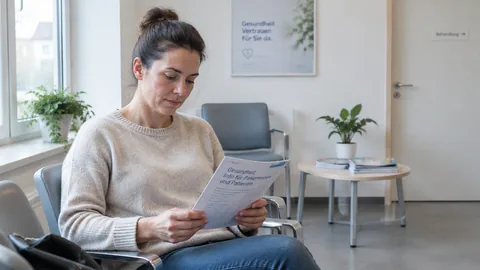
What does German public health insurance not cover?
Ten life situations, sorted honestly
Find your case, see which policy pays
Who it suits and what to check
Boat or yacht? NAMMERT has its own cover concepts for boats, arranged by the same broker.
Boat insuranceUpdated