All about this insurance: Personal liability
Do I really need personal liability insurance in Germany?
Insurance broker / Insurance questions / Personal liability
In short
Usually yes, if your policy includes damage to rented property (Mietsachschäden): floors, walls, doors, bathroom fittings or a fitted kitchen are then paid by your personal liability insurance. Normal wear and tear, window glass and usually heating or electrical appliances are not. A good policy costs singles about EUR 40 to 120 a year.
Guide figures for personal liability insurance that includes damage to rented property, without a deductible.
| Example | Typical range |
|---|---|
| Single, rented flat, basic tariff with rented property cover | about EUR 40 to 120 a year |
| Couple or family, rented flat | about EUR 60 to 180 a year |
| Tariff with a deductible of up to EUR 250 | noticeably cheaper, you pay EUR 0 to 250 per claim |
Guide values as of September 2026 from publicly quoted premium ranges. How much the rented property cover alone adds to the premium is not shown separately; in our experience the difference is small (guide value from our quoting practice).
Worked example
Moving the wardrobe leaves deep scratches over two square metres of parquet. The landlord wants the whole room sanded and sealed.
| Landlord's claim | EUR 1,400 |
| Deduction for the age of the floor (new for old) | about EUR 400 |
| Justified damage | about EUR 1,000 |
| Payment by liability insurance with rented property cover | about EUR 1,000 |
You pay nothing or only your deductible. Without a suitable tariff the amount would come out of your deposit.
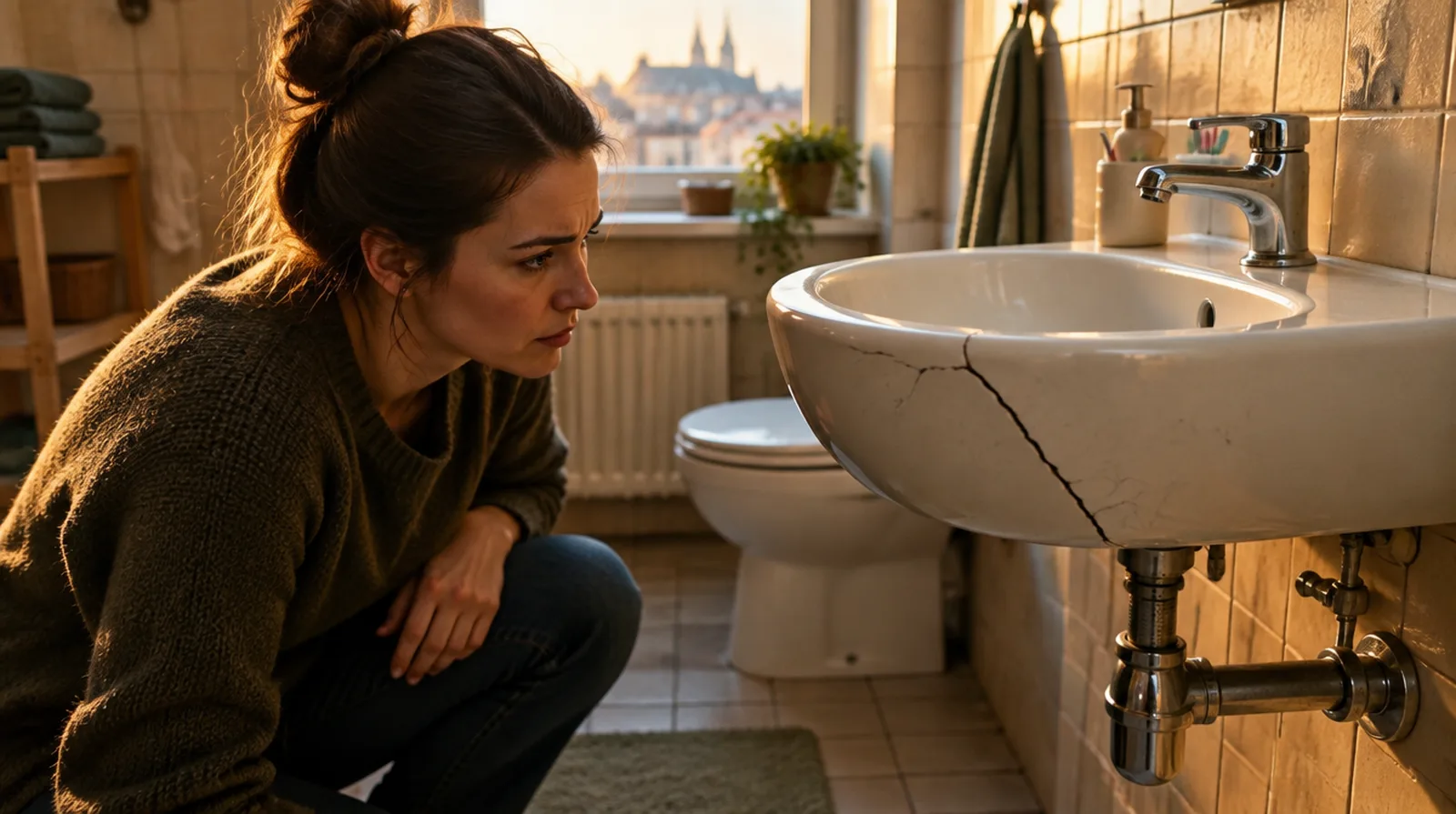
This means damage to the flat you rent: the iron that fell onto the parquet, the crack in the washbasin, the burn mark on the worktop of the fitted kitchen. Many older contracts excluded such damage, because it concerns things you use yourself.
Today most tariffs include damage to rented living space. What matters is that the policy states a sufficient limit and not just a small amount for this part.
| Damage | Paid by good tariffs? |
|---|---|
| Scratches or burn mark on the parquet | yes |
| Cracked washbasin or toilet | yes |
| Damaged door or window frame | yes |
| Broken window pane | usually no, that is a matter for glass insurance |
| Broken boiler or heating | usually no, or only in extended tariffs |
| Faded walls, worn carpet | no, that is normal wear and tear |
In the UK and US, renters often rely on the deposit or on renters insurance that bundles belongings and liability. In Germany damage to the flat is a matter for your personal liability insurance (Privathaftpflichtversicherung), while your own belongings need separate contents insurance.
German landlords usually take a deposit (Kaution) of up to three months' basic rent and inspect the flat carefully when you move out. Many flats are let unfurnished, sometimes even without a kitchen, so a fitted kitchen you rent with the flat is a valuable item. Insist on a handover report (Übergabeprotokoll) with photos when you move in. Some landlords ask for proof of liability insurance before signing.
Under § 538 BGB a tenant is not liable for changes caused by normal use of the flat. A usual number of wall plug holes, slightly worn floors or sun marks on the wall do not have to be paid for at all, which is why no insurance pays for them either.
Disputes often arise when landlords keep back the deposit after you move out. Then it is worth checking first whether there is any damage at all. Your liability insurer checks this too and rejects unjustified claims.
Often excluded are glass, the landlord's heating, hot water and electrical appliances, and mould that has built up over a long time. Movable items belonging to the landlord, such as a washing machine rented with the flat, are often not treated as rented property either.
If you live in a furnished flat or rent a fully equipped holiday flat, check whether movable furnishings are covered too.
If you live in your own house or flat, this part of the cover plays no role in daily life. It becomes important again when you rent holiday flats, hotel rooms or a second home.
Questions and answers
No. A usual number of holes counts as normal use, and you generally do not have to pay for them. If you leave many or large holes, fill them neatly yourself.
Usually not. Glass is almost always excluded from personal liability insurance; that is what glass insurance is for. Landlords often have one for the building.
With good tariffs yes, also abroad and in hotel rooms. Check whether the furnishings of the holiday flat are included.
Rarely. Mould develops over time and often falls under an exclusion. Whether you are liable at all depends on whether poor ventilation or a building defect is the cause.
Damage to a neighbour's flat is a normal liability claim, not damage to rented property. Every personal liability policy pays it if you caused it.
Clauses on cosmetic repairs (Schönheitsreparaturen) and the handover. Insurance does not pay for repainting you agreed to do, only for real damage.
NAMMERT insurance broker
We compare several insurers and come back with a proposal. Free for you; the insurer pays our fee. You can write in English.
Thank you, we have your request.
We will be in touch within one working day. If it is urgent: +49 3375 29 12 77.
All about this insurance: Personal liability
Do I really need personal liability insurance in Germany?
What does personal liability insurance cover in Germany?
German personal liability insurance (Privathaftpflichtversicherung) pays when you are at fault for injury, property da …
When does personal liability insurance not pay in Germany?
Personal liability insurance (Privathaftpflicht) does not pay for damage caused on purpose, damage to your own things, …
Does personal liability insurance pay for lost keys in Germany?
Yes, if your tariff includes the loss of other people's keys, for example to your rented flat, a club house or often y …
How much does personal liability insurance cost in Germany?
Personal liability insurance (Privathaftpflichtversicherung) usually costs singles EUR 40 to 120 a year and families a …
NAMMERT Assekuradeur GmbH, insurance broker licensed under section 34d(1) of the German Trade Regulation Act, broker register no. D-C08Q-TOSD4-37. For boat and yacht insurance we act as underwriting agency, not as broker. Statutory disclosure (German) · Updated