Magazine / Magazine
Diesel in the marina: the two exceptions in a water pollution clause
Autumn means refuelling, pumping the bilge and changing the oil. A rainbow sheen is enough for the marina to lay a boom. Who pays usually comes down to one clause with two exceptions.
26 September 20267 min readNAMMERT Assekuradeur GmbH
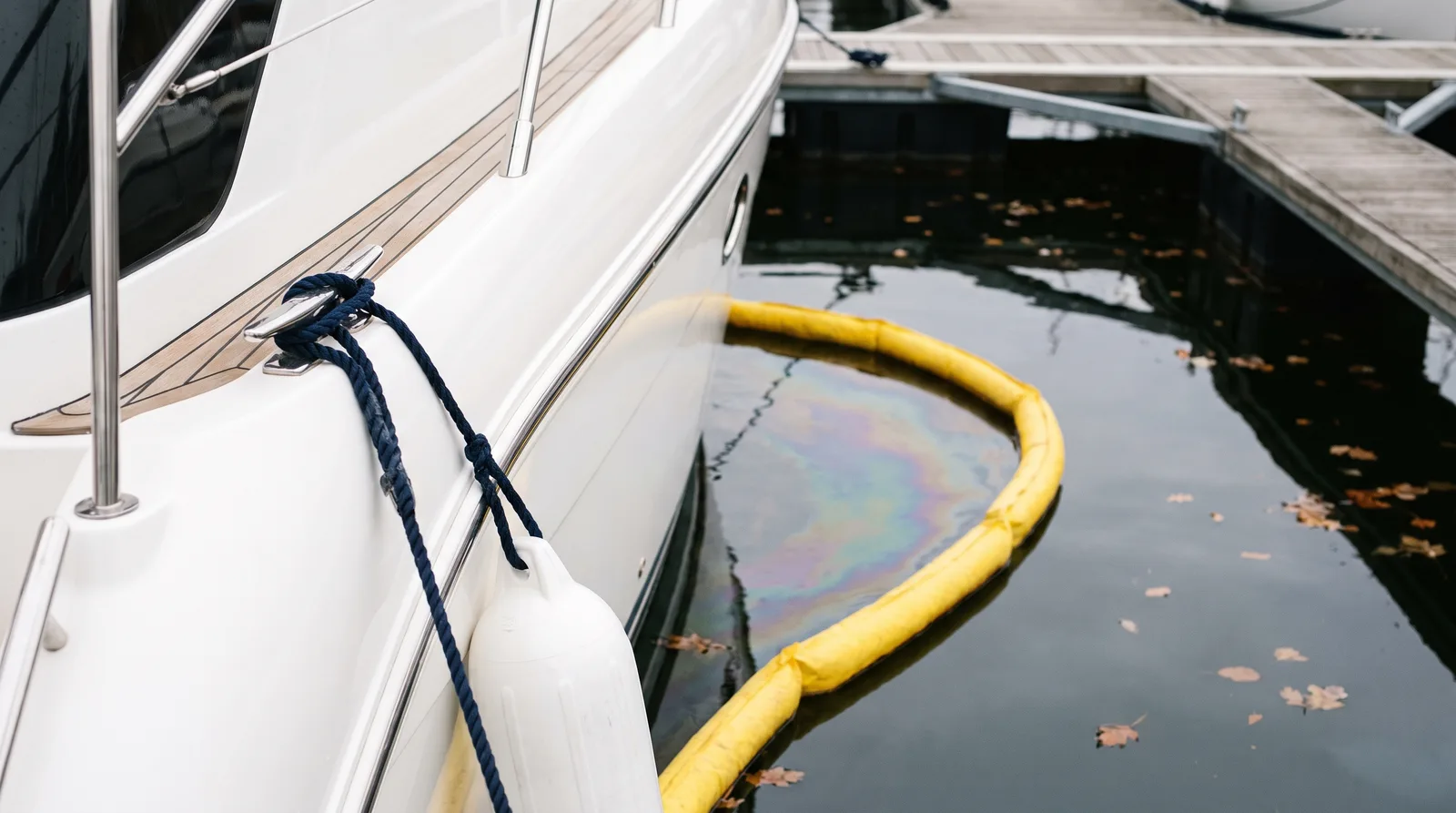
Every harbour master knows the scene. Late September, the boat is being prepared for winter storage, and next to the hull the water shows a rainbow sheen. Diesel came out of the tank vent while filling up, the automatic bilge pump pushed oily water overboard, or something went wrong during an oil change on the pontoon. The marina lays a boom and spreads absorbent, sometimes the water police come by, and a few weeks later an invoice arrives. This mostly concerns motor boats, motor yachts, trawlers and houseboats with inboard diesels, but just as much sailing yachts with an auxiliary engine and trailer boats whose outboard is refuelled at the dock.
The legal position is uncomfortable for the owner. In Germany, section 89 of the Federal Water Act makes anyone who introduces substances into a body of water, or otherwise affects it so that the water quality deteriorates, liable for the resulting damage. The provision does not ask about fault. Other European countries reach similar results under their own law, and the EU Environmental Liability Directive 2004/35/EC adds a public law duty to remediate. A moment of inattention at the fuel nozzle can therefore be enough. The real question is what a boat liability wording does with it.
Many German boat liability wordings contain a water pollution clause built the same way. It includes the owner's legal liability for changes to the physical, chemical or biological condition of a body of water, including groundwater, and treats pure financial loss like property damage. Then come two exceptions. The first is damage caused by discharging or introducing harmful substances into water, or by any other deliberate act affecting it, and in the wording we studied this applies expressly even where the discharge was necessary to save other interests. The second is damage from operational dripping or running out of oil or other fluids from tank caps, fuelling equipment or the vessel's machinery.
In practice this means that diesel escaping from the filler or the vent while refuelling falls under the second exception, and so does oil seeping from the engine into the bilge over weeks. Pumping oily bilge water overboard on purpose falls under the first, and the added sentence makes clear that it stays excluded even if it was done to keep the boat afloat. A further clause usually removes cover altogether for anyone who knowingly breaches water protection rules. What such a clause is really for is the unexpected: a tank torn open in a collision, or a boat that sinks on its mooring and loses its diesel. Whether a fuel hose that bursts without warning still counts as operational is not answered by the words themselves, and it is worth asking the insurer before it happens.
Alongside liability towards third parties there is a second level that many owners overlook: the public law duty to remediate environmental damage when an authority orders it. That duty is owed to the authority, not to a neighbour, and it is often dealt with in a separate clause with its own limit. Look for three things there. Does the clause require the release to be sudden, accidental and unintended? Is the limit per event and at the same time the annual aggregate? And does it extend beyond the home country to incidents elsewhere in the area of the EU directive, which matters for anyone who cruises in Croatia, Italy or Spain?
The short version for the contract: liability cover is there for accidents, not for running the boat. What regularly happens while refuelling, pumping and changing oil stays with the owner under wordings of this kind. Prevention is a matter of habits: absorbent pads on board, an overflow bottle on the tank vent, a clean bilge before the boat is lifted out, and oily bilge water taken to the marina's reception point ashore rather than into the basin. If the water starts to shimmer anyway, tell the harbour master first and leave the washing up liquid alone: it only spreads the oil and adds a second substance to the water.
Worth checking
Common questions
Diesel ran out of the vent into the marina while I was refuelling. Will liability insurance pay for the boom?
Often not. Many water pollution clauses exclude operational running out of fluids from tank caps and fuelling equipment in so many words. Check whether your wording contains that exception before you assume the cost is covered.
I had to pump the bilge to keep the boat afloat and some oil went with it. Does that change anything?
Under the wording we studied it does not: deliberate discharge is excluded even where it was necessary to protect other interests. Pumping was still the right decision, but the oil in the water is a separate question.
Does environmental remediation abroad fall under the same clause?
Usually it sits in a separate clause with its own limit. Look for whether it applies throughout the area of the EU Environmental Liability Directive or only in the country where the policy was issued.
Related