All about this insurance: Car insurance
Can I use my no-claims bonus from abroad in Germany?
Insurance broker / Insurance questions / Car insurance
In short
Usually you receive the replacement value minus the salvage value: the price of a comparable used car minus what the wreck still fetches. If someone else caused the accident, their liability insurer pays. If you caused it, only your comprehensive cover (Vollkasko) pays, minus your deductible. You only get the new price if your policy includes new-price compensation.
Examples from published calculations and policy terms, 2026.
| Example | Typical range |
|---|---|
| Comprehensive cover, replacement value EUR 8,300, salvage value EUR 2,100, deductible EUR 300 | about EUR 5,900 paid out |
| New car for EUR 38,000, total loss after 8 months, with new-price cover | about EUR 38,000 instead of about EUR 29,000 |
| Other driver at fault, replacement value EUR 10,000, you want to repair | repairs up to about EUR 13,000 can be claimed |
| New-price period in policies | usually 6 to 24 months, some 36 months |
Example figures from publicly quoted calculations and terms, as of September 2026. The extra premium for new-price cover is a guide value from our quoting practice and is often small. What you receive depends on the assessment and your policy terms.
Worked example
How comprehensive cover calculates when repairs would cost more than the car is worth.
| Replacement value per assessment | EUR 8,300 |
| Salvage value of the wreck | minus EUR 2,100 |
| Comprehensive deductible | minus EUR 300 |
| Proceeds from selling the wreck | plus EUR 2,100 |
The insurer pays EUR 5,900; with the sale of the wreck you have EUR 8,000 for your next car.
If another driver caused the crash, their liability insurance pays for your car, usually plus the assessor, towing and loss of use or a rental car. No deductible applies.
If you caused it, only your comprehensive cover helps. Partial cover (Teilkasko) pays for a total loss only for specific causes such as fire, theft, storm, hail or hitting a wild animal. With liability only and your own fault, you get nothing for your car.
| Situation | Who pays | Roughly what |
|---|---|---|
| Other driver fully at fault | their liability insurer | replacement minus salvage value plus extra costs |
| Your fault, comprehensive cover | your insurer | replacement minus salvage value minus deductible |
| Hail, fire, theft, wild animal | your partial cover | as above, depending on terms |
| Your fault, liability only | nobody | nothing for your own car |
| New car with new-price cover | your comprehensive cover | the new price within the agreed period |
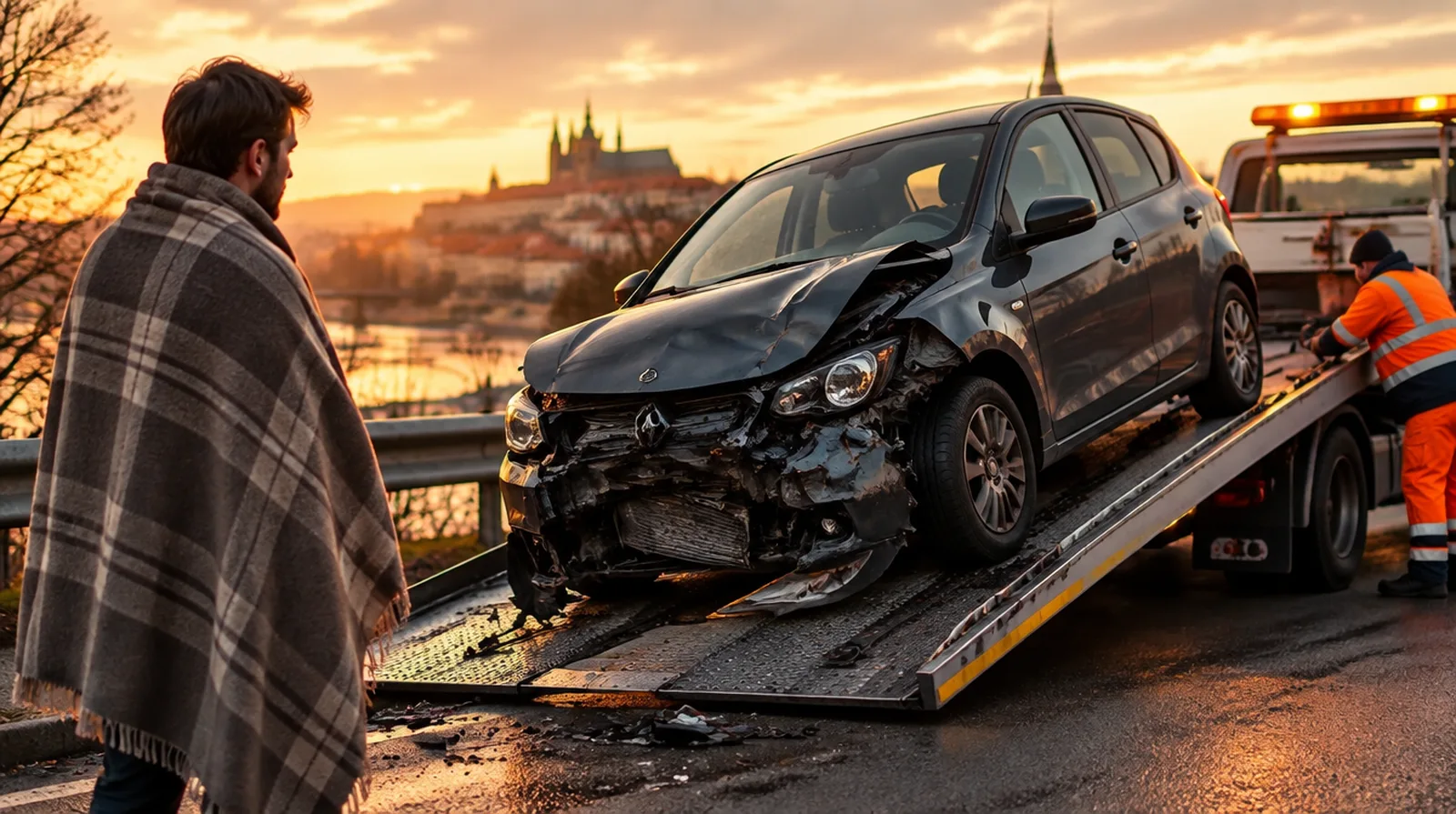
An assessor (Gutachter) estimates the repair cost, the replacement value (Wiederbeschaffungswert), meaning the price of a comparable used car, and the salvage value (Restwert) of the damaged car. If repairs would cost more than the replacement value, the car counts as an economic total loss.
You are paid the difference between replacement and salvage value. The wreck stays yours and you sell it, often to a buyer the insurer names. Check the salvage offer before selling: if you sell for much less, the gap is your loss.
If you want to keep your car and someone else is at fault, you may generally have it repaired for up to about 130 percent of the replacement value. The repair must be done properly according to the assessment and you must keep driving the car. A makeshift fix does not count.
Your own comprehensive cover has no such rule. It stops at replacement value minus salvage value, even if you repair.
With new-price compensation (Neupreisentschädigung) your comprehensive cover pays the new price instead of the used value for a period after first registration, usually 6 to 24 months. Many policies require you to be the first owner and also treat repair costs from about 80 percent of the new price as a total loss.
With a lease or loan, the amount you still owe is often higher than the replacement value. Only GAP cover pays that gap. Without it you pay the difference yourself, even though the car is gone.
Claims are handled in German, and assessment reports and letters from the other insurer will be in German too. You may appoint your own independent assessor if the other side is at fault, and their liability insurer pays for it.
A total loss you caused under comprehensive cover moves you down in the no-claims class (Schadenfreiheitsklasse), which raises your premium for years. Losses under partial cover, like hail or a wild animal, do not.
Questions and answers
Only if your comprehensive cover includes new-price compensation and the loss happens within the period. Otherwise you get the used value.
No. The wreck is yours. You can sell or repair it, but the salvage value is deducted from the payment.
Under your own cover, yes. If the other driver's liability insurer pays, there is no deductible.
Nobody pays for your own car. Liability only covers damage to others.
Only if you actually pay it, for example when buying a replacement car from a dealer or on a repair invoice.
NAMMERT insurance broker
We compare several insurers and come back with a proposal. Free for you; the insurer pays our fee. You can write in English.
Thank you, we have your request.
We will be in touch within one working day. If it is urgent: +49 3375 29 12 77.
All about this insurance: Car insurance
Can I use my no-claims bonus from abroad in Germany?
What is GAP insurance for a leased car in Germany?
GAP cover pays the difference when your leased car is written off or stolen: comprehensive cover (Vollkasko) pays the …
When is comprehensive car insurance worth it in Germany?
Comprehensive cover (Vollkasko) is usually worth it for new, financed, leased and expensive cars, roughly in their fir …
What should I do after a car accident in Germany?
Hazard lights on, put on the high visibility vest, set up the warning triangle, help anyone injured and call 112 if so …
What is the difference between Teilkasko and Vollkasko?
Teilkasko (partial cover) pays for damage you did not cause yourself: theft, storm, hail, fire, broken glass and colli …
NAMMERT Assekuradeur GmbH, insurance broker licensed under section 34d(1) of the German Trade Regulation Act, broker register no. D-C08Q-TOSD4-37. For boat and yacht insurance we act as underwriting agency, not as broker. Statutory disclosure (German) · Updated
Was this useful?