Magazine / Magazine
Gross negligence in hull insurance: the clause that decides how much is paid
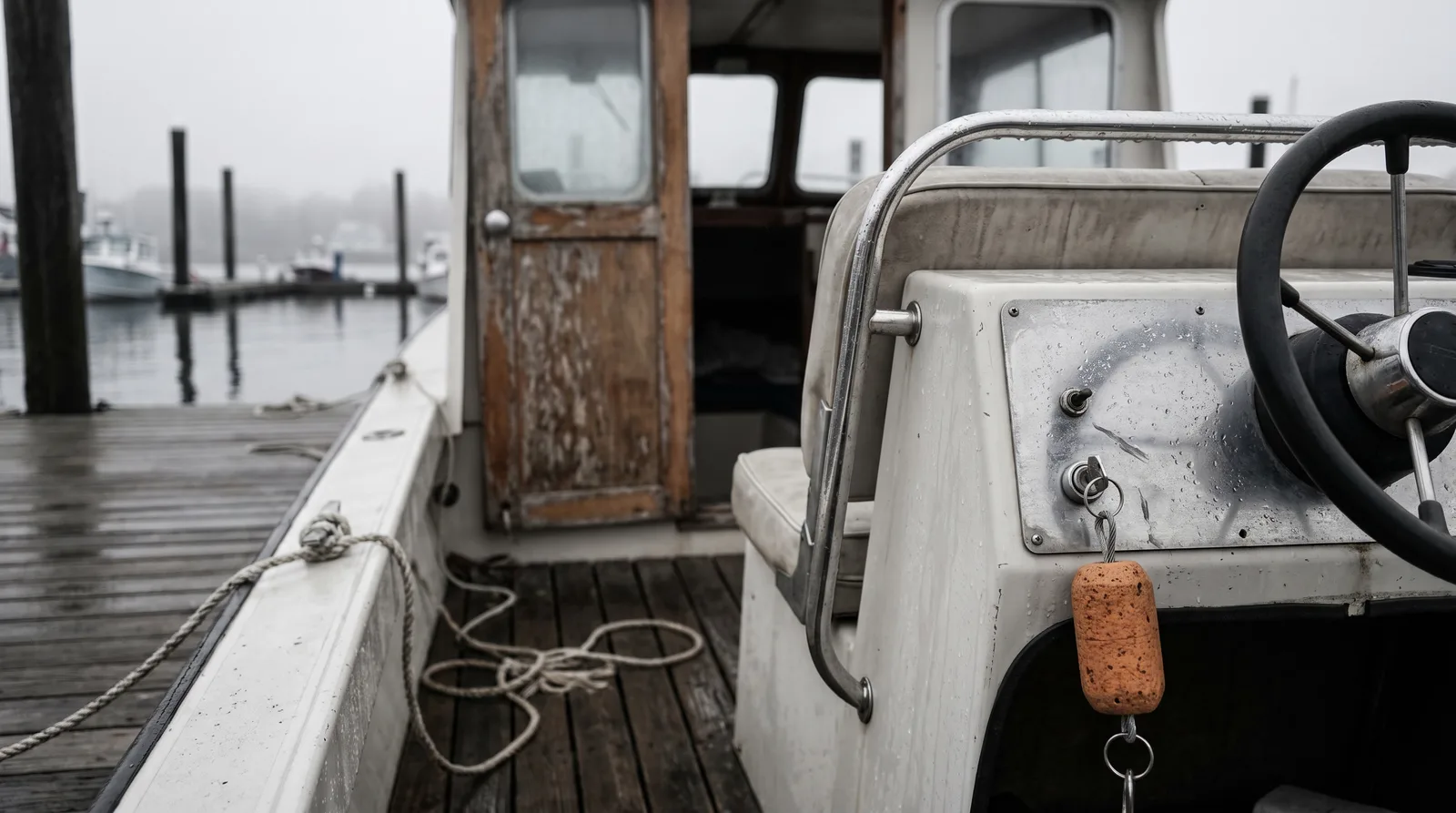
A seacock left open, a key left in the ignition, a trip out despite a gale warning: whether the payout is cut then depends on one paragraph of the wording, and on whether it contains a waiver.
22 September 20267 min readNAMMERT Assekuradeur GmbH
In claims handling the question almost always comes after the loss, and it comes quietly: was that bad luck, or was it grossly negligent? The seacock on a sailing yacht that stayed open after recommissioning. The motor boat that went out despite a gale warning. The line round the propeller, with the owner motoring on to the marina while the shaft shook. The key left in the ignition overnight at the pontoon. In every one of these cases the settlement turns on a single paragraph of the hull wording, and different wordings write it very differently.
Under German insurance law, which governs many policies written for boats berthed in Germany, the starting point is section 81 of the Insurance Contract Act (VVG). An insured who causes the loss intentionally receives nothing. One who causes it through gross negligence does not automatically lose everything; the insurer may reduce the payment in proportion to the degree of fault. Gross negligence is usually described as disregarding the care that is required to an unusually high degree, ignoring what would have been obvious to anyone. There is no fixed list of such cases in the law, and no fixed percentage either. Each claim is judged on its facts, which is why the wording around this rule matters so much.
One detail in these clauses is easy to overlook: whose fault counts. Some wordings name it expressly, the policyholder, the skipper at the helm or the people on board. If a friend borrows the yacht and runs onto a shoal at dusk without a chart, their conduct can be the one that decides the claim. The same goes for a guest who opens a valve when mooring and forgets it. A hull policy of that kind does not only ask what the owner did, it asks what was done aboard. Duties after a loss, such as prompt notice, are often extended in the same way to anyone the owner lets use the boat.
The real difference between contracts lies in whether they waive the reduction, and up to what limit. Some wordings stop at the proportional reduction and say nothing more. Others state that no reduction for gross negligence will be made up to a loss amount of a stated share of the sum insured, and a quarter or a half are shares found in the German market. A worked example shows the effect: on a sailing yacht insured for 80,000 euros, a waiver up to 25 percent of the sum insured protects losses up to 20,000 euros, one up to 50 percent protects losses up to 40,000 euros. Above that limit the reduction usually applies again.
The exceptions to such a waiver are the part to read most carefully. Waivers often do not apply where the cause of the loss is theft, drug use or alcohol. A key left in the ignition overnight can therefore put a stolen boat back under the full reduction rule, whatever the waiver says about other losses. The same applies to a skipper who leaves the berth after the club party and hits the pontoon. Separate from all of this is an exclusion found in many wordings that does not reduce at all: loss caused by someone steering the boat without the licence required for that boat or those waters is simply not paid.
Two boundaries complete the picture. A duty breached after the loss, such as late notice or repairs carried out before the insurer could inspect, usually falls under a separate clause on obligations, not under the rule on causing the loss. Under German law the insurer may then only reduce for gross negligence if it warned the policyholder of that consequence in text form beforehand, and not where the breach made no difference to the loss or to establishing it. Liability cover works differently again: third party liability wordings for boats often exclude only claims that were caused intentionally, so a victim at the next berth is compensated even if the mistake was a gross one.
What does this mean for an owner of a sailing yacht, motor boat, catamaran or trailer boat? The waiver is the sentence that makes the biggest difference after an expensive mistake, because nobody knows in advance whether a mistake will one day be judged gross. When you read your contract, find the paragraph on causing the insured event and check three things: whether a waiver exists, how far it reaches, and which exceptions it names. And because the limit is a share of the sum insured, the reverse holds too: a boat insured for too little also lowers the threshold below which no reduction applies.
Worth checking
Common questions
Does gross negligence mean the claim is paid at nothing?
Not automatically. Under German insurance law gross negligence allows a reduction in proportion to the degree of fault, while an intentionally caused loss is not paid. Some hull wordings go further and waive the reduction up to a stated share of the sum insured.
A friend was steering when the mistake happened. Does that count?
It can. Some wordings name the policyholder, the skipper at the helm and the people on board as persons whose fault is taken into account. If the friend lacked the licence the waters require, many wordings exclude the resulting loss altogether.
Does a waiver help if the boat was stolen because the key was left in it?
Often not. Waivers frequently carve out losses caused by theft, drug use or alcohol. Read the exceptions in your own wording, because a waiver without these exceptions is a very different clause from one with them.
Related