Magazine / Magazine
Rope round the propeller: proving the engine damage was an accident
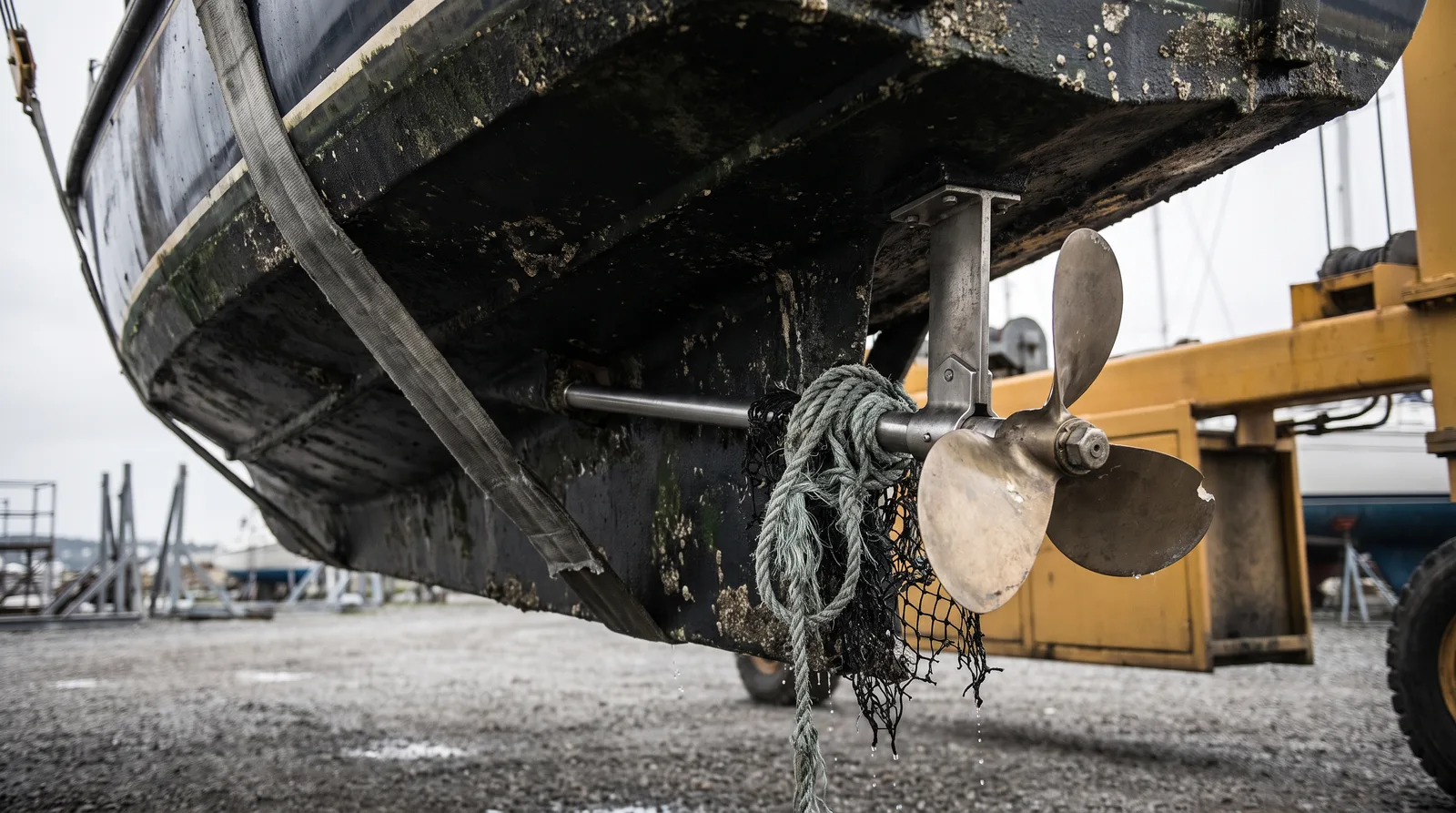
After a rope round the propeller the engine often seems fine, and the real damage only shows at the yard. Keep the rope, the photographs and the log entry, and the outside event can be proven.
17 September 20267 min readNAMMERT Assekuradeur GmbH
There is a loss that turns up every year, mostly in late summer and autumn. A motor boat, or a sailing yacht under engine, crosses an anchorage, passes a line of fishing floats or motors through a harbour entrance full of floating debris. A dull thud, then vibration, and the engine slows or stalls. Later a diver or the yard crane finds a rope, sometimes a scrap of net, wound hard round the shaft. Weeks after that the yard names the real damage: a leaking shaft seal, a bent shaft, a damaged gearbox or engine mounts.
For the claim, one question decides almost everything: was this an accident or a mechanical breakdown? Many hull wordings that include accidental damage name collision with fixed or floating objects as an insured event, and a rope drifting into the propeller is exactly that, an event from outside. Against it stand the exclusions: operational breakdown of machinery, wear and tear, lack of maintenance, corrosion and cavitation. A gearbox that gives up after years without an oil change is not an accident just because it failed afloat. Some basic hull covers have no accident section at all and respond only to storm, fire or theft, so check first which kind you hold.
Between the two sits the surveyor, and the surveyor needs something to look at. This is where the case is often lost. The diver cuts the rope free and lets it drift away, the yard throws out the netting, the engine seems fine again, and only weeks later does the shaft seal start to drip. What is left is damage to the drive train with no trace of an event, and a surveyor then has little choice but to treat it as wear. Most wordings give the insurer the right to inspect before repairs begin, and many only pay for a surveyor the insurer has appointed or approved.
The second place to look in the wording is the machinery exclusion, and above all how far it reaches. Some wordings exclude only the breakdown itself, others every consequence of it as well. Some offer a machinery extension that brings back part of what is excluded: hidden material defects, design faults, a bent or broken shaft, operator error, or wrong or contaminated fuel. Read that list carefully, because such extensions often leave out the defective part itself, pipework, valves and tanks, and some exclude diesel bug, the microbial growth in fuel tanks.
Two conditions in such extensions often matter more than their scope. Many drop machinery above a certain age, and the limit can be as low as ten years, which leaves the owner of a trawler or motor yacht with an older diesel only the accident route. Many also require proof that the engine was serviced to the maker's schedule by a qualified firm. Sailing yachts with a saildrive are just as exposed as shaft-driven boats, since a rope wraps round propeller and leg in the same way. For jet skis, look at how the wording treats water ingestion damage to the engine, which some wordings exclude unless it follows a collision.
What happens aboard after the thud counts as well. Carrying on under power with a vibrating shaft makes the damage bigger and can raise the question of gross negligence, which some wordings answer with a proportional reduction and others more harshly. Stopping the engine, sailing on or accepting a tow reduces the loss, and costs spent to limit a covered loss are usually recoverable even if the effort fails. Check whether lifting costs are paid when the lift was needed because of the damage, and expect loss of use for the rest of the season to be excluded as indirect loss.
Worth checking
Common questions
A rope caught in my propeller and the gearbox is damaged. Is that a claim?
Under hull cover that includes accidental damage, collision with a floating object is usually an insured event. What counts is proof that the rope caused the damage to shaft, seal or gearbox.
My engine simply failed with no outside cause. What then?
That is normally treated as mechanical breakdown and excluded. Only a machinery extension can help, and only if the cause is on its list, the engine is within its age limit and the servicing can be shown.
The diver has already thrown the rope away. What now?
Then photographs, the log entry and the diver's invoice have to carry the case. Ask the diver for a short written account of what was found on the shaft, and tell the insurer openly.
Related