Magazine / Magazine
New for old: what a partial loss on a boat really pays out
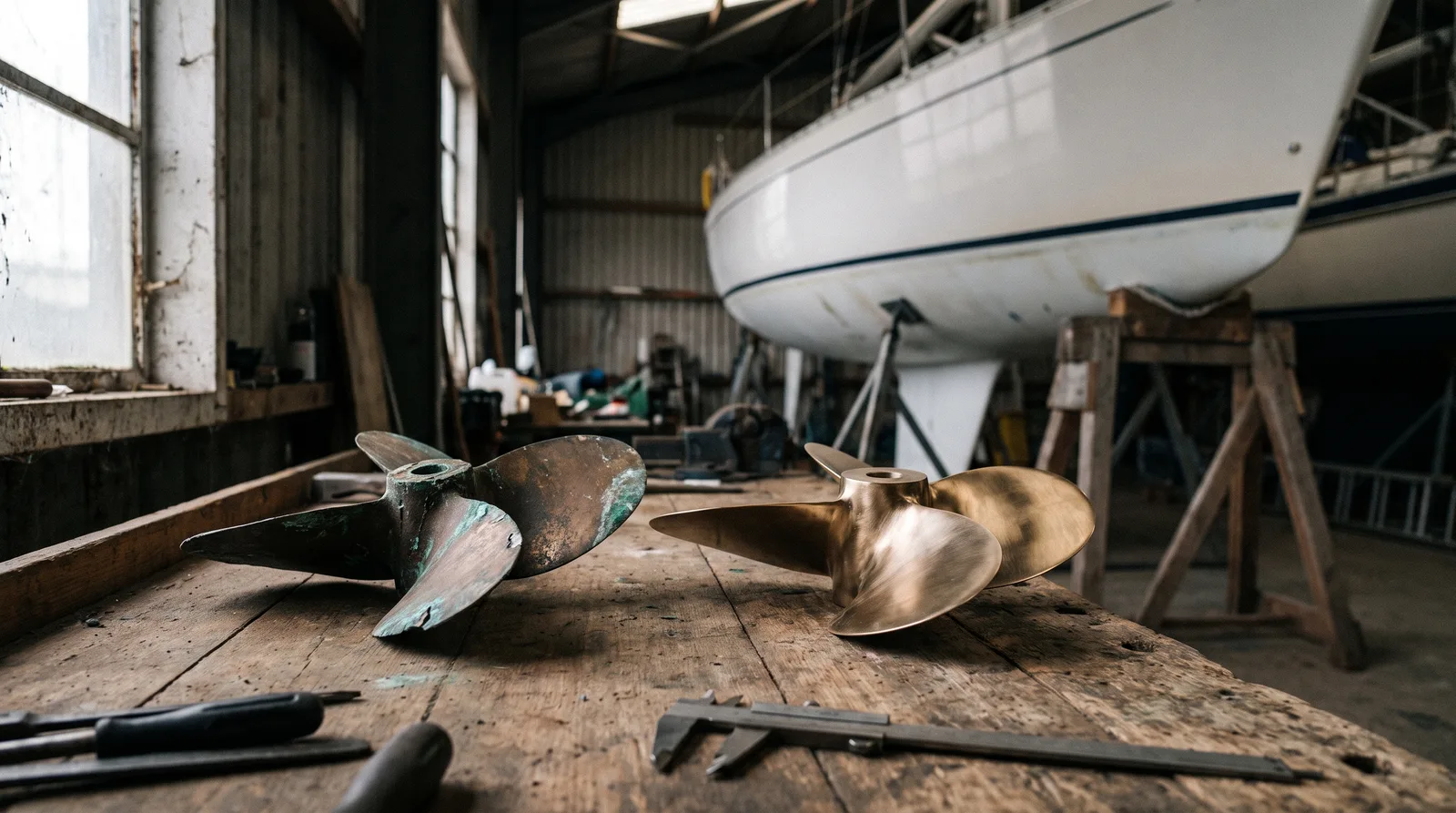
The propeller is bent and the yard fits a new one. How much of the bill comes back depends on one sentence about new for old, and three more about VAT, surveyors and salvage.
6 October 20267 min readNAMMERT Assekuradeur GmbH
October is when the season's damage goes to the yard. The propeller that hit a rock in July, the headsail that tore in a gale, the outboard after a clumsy berthing. The repairs happen over the winter, and with the invoice comes the question of how much the hull insurer really pays out. The answer is rarely in the list of insured perils. It sits further back, in the section on the amount of indemnity, and there one sentence decides whether a partial loss is settled new for old or with a deduction for age. It applies to every kind of boat, sailing yacht, motor boat, trailer boat or jet ski alike; only the parts differ.
A deduction new for old works like this: an old part is replaced by a new one, the owner ends up better off than before, and so the insurer keeps back a share for age. A German hull wording we know well sets out the scale plainly. Up to three years there is no deduction, after three years 20 percent, after five years 35 percent and from ten years 50 percent. After year five, every euro of the yard bill becomes 65 cents; from year ten, half. On a new diesel engine, a suit of sails or the chartplotter, that is the largest item in the whole settlement.
Other wordings settle partial losses without any deduction for age, sometimes expressly at new value. Read the small print around that promise, though. It often starts with a qualifier such as unless otherwise agreed, and the agreement that overrides it sits in the schedule or in an endorsement, not in the general conditions. So when you compare offers, look at three things: whether the wording deducts new for old at all, from which age and at what rate, and whether anything in the schedule changes it. Two policies with the same price can pay out very different sums for the same bent propeller.
Three more sentences decide many settlements. First, VAT: many wordings refund it only if it was actually paid and you cannot reclaim it as input tax, so an owner who takes the cash and skips the repair does not get it. Transport, freight, storage and standby costs are often treated the same way, paid only if they really arose. Crane costs caused by the damage are usually part of the claim, and transport to the repair yard may count like the repair itself while still eating into the sum insured. If you are registered for VAT, the boat is a business asset or you sail abroad, ask how this is handled before you sign.
Second, the surveyor. In the German example, surveyor fees are refunded only if the insurer appointed the surveyor or agreed to the appointment. Owners who hire their own expert straight after the damage may end up paying for the report themselves. Third, what is left of the old part. Proceeds that can be obtained from the residual value are offset against the claim, and you cannot avoid that by simply handing the wreckage to the insurer. An engine that still has value as a parts donor reduces the payment. These three rules are less visible than the deduction, but they show up on the final statement.
Settlement depends on paperwork. An age scale can only be applied if the age of a part is known, so keep invoices for the engine, sails, rigging and electronics with the boat's papers and not in a box in the cellar. Let the insurer inspect before the repair starts, get a written quote from the yard and keep the removed part until the claim is closed. None of this is exotic. It is simply the part of a hull policy that most owners read for the first time when the yard bill arrives, and October is a good month to read it earlier.
Worth checking
Common questions
What does new for old mean in boat insurance?
When an old part is replaced by a new one, some wordings deduct a share for age. A German example deducts 20 percent after three years, 35 after five and 50 from ten years onwards.
Do I get VAT back if I do not repair the boat?
Often not. Many wordings refund VAT only if it was actually paid and cannot be reclaimed as input tax. Transport, storage and standby costs are frequently handled the same way.
Can I choose my own surveyor?
You can, but many wordings refund surveyor fees only if the insurer appointed the surveyor or agreed beforehand. A short call before the appointment avoids an argument afterwards.
Related