Engine failure afloat: what a hull policy says about it
The engine stops, the boat drifts and someone has to tow. What a hull policy says about it usually comes down to three clauses, and the engine itself is rarely one of them.
6 November 20268 min readNAMMERT Assekuradeur GmbH
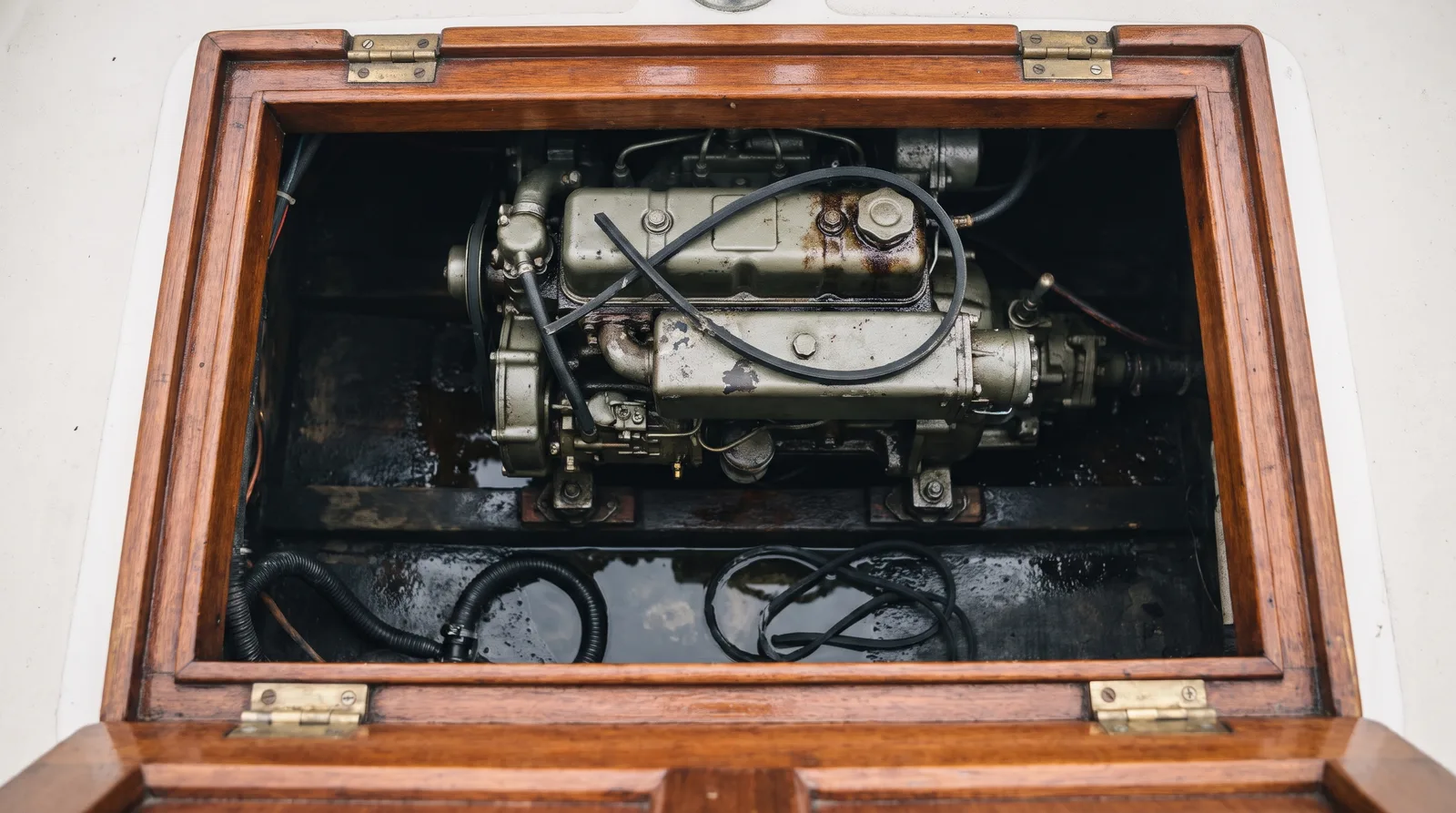
Engine failure afloat is rarely the loss itself, but it starts a chain. On 20 October 2026 a 14.5 metre gaff ketch built in 1938 lost her engine at about 5 pm while being delivered from the island of Föhr to Hamburg, some 15 nautical miles off the German North Sea coast. She was already taking on a little water. The German Maritime Search and Rescue Service (DGzRS) towed her to Cuxhaven, and on the way two of her three pumps failed. What a hull policy says about such a day is worth reading before it happens, because the answer sits in three clauses.
The first clause to look for is the machinery exclusion. Many hull wordings exclude operational damage to mechanical equipment, and the German wordings this magazine knows best name short circuits and the consequential damage of such failures as well. A seized diesel, a snapped drive belt or a disintegrated impeller is then not an insured event in itself, whether the boat is a motor boat, a sailing yacht with an auxiliary diesel or a trawler yacht. Read next to it the exclusions for wear and tear, for latent and design defects, and for poor maintenance. Each of them can end the claim before the question of the drifting boat is even asked.
The second point is the difference between the failed part and what it causes. Some wordings exclude only the part directly affected by wear or a material defect, and treat damage to other insured property as a direct consequence differently. If a worn hose clip lets water into the boat, the clip may stay outside the claim while the soaked interior may not. For the machinery exclusion the consequential damage is often named explicitly. Which clause applies depends on the cause, and the cause can only be shown if the broken part is kept and the sequence of events is written down.
The third clause is the definition of an accident. If a boat without power drifts onto a sandbank, against a quay or into another boat, check whether stranding, grounding and collision are named as insured accidents in the wording, or whether the contract only covers named perils such as storm, fire and theft. How a grounding after an engine failure is treated is not settled by any list; the sequence of events decides. Damage the drifting boat causes to others is a matter for the liability section, not the hull cover, so check that limit as well.
Then there is the cost of the tow. Most wordings reimburse the costs of averting or minimising an insured loss, sometimes even beyond the sum insured. The key word is insured: a tow that is only needed because the engine has stopped is not automatically such a cost. Write down what danger the tow was meant to avert, and keep the invoice. Transport to the yard is usually reimbursed only where an insured event caused it, and it may be counted against the sum insured.
The engine itself normally needs a machinery extension. Where an insurer offers one, the questions are always the same: which parts are listed (main engine, gearbox, shaft, propeller, generator, pumps, powered winches), whether the defective part itself is excluded, whether shaft fracture, operator error and wrong fuelling are named, and whether diesel bug is carved out. Look closely for an age limit on the machinery, often ten years in German wordings, and for a maintenance condition, such as servicing by a specialist yard according to the manufacturer. A deductible per claim usually applies.
For owners of classic yachts, motor boats and sailing yachts with an older diesel the practical lesson is simple. A hull policy is built for the hull, the equipment and the consequences of an accident, not for the machinery. Whoever wants the engine insured needs the extension, an engine within the age limit and the service records to prove the maintenance. And whoever is still on delivery passages in late autumn plans for a failure: anchor ready to drop, bilge pumps on an independent power source, a weather window with something to spare.
Worth checking
Common questions
Does a hull policy pay for the engine if it simply stops?
Usually not. Many hull wordings exclude operational damage to machinery, often including its consequential damage. Engine cover is typically sold as a separate machinery extension with an age limit and a maintenance condition, so the schedule and that clause are the place to look.
My boat drifted aground after the engine failed. Is that an insured accident?
It depends on the wording. Check whether stranding and grounding are named as insured accidents or whether the contract only covers named perils such as storm and fire. The sequence of events decides how the claim is assessed, so describe it in writing in the claim form.
Who pays for the tow into harbour?
Most wordings reimburse costs incurred to avert or minimise an insured loss. A tow that is only needed because the engine stopped is not automatically one of them. Record what danger the tow was meant to avert and send the invoice with the claim.
Related
