Magazine / Magazine: Policy and market
Diminished value and loss of use: what hull cover leaves out after a repair
The yard did a clean repair, yet the boat is worth less at sale and the summer is gone. One sentence in many hull wordings explains why nobody pays for that.
13 October 20267 min readNAMMERT Assekuradeur GmbH
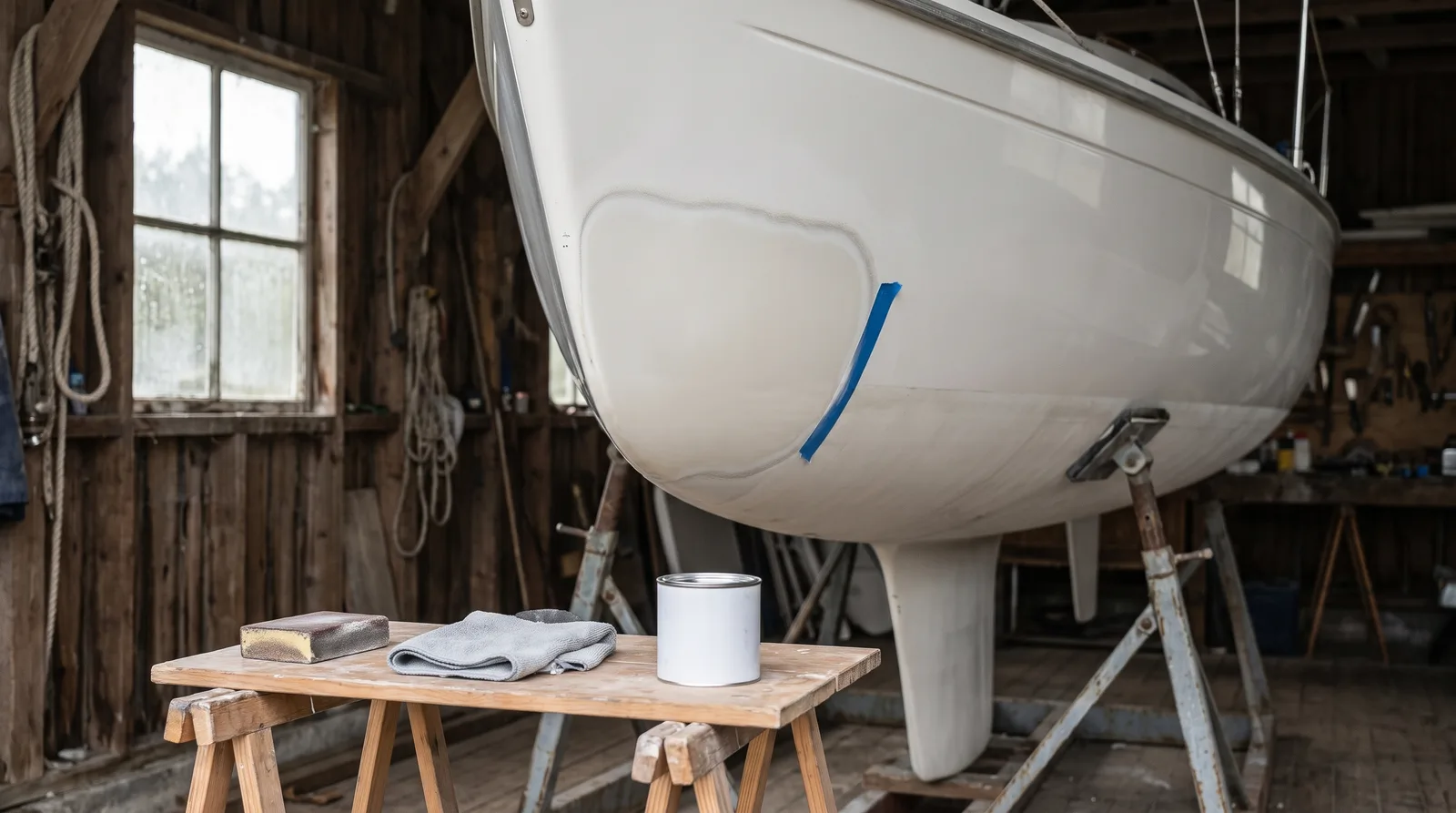
October is when the repair invoice arrives, and with it a question many owners only ask now. The yard has fixed the hull properly and the hull insurer has paid for the work, yet something is left over: the diminished value, because a buyer will later ask about the repaired section, and the loss of use, because the sailing yacht spent June to September in the shed. Whether anyone pays for that, and what hull cover leaves out, is decided by one sentence about consequential loss, and it reads the same for a motor boat, a racing yacht, a trailer boat or a jet ski.
A German hull wording we know well puts it in its plainest form: indirect losses, such as diminished value, impaired racing ability and lost use of the vessel, are not compensated. It even adds an example: no compensation is paid if the owner cannot use the boat because a repair takes a long time. Many hull wordings across Europe follow the same logic. Hull cover pays to restore the boat, the physical thing that was damaged. What the damage costs beyond that, in market value, in time on the water or in race results, sits outside the purpose of the contract.
In practice that means three things to look for. Diminished value: a properly repaired hull is technically sound, but the repair belongs in the sale documents and some buyers will offer less. Loss of use: an owner who pays for a second berth, charters a boat for the summer holiday or simply goes without a boat in July bears that cost alone. Racing ability: anyone who races a yacht, a powerboat or a jet ski and misses a series because of the damage loses points and entry fees. Read the exclusions section of your wording for these words, and look in the schedule for anything that changes them.
There are still levers. The first is time. Many wordings make the payment due a short period after the insurer has finished establishing the claim, and some allow an interim payment if that takes longer than a set period. The German example pays two weeks after the claim is established and lets the owner ask for an advance of the minimum amount due once a month has passed since the claim was reported. Report early, send photos and the yard quote at once and make the inspection easy. Every week saved in the shed is a week of the one loss no hull policy pays for, and a claim in April costs more season than the same claim in October.
The second lever is the question of who caused the damage. If another boat hit yours, your claim is against that skipper and their liability insurer, and there the hull exclusion does not apply: general tort law decides whether diminished value or loss of use is recoverable, and how much. That is often disputed and depends on the country and the facts. Legal expenses insurance that covers claims for damages after a boating accident can make it worth pursuing. The reverse also holds: if another owner claims diminished value from you, that is a matter for your liability insurer, which has to examine the claim and either defend it or settle it.
Our view is simple. The sentence on consequential loss only surprises owners who meet it for the first time on the settlement. It draws a clear line: hull cover restores the boat, it does not replace the summer. Owners who know this collect more evidence after a collision than the hull claim needs, including berth invoices, charter bills and missed race entries, because those papers count later against the party at fault. And anyone planning to sell keeps the yard invoice and repair photos with the boat's papers, so that a clean repair does not turn into a bargaining point.
Worth checking
Common questions
Does hull insurance pay for diminished value after a repair?
Often not. Many hull wordings exclude indirect losses such as diminished value, impaired racing ability and loss of use. They pay to restore the boat, not for what the damage costs beyond that.
Is there compensation while my boat is in the yard for weeks?
Usually not from the hull insurer; some wordings name exactly this case as an example. Check whether your contract allows an interim payment if the claim takes longer than a set period.
Can I claim diminished value from the other skipper?
Your claim goes to the party at fault and their liability insurer, under general tort law. Whether and how much is paid depends on the facts and the country, so keep every receipt from the start.
Related