Magazine / Magazine
Damaged at the berth and nobody saw it: collision, vandalism or wear
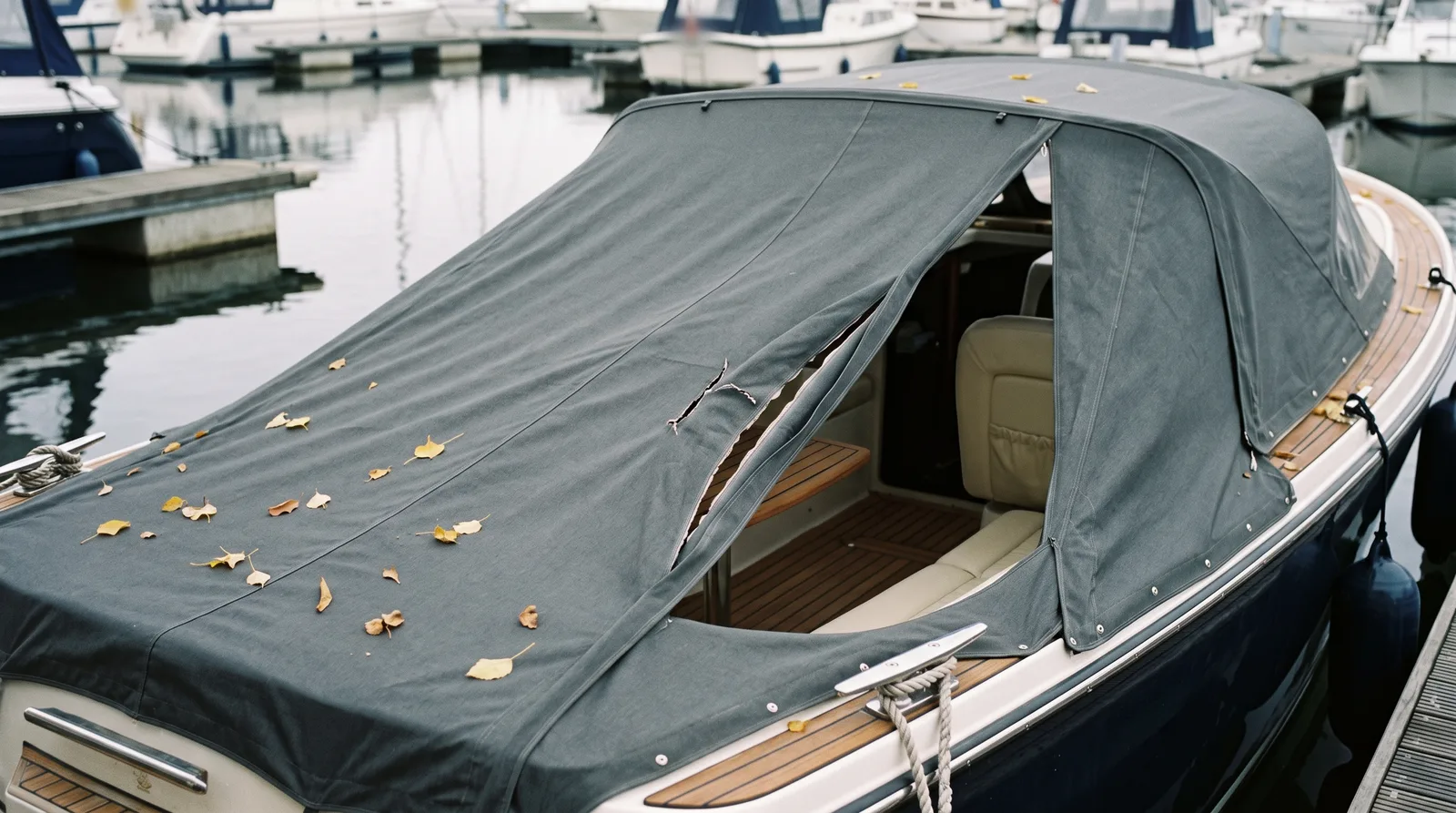
After a few weeks away, the cover is slashed or the topsides are dented and nobody owns up. For hull cover the question is usually not who did it but what happened, and that has to be visible on the boat.
30 September 20267 min readNAMMERT Assekuradeur GmbH
It happens every autumn in marinas across Europe. After the last sail of the season the boat stays on her pontoon berth or mooring, and the owner comes back two or three weeks later. There is a fresh dent below the rubbing strake with someone else's paint in it, the cockpit cover has been slashed, or a mooring line has been cut. Nobody saw anything, and the harbour master knows nothing. It affects sailing yachts and motor boats alongside or on moorings, catamarans on the wide outer berths, houseboats and, once laid up ashore, trailer boats in open storage yards. The first question is nearly always the same: will the insurer pay if I do not know who did it?
In most hull wordings the answer depends less on who than on what. Many German hull wordings list collision with fixed or floating objects under the accident of the vessel, and a separate insured event for malicious damage by persons who have no right to use the boat. Another boat pushing against yours while berthing falls under the first, a slashed cover under the second, and in neither case does the insurer need a name. Not every wording names both, though. Basic hull forms often cover only storm, fire and theft of the whole boat, and malicious damage is then simply not there. Storm is usually defined by a threshold, in German wordings wind of Beaufort force 8 or more. That is why it pays to keep the weather record for the days nobody was on board.
The real work in these claims is separating damage from wear. Almost every hull policy contains an exclusion for wear and tear in ordinary use, and one for weather such as sun, rain or frost unless a storm caused it. A scuff that your own fender has rubbed into the gelcoat over weeks, a line chafed through on a sharp edge, canvas that the sun has made brittle: at first glance this looks like someone else's doing, and often it is not. A surveyor reads the traces. A single point of impact with foreign paint and sharp fresh edges suggests contact, a smooth polished band at fender height suggests chafe. A straight cut with clean edges suggests a knife, frayed edges and brittle fibres suggest age. How a borderline case ends, such as chafe after a night of heavy swell, cannot be said in general. It depends on what the boat can still show.
So the order after the discovery matters. Hull wordings usually require every loss to be reported promptly and in writing, and many add a duty to report vandalism, theft and fire to the police without delay, in a marina also to the harbour office. Check whether yours has that duty and within what time. For a bump by an unknown boat the wording may not require a police report, but it still helps, as does asking the harbour master, the neighbours on the pontoon and the marina about camera footage before it is overwritten. Most insurers reserve the right to inspect the damage before repairs start. Polishing out the dent or sending the cover to the sail loft first removes exactly the traces that separate contact from wear, and a breach of such a duty can reduce the claim.
Then the money. Check whether the deductible applies to collision and malicious damage; in German wordings it usually applies to both and is waived only for total loss and theft. Some wordings reduce the deductible after several claim free years. If the culprit turns up later, the insurer normally takes over the claim against them to the extent it has paid, and you are expected to hand over everything needed to pursue it. The part it did not pay, typically the deductible, can be claimed from the person responsible or their liability insurer. That is a good reason to note names, boat names and witnesses even if the loss was first reported without anyone to blame.
For laying up ashore there is one more clause worth reading. Some wordings exclude theft and malicious damage if the boat stands on land in an open yard that is neither fenced nor locked, or in a building that is not locked. Waterfront plots may count as enclosed when only the water side is open, which describes many marina yards. Before the boat goes into winter storage, ask the yard whether the site is fenced and locked at night, and look in the hull policy for a condition on storage ashore. It is the cheapest protection against damage that in the end nobody wants to have caused.
Worth checking
Common questions
I do not know who did it. Can a hull policy still respond?
Check whether your wording names collision with floating objects and malicious damage by third parties as insured events. Where it does, a known culprit is usually not required; the deductible still applies.
Do I really need to go to the police about a slashed cover?
Many hull wordings require vandalism to be reported to the police without delay, in a marina also to the harbour office. Even where yours does not, the report is useful evidence and helps if the culprit is found later.
The scuff comes from my own fender. Is that a claim?
Usually not. Wear and tear in ordinary use is excluded in almost every hull wording. It may be different if a storm caused it, so keep the wind record for the days in question and show it to the surveyor.
Related