Magazine / Magazine
Lightning at the berth: when dead electronics are a lightning loss
Lightning does not have to hit your mast to kill the plotter, the VHF and the charger. What matters is tying the damage to a storm, and that only works with evidence gathered in the first days.
21 September 20267 min readNAMMERT Assekuradeur GmbH
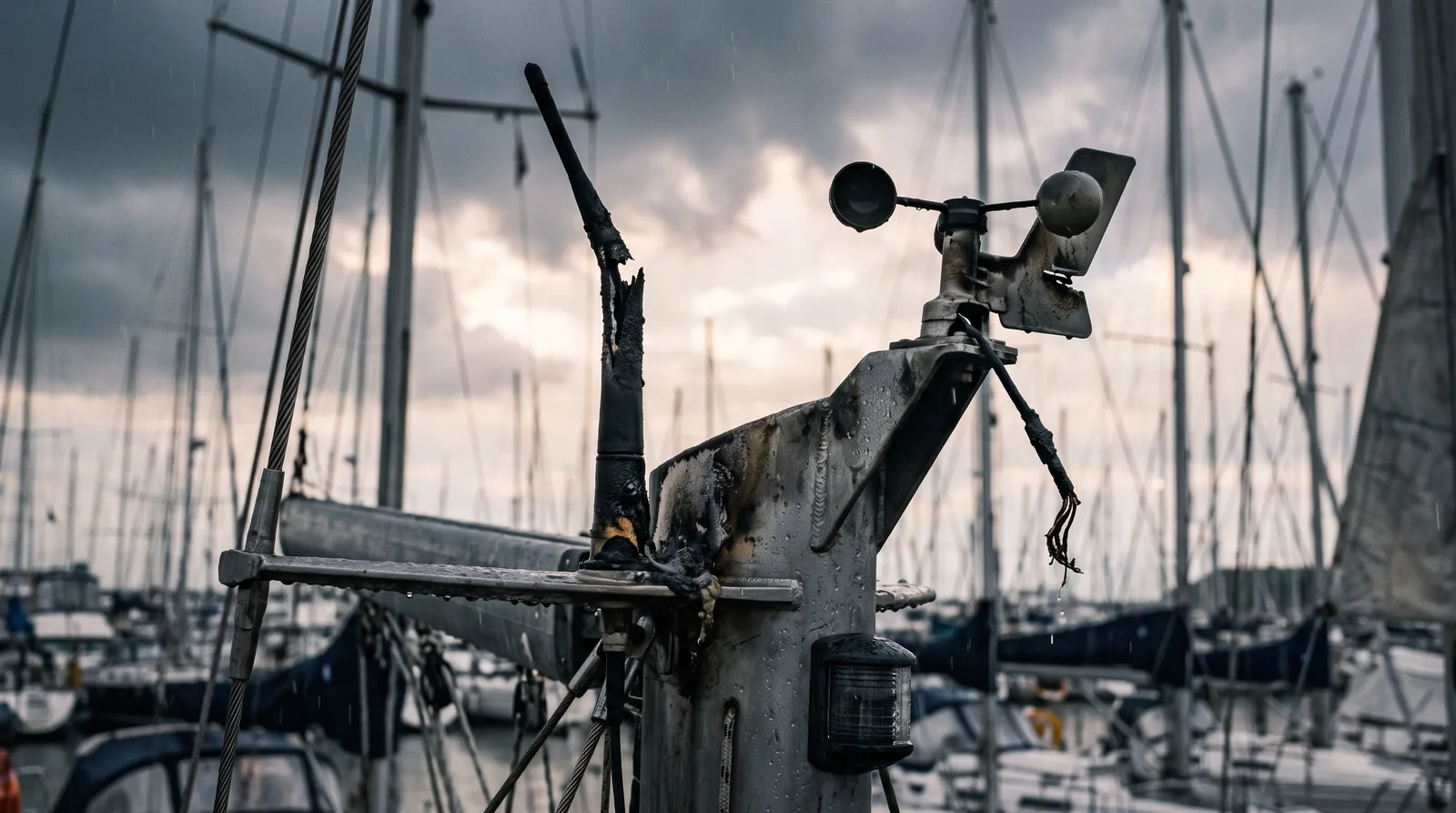
It is one of the losses that come back every thunderstorm season. A storm passes over the marina at night, and in the morning nothing aboard looks different. Only when the owner switches on does it show: the chartplotter stays black, the VHF will not transmit, the wind instrument reads nothing and the charger on shore power is silent. Sometimes the antenna at the masthead is scorched or a cable end burnt, often there is nothing to see at all. Sailing yachts with a tall aluminium mast are exposed, but so are motor boats, catamarans and houseboats plugged into shore power on the pontoon.
For the claim, the question is one of cause, and hull wordings usually build it in themselves. Lightning normally appears among the named natural perils, next to storm, hail and earthquake. Some wordings go further and define it: the direct passage of a lightning bolt onto property, adding that surge, overcurrent or short circuit damage to electrical equipment can also count as lightning damage. Where that sentence exists, the bolt does not have to hit your own mast. A surge that runs into the boat through the shore power pedestal or from a strike nearby can be enough. Look for this definition in the wording before you file.
Against it usually stands an exclusion for mechanical and electrical breakdown, and some wordings name direct short circuit damage and its consequences explicitly. A short circuit from a corroded terminal, a chafed cable or an ageing charger is then not an insured event. The same short circuit becomes one if lightning caused it. The damage looks identical in both cases, which is why the claim turns on the cause and not on the result. An owner who can show a storm over the marina that night starts from a very different position than one who simply finds a dead plotter.
Evidence is easiest to secure in the first days. Most wordings require prompt notice of a loss and give the insurer the right to inspect before repairs begin. An electrician who swaps the dead units straight away and throws them out removes exactly what a surveyor needs to see: burn marks on circuit boards, blown fuses, scorched connectors. Many wordings also forbid selling damaged items before the claim is settled. Keep the units, note the date of the storm, and save the official thunderstorm warning or an extract from a lightning detection service for the place and time.
It gets hard when the damage only shows weeks later, for example when the boat is recommissioned in spring. Then there is a broken plotter with no date attached, and whether a storm or old age killed it can hardly be answered any more. A short round after every stormy night in the marina is worth the time: switch everything on, test the radio, check the instruments, look at the charger and the shore power lead. Photograph whatever has failed and report it the same day, even before the link to lightning is certain. A report that proves unnecessary costs nothing, a late one can cost the proof.
What the contract then pays depends on how it is written, and a few points deserve a close look. Check whether fixed equipment, electronics and portable navigation gear such as a handheld VHF are part of the insured property. Check whether personal belongings like phones and laptops are included at all, and if so, up to which limit per loss. Look for age deductions on partial losses, which can take a large share off electronics that are several years old. Owners of electric or hybrid boats should look for a separate limit on consequential damage from short circuits, which some wordings set well below the sum insured.
Worth checking
Common questions
Lightning did not hit my mast, but the electronics are dead. Is that lightning damage?
It can be. Some wordings state that surge, overcurrent or short circuit damage to electrical equipment can count as lightning damage. What decides is evidence that a storm was the cause, such as a warning or lightning detection data for that night.
My charger shorted out and there was no storm. Is that a claim?
Usually not. Most hull wordings exclude mechanical and electrical breakdown, and some name short circuit damage expressly. A short circuit normally becomes a claim only when an insured event such as lightning caused it.
The electrician has already thrown away the broken units. What now?
Then photographs, the invoice with a written finding and the storm data have to carry the case. Ask the electrician for a short account of what was found. Next time, let the insurer inspect before anything is replaced.
Related