Wake damage at the jetty: when a passing boat does the harm
A motor boat passes the jetty on the plane, and a few seconds later its wake slams your boat into the pontoon. Whether the other skipper, your own insurer or nobody pays depends on two questions.
21 October 20267 min readNAMMERT Assekuradeur GmbH
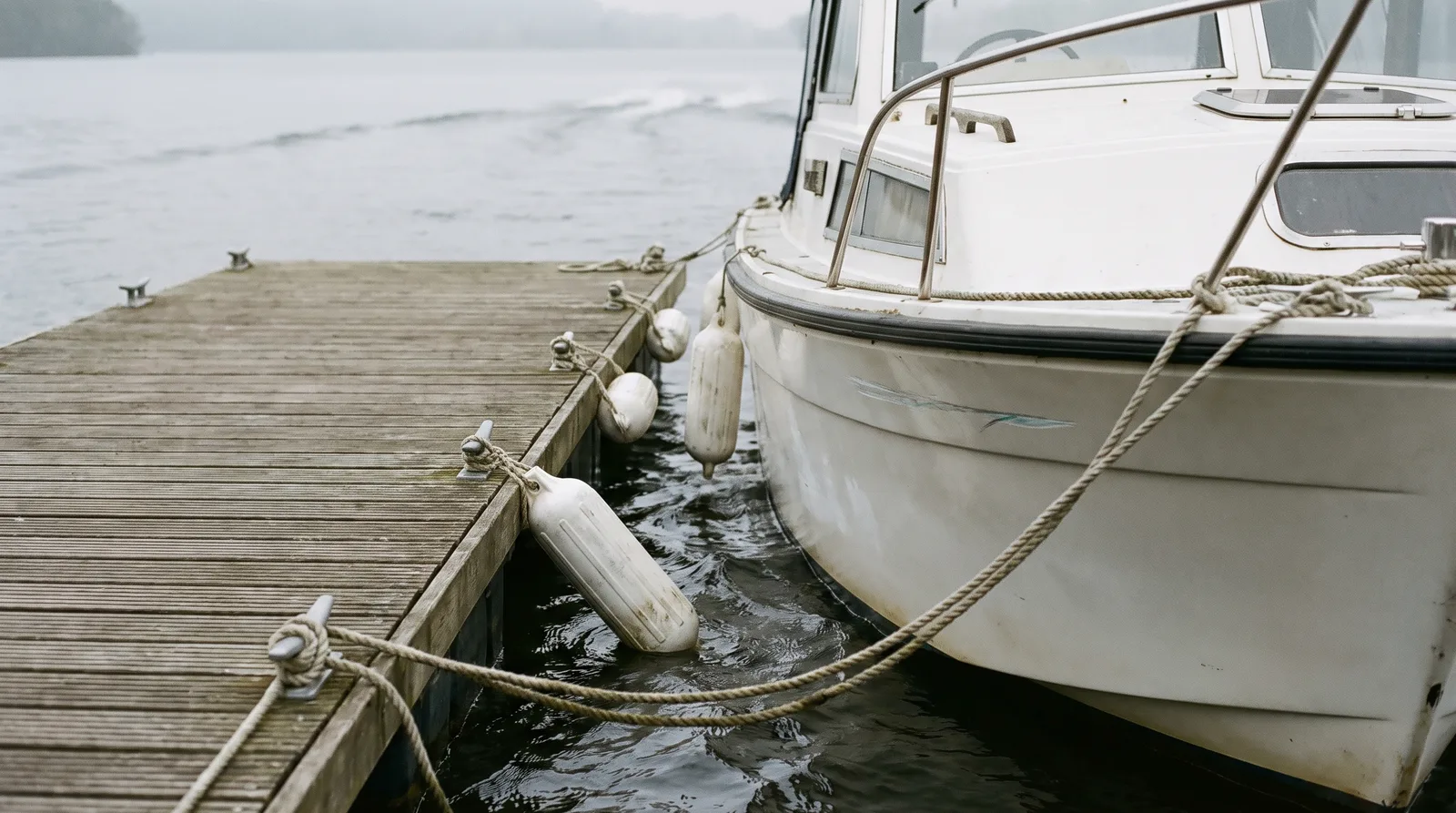
It is one of the most familiar patterns in claims files from summer well into autumn: wake damage at the jetty. A passing boat, usually a motor boat on the plane, sometimes a passenger vessel, runs close to the moorings. Its wake arrives a few seconds later, your boat lifts, the fenders ride up or pop out, and the hull or rubbing strake strikes the edge of the pontoon. When the owner finds the scratch, the boat that does the harm is long gone round the next headland. The damage is real; the open question is who pays for it.
Start with the rules of the road. On German inland waterways, section 6.20 of the Inland Waterways Regulations (Binnenschifffahrtsstraßen-Ordnung), headed avoidance of wash, requires every vessel to adjust its speed so that its wash or suction cannot damage moored or moving vessels or installations, and to slow down in good time off harbour entrances and usual berths. At sea, Rule 6 of the International Regulations for Preventing Collisions at Sea requires a safe speed at all times. A skipper who throws a full wake past a jetty is breaking a rule, not just good manners, and that matters for liability whether the culprit is a motor yacht or a sailing yacht under engine.
What happens after a loss depends first on whether you know who caused it. If you do, that skipper is liable, and their liability insurer is the natural address. Many owners still go through their own hull cover first; where the wording responds, the insurer settles and then pursues the other party, because the claim passes to the insurer up to the amount it has paid. Most wordings contain a duty to hand over everything needed for that recovery. In practice that means the name or registration of the other boat, the time, the direction it was heading, witnesses on the jetty and, ideally, a photo or video of the boat as it passed.
If nobody can be traced, the wording of your own policy decides. Look at the insured perils. A wording that names accident, and lists collision with fixed or floating objects under it, will usually treat a hull striking the pontoon as an accident, subject to the deductible. A named perils wording that lists only storm, fire, lightning and theft may not respond at all on a calm day, because a wake is not a storm. Owners with such a wording depend entirely on finding the other skipper, which is why evidence counts twice for them.
Two distinctions come up in almost every file. Worn fenders and brittle lines are usually treated as wear and tear and excluded in themselves, while damage they cause to the boat as a direct consequence may still be covered; read the exclusion clause to see how your wording draws that line. And if your boat, thrown by the wake, damages the pontoon you rent, that is a liability question: does the wording include damage to rented berths and jetties, or does it exclude property in your care? That difference often decides who pays for the marina's repair bill.
In our experience, wake damage nearly always turns on the evidence and almost never on the wording itself. Report it straight away, let the insurer inspect before any repair, and resist fixing the gelcoat yourself the following weekend. Tell the harbourmaster: the same fast boats tend to pass the same jetties, and a report to the water police helps the next owner as well. And when you are the one at the helm, ease off before every harbour entrance and every line of moorings; it protects the people alongside and your own liability.
SeriesPart 4 of 11
At the mooring: water, storms, lightning and persons unknown
All parts at a glance
Worth checking
Common questions
A motor boat sped past and my boat hit the pontoon. Who pays?
First the other skipper, if known, since excessive wash breaks the rules on the water. You can also claim under your own hull cover where accident is an insured peril; the insurer then recovers the money from the other party.
The other boat has gone and nobody saw it. Can I still claim?
It depends on the wording. Where accident including collision with fixed objects is insured, the damage is usually covered less the deductible. A named perils wording that only covers storm may not respond on a calm day.
My boat damaged the club's jetty because of the wake. Do I have to pay?
That is a liability question: whether you are liable at all, and whether your wording includes or excludes damage to rented berths and jetties. Check the exclusions for property in your care before you accept anything.
Related
