Magazine / Magazine
Fire on board in winter: when a scorched cushion is not yet a fire
Through the winter, fan heaters and dehumidifiers run unattended in many cabins. Whether a charred cushion counts as fire depends on a definition in the wording, and on whether the cause can still be shown.
25 September 20267 min readNAMMERT Assekuradeur GmbH
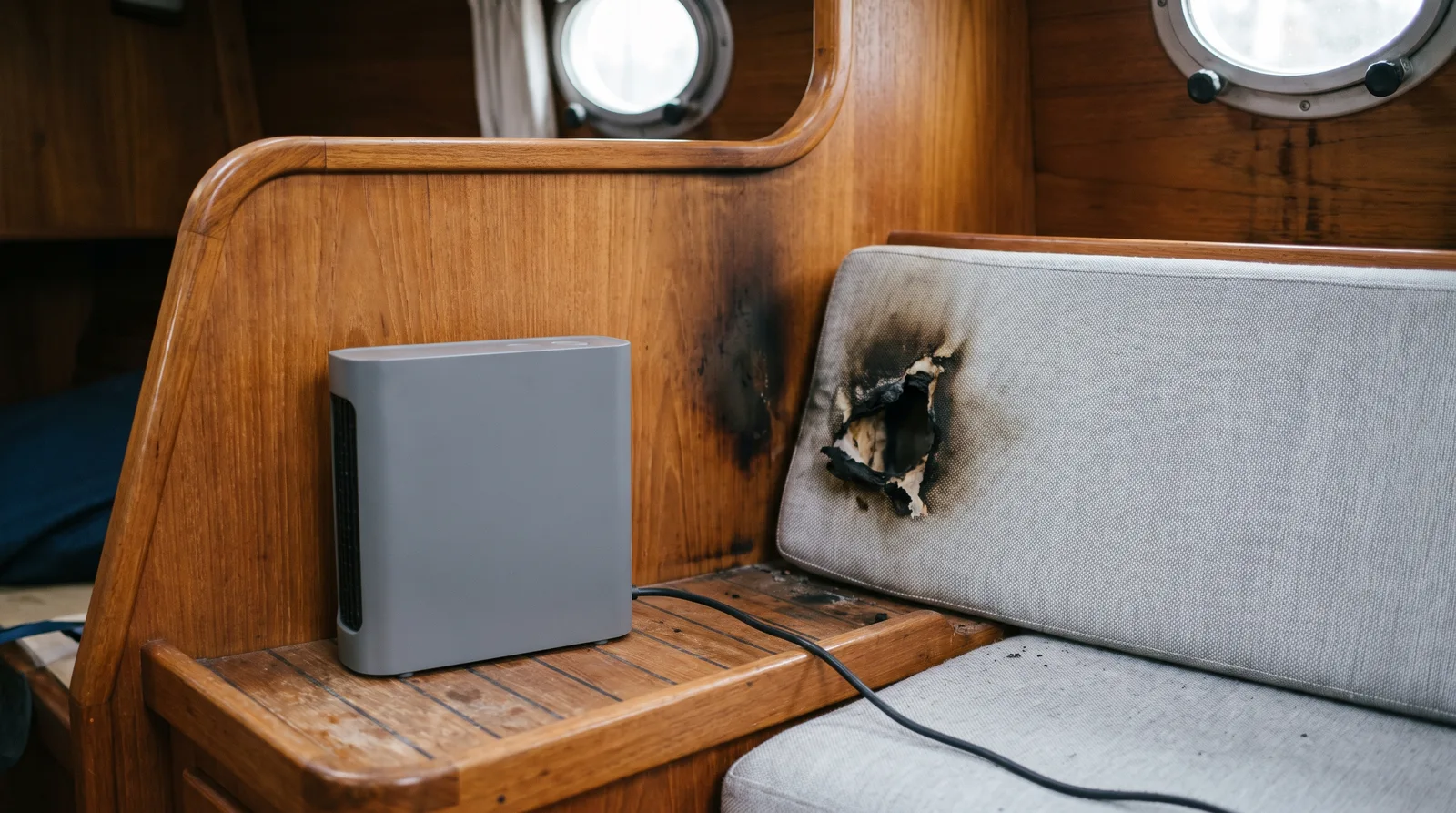
A pattern we see every autumn: the boat is still on its berth or already in a storage shed, and to keep damp and mould out of the cabin a small fan heater or dehumidifier runs off shore power, usually on an extension lead and often for days with nobody checking. On the next visit there is a smell of burning. The settee cushion next to the heater has a black hole in it and the joinery above is covered in soot. Sometimes the fire went out on its own, sometimes it took half the saloon. This affects sailing yachts, motor cruisers with a cabin, trawler yachts and houseboats, in short anything with an enclosed interior that stays connected to power over the winter. Open boats and personal watercraft rarely show this pattern.
The first thing to look at in a hull wording is how it defines fire. A common German definition, used in the wordings we work with, requires a fire with flames that started without a proper hearth or left it, and that can spread under its own power; explosion is defined as a sudden release of force caused by expanding gases or vapours. A cushion that has only smouldered and charred next to a hot appliance, with no flame spreading, does not meet a definition like that. Some wordings close this gap with an extra sentence that names scorching damage to upholstery and furniture separately, many do not. The hole in the cushion looks the same either way. Whether your wording has that sentence is something you can check today, not after the event.
The second question is the cause, and with a fire on board it is always investigated. Many hull wordings exclude mechanical and electrical breakdown, and some name short circuit damage and its consequences expressly. Poor maintenance is a frequent exclusion as well, and wordings for electric and hybrid boats may exclude a fire that follows a deep discharge of the battery. How far exclusions like these reach once a fire has spread through the saloon cannot be answered in general. It depends on where and why the fire started, and the only evidence for that is what is left after it has been put out.
That is why the first hours matter. Most wordings require prompt notice of a loss, and many ask for fire and explosion to be reported to the police as well; in German wordings this often extends to the harbour authority when the boat is in a port. That police report is the step most often skipped after a small cabin fire the owner put out alone. Insurers usually reserve the right to inspect before repairs and to investigate the cause. An owner who clears out the saloon straight away and throws the melted heater in the skip removes exactly what a surveyor needs: the appliance, the plug, the extension lead and the socket where the seat of the fire could be read.
A heater left running for days beside a cushion also raises the question of gross negligence, which many wordings treat as a ground for reducing the payment in proportion to the fault, sometimes with a threshold below which no reduction is made. If the fire spreads to other boats in the shed, the question becomes one of legal liability towards their owners, which is a matter for third party cover. Damage to the storage shed or the berth you rent is a separate point: liability wordings often exclude damage to property you have rented and then add it back for berths and storage spaces, and some do not add it back at all. It is worth reading that clause before the boat goes into the shed.
In our view the best fire protection in winter storage needs no heat at all: ventilate, store cushions ashore or on edge, use desiccant instead of a heater. If an appliance does run, it stands clear on a non combustible surface, well away from fabric and timber, is plugged in without a multi socket adaptor, and the yard or marina has been asked what the storage contract says about unattended appliances on shore power. And if it has happened, the order is the same as with any loss: secure and report first, clean up afterwards.
Worth checking
Common questions
The cushion only smouldered, there were no flames. Is that a fire?
Under many wordings it is not, because fire is defined as a fire with flames that can spread under its own power. Some wordings name scorching damage to upholstery and furniture separately. Look for that sentence in yours.
I put the small fire out myself. Do I still have to go to the police?
Many wordings require fire and explosion to be reported to the police promptly, and some also to the harbour authority. Check your wording, and report the loss to your insurer in any case before anything is cleared away.
The fire started with a short circuit in the charger. Is that a claim?
That depends on the wording and on the facts. Many wordings exclude electrical breakdown and some name short circuits expressly. How far that reaches once a fire has spread is decided by the investigation, so keep everything that is left.
Related