Magazine / Magazine: Policy and market
Wreck removal and salvage costs: what a boat owner should check
Raising a sunken boat can cost more than the hull was worth. Whether the insurer pays often turns on one short section of the hull wording and on who ordered the removal.
28 October 20267 min readNAMMERT Assekuradeur GmbH
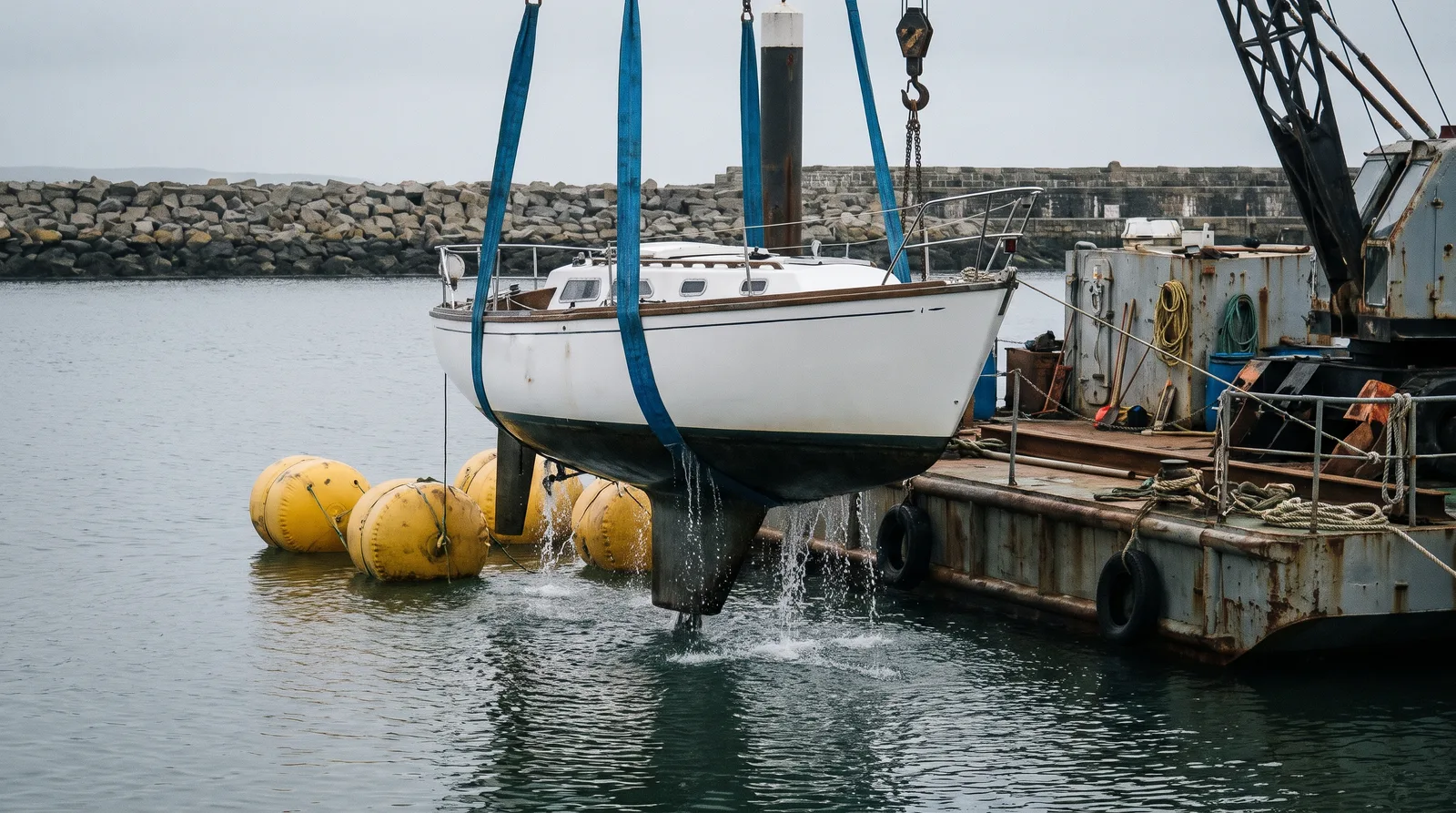
When a sailing yacht sinks on its mooring, a motor boat capsizes off a harbour entrance or a houseboat ends up half submerged after a storm, the owner soon faces the question of wreck removal and salvage costs: who pays to raise the boat, take it away and dispose of it? The answer sits in a short section of the hull wording that few owners read before they need it. In many German hull wordings it carries a title along the lines of loss mitigation, salvage and wreck removal costs, and it has two parts that are easily confused. Any boat owner should check what both parts say, because they work in different ways.
The first part deals with costs incurred to avert or reduce a loss. Typical German wordings reimburse such costs, even when the effort fails, if they were incurred in an insured event on the instructions of the insurer or if the policyholder could reasonably consider them necessary in the circumstances. Many wordings add that this applies even where these costs and the payment for the boat together exceed the sum insured. Paying a diver to replace a broken mooring chain as a gale approaches, or hiring a pump so that a flooded boat does not go down completely, are typical examples. What matters is that an insured loss is threatened or has happened and that the measure works against it.
The second part covers raising, removing and disposing of the boat itself. Look in the contract for three details. First, whether these costs are paid on top of the payment for the damaged or lost boat or are deducted from it; good wordings say they apply regardless of the amount paid for the hull. Second, the limit per event: some wordings cap it at the sum insured on the boat, others at a fixed amount that can be far higher. Third, the condition that triggers it. For an older or smaller boat this is where the money goes, because cranes, lift bags and divers are priced by the job on site, not by the value of the hull.
That condition is the point most owners miss. Many German hull wordings pay for salvage and wreck removal only if a state or the competent authority has arranged or ordered it on a legal basis. On German federal waterways, section 30 of the Federal Waterways Act (Bundeswasserstraßengesetz) expressly names sunken vessels as obstacles to navigation that the waterway authorities may remove where immediate action is needed, and the Federal Waterways and Shipping Agency then reclaims the costs from those responsible and from the owners. On lakes, in private marinas and abroad, other bodies and rules apply, but the question to put to the policy stays the same: did an authority arrange or order the removal?
What this means after a loss: a salvage job that nobody ordered usually falls outside that second part. Whether the cost is paid then depends on the first part, that is, whether lifting the boat averted or reduced an insured loss and whether the owner could reasonably consider it necessary. Getting a boat out of the water quickly before the engine and wiring are ruined can meet that test. It becomes clear cut with an instruction from the insurer, which is why the claim should be reported before any salvage firm is hired. Most wordings also list prompt notice of the loss and a duty to take reasonable steps to limit it, and to follow the insurer's instructions, among the duties after a claim.
Liability cover is not the place to look. Liability wordings deal with claims by third parties, for example damage to a pontoon or a neighbouring boat caused by the sinking yacht, and usually do not list raising the owner's own boat as a separate benefit. Owners with liability cover only should therefore not count on it for their own wreck. Where the salvage limit is tied to the sum insured, it is worth checking that figure twice, because a low value on an older boat then limits both the payment for the hull and the money for salvage. Readers insured outside Germany should check how their own wording and national law handle these points, because conditions and limits differ.
Worth checking
Common questions
Is salvage paid if no authority orders it?
Under many German hull wordings, not through the salvage and wreck removal clause, which requires an order or arrangement by an authority. The cost may still be reimbursed as a loss mitigation expense if lifting the boat averted or reduced an insured loss and was reasonable or instructed by the insurer.
Does liability cover pay to raise my own boat?
Usually not. Liability wordings deal with claims by third parties, such as damage to a pontoon or another boat. Raising the owner's own boat is normally a question for the hull wording, so that is where to look first.
Are salvage costs deducted from the payment for the boat?
That depends on the wording. Many German hull wordings state that salvage and wreck removal costs apply regardless of the amount paid for the damaged or lost boat, up to a separate limit per event. Check the exact text and the limit in the contract.
Related
