A guest slips on board: liability, accident cover and the first week
A guest slips on a wet gangway or falls down the companionway. Two different contracts decide who pays, and each asks a different question.
8 November 20267 min readNAMMERT Assekuradeur GmbH
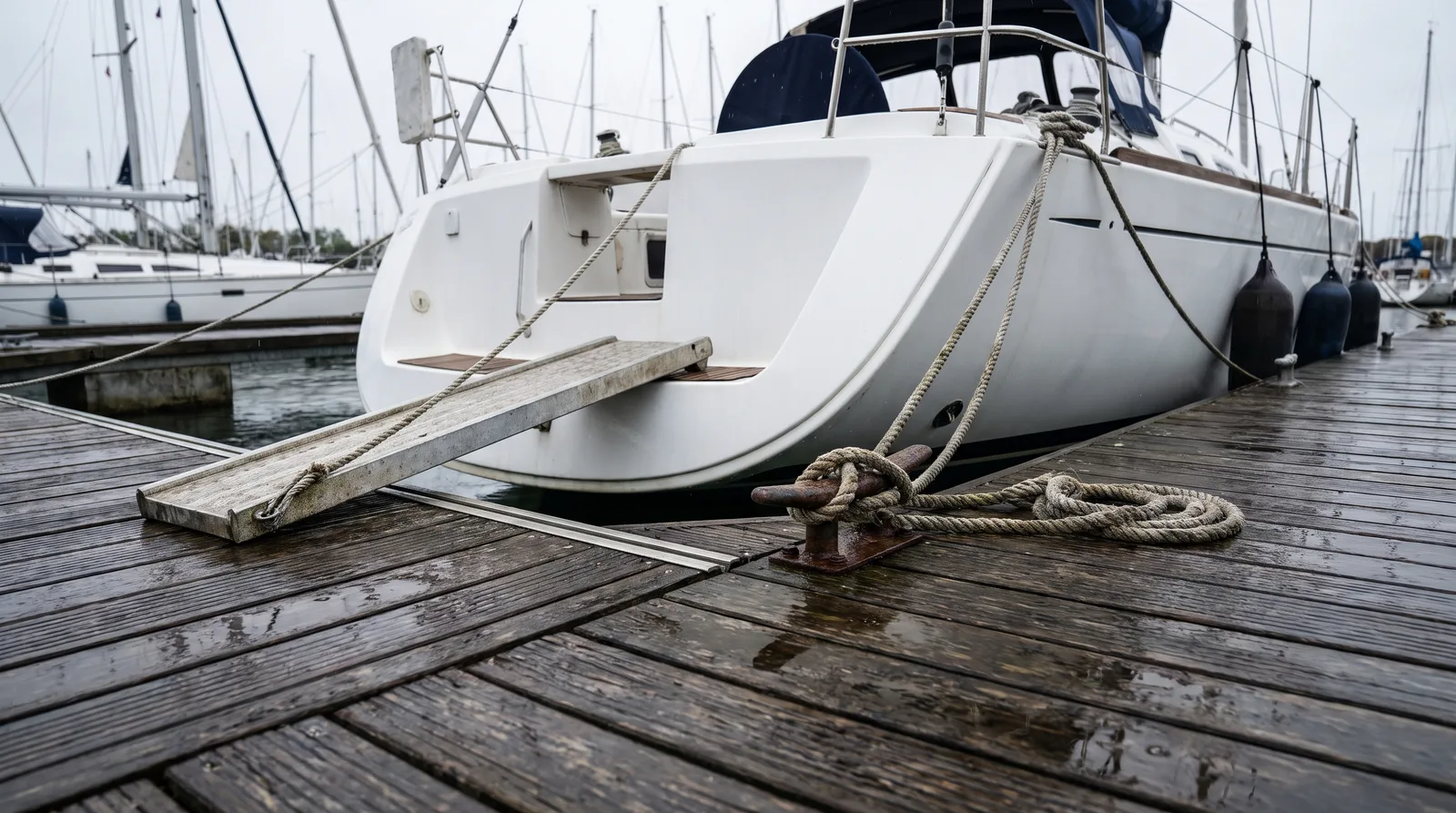
It happens every season and it nearly always starts as nothing. A guest steps aboard over the gangway after rain, slips on the wet plank and twists a knee, or misses the last step of a sailing yacht's companionway and lands on the edge. That evening everyone says it is fine. If it turns out not to be fine, two separate contracts decide who pays: the owner's liability cover and a boat accident policy, if there is one. They ask entirely different questions, and an owner who mixes them up tends to report late or to the wrong insurer. This piece walks through the first week and the clauses worth finding in the wording.
Liability cover asks about fault. It answers for the owner's legal liability arising from owning and using the boat, and a typical wording describes three things: the insurer examines whether the owner is liable at all, defends unjustified claims and pays justified ones. If the gangway was not secured, a step was loose or a line lay across the pontoon, the owner may be liable for treatment costs, lost earnings and damages for pain. If the guest simply slipped with nobody at fault, there is no claim to pay, and the insurer's job is to reject it. That is still a service to the owner, but it is no money for the guest, and guests are often surprised by that.
Two clauses matter on family trips. Many liability wordings exclude claims by relatives who live in the same household as the policyholder, so a fall by the owner's own daughter is usually not a liability case at all. And one sentence matters on the evening of the fall: most wordings say that an admission of liability or a settlement made without the insurer's consent only binds the insurer if the claim would have existed anyway. Telling a shaken guest on the pontoon that you will pay for everything does not create a claim the insurer has to honour. It can, however, make the conversation that follows a great deal harder.
Accident cover does not ask about fault, it asks about the person. This is where wordings differ most. Some insure only the owner. Others add close family. Some name every authorised person aboard, skipper, crew and guests alike. Several split the sum insured by the number of people on board at the time of the accident, so each person is covered for a share. For the guest on the gangway the question is simple: does the contract name guests at all, and if so, how large is the share that falls to one person when six people were aboard?
Then comes the place. Some wordings tie accident cover to the private use of the boat at sea. Others list mooring, lying in harbour, slipping, maintenance, repair and refit by name. In November this is no small print: a fall from the ladder while working on a motor boat or sailing yacht ashore over winter is exactly the case to read up on before the first working day, not after. What counts as an accident is usually drawn widely. A fall is a classic example of mechanical force, and many wordings also count a strain caused by increased physical effort, such as slipping while climbing aboard and wrenching a shoulder. Menisci and spinal discs are often excluded from that rule.
One limit concerns the evening on board. Accident wordings commonly exclude accidents caused by impaired consciousness and name alcohol and medication among the causes. The point is not a glass of wine as such, but a state in which someone can no longer cope with the situation in front of them. On a wet gangway in the dark that threshold comes sooner than at the kitchen table, and after a loss it is precisely what the insurer will ask about. Worth knowing before anyone pours the second glass.
In claims practice, more is lost through deadlines than through gaps in cover. Liability wordings often require any incident to be reported within a week, even before anyone has made a claim. Accident wordings usually require a doctor to be consulted promptly and the insurer to be told. Permanent impairment typically has to occur, be confirmed by a doctor and be claimed within fixed periods, often 18 and 24 months after the accident. A knee that was only swollen in November and needs surgery in spring is exactly the case these periods were written for. Report the fall, even if everyone says it is nothing.
SeriesPart 6 of 11
Making a boat claim: report it, prove it, get paid
All parts at a glance
- Reporting damage
- Reading your own policy
- Rope round the propeller
- Engine failure afloat
- Driftwood in the fairway
- A guest slips on board
- Collision with a working vessel
- Gross negligence in hull insurance
- New for old: what a partial loss on a boat really pays out
- Diminished value and loss of use
- Wreck removal and salvage costs
Worth checking
Common questions
My guest slipped on the gangway. Will my liability cover pay?
Only if you are legally liable for the fall, for example because the gangway was not secured. Without fault on your side, the insurer examines the claim and rejects it. Check the wording for how it describes this duty.
Are guests covered by a boat accident policy?
That depends entirely on the wording. Some name only the owner, some add close family, some name all authorised persons aboard. Look for the clause on insured persons and whether the sum is split between everyone on board.
My wife fell down the companionway. Is that a liability claim?
Usually not. Many liability wordings exclude claims by relatives living in the same household. An accident policy that names family members is normally the relevant contract in that situation.
How long do I have to report a lasting injury?
Accident wordings often set fixed periods for permanent impairment to occur, be confirmed by a doctor and be claimed, commonly 18 and 24 months. Missing them can end the claim, so note them early.
Related
