Erection all risks insurance in Germany: covering plant until handover
If your company installs machinery, production lines or steel structures at a customer's site in Germany, you usually carry the risk of damage until the customer formally accepts the work. Drop a component from the crane, blow a control cabinet on first start-up or lose cable to thieves overnight, and you rebuild at your own cost. Erection all risks insurance, Montageversicherung in German, is the property cover for that period, test runs included.
Do I need erection all risks cover for an installation job in Germany?
In most cases yes, if you install equipment on site and bear the risk until acceptance. Under a German works contract that is the default position (§ 644 BGB). Your general liability policy will not help, because it pays for damage to other people's property, not to your own work before handover. Pure suppliers without installation and service firms usually do not need it.
Erection all risks versus contractors all risks
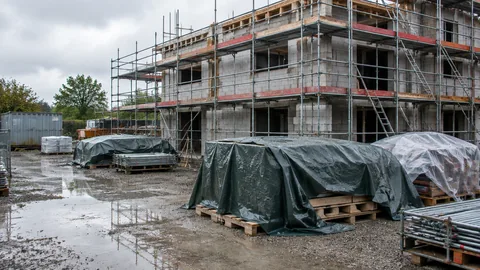
German insurers draw the line by what is being built. Contractors all risks (Bauleistungsversicherung) covers structures such as foundations, buildings and roads. Erection all risks covers machinery, mechanical equipment, steelwork and technical plant that is assembled, connected and commissioned. Large industrial sites often carry both policies side by side.
The overlap zones are machine foundations and building services. Agree in writing before work starts which items fall under which policy, otherwise each insurer may point at the other after a loss.
Commissioning is where the big losses happen
Lifting accidents are visible, but the expensive claims tend to come at first start-up: a swapped phase, a forgotten bolt in a gearbox, overpressure in a line. Test runs are normally included, but only for an agreed period. If commissioning drags on, for example because the customer asks for changes, extend the cover before it expires.
Cover ends when the test run is completed, at acceptance or when the plant is declared ready for operation, whichever comes first. From then on the plant is the operator's risk under their machinery breakdown or electronic equipment policy. Make sure the handover date is documented.
Extensions worth asking for
Beyond the installed object you can usually add your own erection equipment such as scaffolding, hoists and tool containers, the customer's existing plant you connect to, debris removal and salvage costs, and express or air freight for spare parts. Each extension needs its own sum insured.
Existing plant is the one most often missed. Tie a new control system into a running line, damage the line, and without this extension neither the erection policy nor liability cover will reliably pay.
Annual policy for regular installers
Firms that install only occasionally insure each project separately. Companies with a steady flow of jobs are usually better served by an annual policy that covers every installation up to a limit per object, with the premium based on declared installation turnover. No job then starts uninsured because a declaration was forgotten.
What is covered
Sudden and unforeseen damage to the installed object until acceptance
Clumsiness, negligence and operating errors by fitters
Damage during lifting, setting down and alignment
Short circuit, overvoltage and the effects of erection errors during test runs
Fire, lightning, explosion, storm and, depending on the policy, flood
Theft of installed parts and vandalism
Erection equipment and existing plant, if included
Debris removal, salvage and express freight as agreed
What is not covered
The defective part itself after a design, material or casting fault, usually only the resulting damage
Damage after acceptance or the start of regular operation
Third party liability for property damage or injury
Contract penalties, delay and loss of profit
Wear and tear, rust and gradual deterioration
The agreed deductible
Who needs it
Machine and plant builders who install and commission at the customer's site
Installation contractors and self-employed fitters
Steel construction, conveyor and crane companies
Manufacturers of energy, ventilation and process plant
Foreign firms installing in Germany under a German works contract
Who does not need it
Companies that only deliver and leave installation to the customer
Pure maintenance and service providers
Wheel of misfortune
Spin the wheel of bad luck
Six things that really happen. The wheel picks yours and shows who pays.
Cost:
Budget policy Strong policy
See all six cases
Component slips off the crane, new part, freight and reinstallation. Budget policy: pays, Strong policy: pays. The textbook erection loss. Damage to the installed object is paid, less the deductible.
Short circuit on first start-up, control cabinet, motors, wiring. Budget policy: pays in part, Strong policy: pays. Covered while the agreed test run period lasts. Weak policies keep it short.
Copper cable stolen overnight, material and labour to reinstall. Budget policy: pays in part, Strong policy: pays. Installed parts are usually covered, loose material in storage only with a specific extension.
Customer's existing line damaged, repair of the existing plant. Budget policy: does not pay, Strong policy: pays. Existing plant is not part of the installed object. It is covered only when expressly included.
Erection fault shows after handover, resulting damage to the plant. Budget policy: does not pay, Strong policy: pays in part. Cover ends at acceptance. Some policies offer limited maintenance period cover.
Customer claims a delay penalty, contract penalty for late handover. Budget policy: does not pay, Strong policy: does not pay. Penalties and delay losses are not physical damage. No erection policy pays them.
What it costs
The premium depends mainly on the erection value, meaning the replacement value of the object including installation costs, and on the time until acceptance. Annual policies are rated on declared installation turnover, usually with a minimum premium. We have no reliable, independently published example premiums for this class in Germany, so we do not quote figures.
What drives the premium
Erection value and value of the heaviest single item
Type of plant and share of electrical and control equipment
Duration of installation and test runs
Site, country and exposure to flood or theft
Included erection equipment and existing plant
Claims history and deductible
The insurer prices the risk only after reviewing the project description, installation schedule and site.
The policy levels on the market
01
Single project policy
One installation from unloading to acceptance with a fixed test run period. Suits firms with occasional large jobs.
02
Annual policy
All installations in a year up to a limit per object, premium based on turnover, options for erection equipment and existing plant.
03
Major project cover
For power, chemical or industrial plant with high values: individually underwritten, often covering all parties and the maintenance period.
How to recognise a good policy
Criterion
Minimum standard
Strong policy
Why it matters
Test run period
short and fixed
generous and extendable on request
Commissioning almost always takes longer than planned.
Consequences of faults
external causes only
resulting damage from design and erection faults covered
Most losses start with a mistake on your own side.
Existing plant
not covered
included with its own sum insured
Connecting to a running line puts the largest values at risk.
Erection equipment
excluded
scaffolding, hoists and tools included
Your equipment sits on someone else's site for weeks.
Natural perils
storm only
flood and heavy rain included
Open halls and pits fill up quickly.
Territorial scope
Germany only
worldwide or all countries you need
Plant engineering is an export business.
Maintenance period
not covered
erection faults that show after handover covered as an option
A fault made during installation can cause damage months later.
Insurers on the German market
In Germany erection all risks is written mainly by property insurers with engineering departments and, for large plant, by industrial insurers. Acceptance depends on the plant, the values and the country. This is a market overview, not a statement about who we work with.
Insurer
Background
Allianz
property and casualty company of the Allianz group, based in Munich
HDI Global
industrial insurer of the Talanx group for larger corporate clients
Mannheimer
property insurer based in Mannheim with its own erection insurance terms
Zurich
European company of the Zurich group, based in Frankfurt
R+V
insurer of the German cooperative banks, based in Wiesbaden
VHV
broker focused insurer from Hanover with a construction and trades focus
One policy for one installation with a fixed term. Simple, but every job must be declared in time.
Annual erection policy
Covers all installations in the year automatically up to the agreed limit. Standard for firms with ongoing work.
Contractors all risks
The sister class for the structure itself. On mixed sites the two policies complement each other.
Machinery breakdown insurance
Takes over after acceptance and covers the plant in operation, taken out by the operator.
Cargo insurance
Covers the journey from the factory to the site. Erection cover usually starts at unloading.
Myth or truth
True or false?
Five things people say about this insurance. Guess first, then see the answer.
Liability insurance pays for damage to my own installation before handover.
This is false.
No. Liability cover pays for damage to other people's property. Your own work before acceptance is almost always excluded, which is exactly what erection all risks is for.
Test runs are covered for as long as they take.
This is false.
No. Test runs are usually covered for an agreed period, and the cover must be extended in time if commissioning is delayed.
The customer can take out the erection policy instead of the supplier.
This is true.
Yes. On large projects the customer often insures the whole project and all parties under one policy. The supply contract should say who insures.
After a material defect, the faulty part itself is usually not replaced.
This is true.
True for most policies. The damage the defect causes to other parts is covered, while replacing the faulty part is the supplier's warranty obligation.
A contractors all risks policy also covers machinery installation.
This is false.
Usually not. Contractors all risks covers structures. Machinery and technical plant including test runs belong under erection all risks.
Common mistakes
Relying on liability insurance, which does not cover your own work
Extending commissioning without telling the insurer
Leaving out the customer's existing plant you connect to
Insuring transport and erection separately and leaving a gap at unloading
Choosing limits per object in an annual policy that are too low
Frequently asked questions
Questions and answers
Frequently asked
What is the difference between erection all risks and contractors all risks?
Contractors all risks covers structures, erection all risks covers machinery,
steelwork and technical plant including test runs.
What matters is what is being built, not where.
Mixed sites often need both with a clear dividing line.
When does cover start and end?
Usually from unloading on site until acceptance or the start of regular operation.
Transport to the site needs cargo cover,
operation afterwards needs the operator's machinery policy.
Are test runs always included?
Usually, but only for an agreed period.
If commissioning takes longer, extend the cover before it lapses.
Check this period in every quote.
Does the policy pay if a design fault causes the loss?
It usually pays for the damage the fault causes to other parts,
not for replacing the faulty part itself.
That remains a warranty matter for the supplier.
Who should buy the policy, the supplier or the customer?
The contract decides.
Usually whoever carries the risk until acceptance insures, typically the manufacturer or installer.
On large projects the customer often insures all parties under one policy.
We are a foreign company installing in Germany. Can we insure locally?
Yes.
A German policy can cover your installation in Germany, and some customers prefer a German insurer.
Alternatively your home policy may extend to Germany; we compare both routes.
Are our tools and lifting gear covered?
Only if erection equipment is included as an extension.
Otherwise they need separate equipment or machinery cover.
Why use a broker?
Because insurers treat test runs, existing plant,
consequential damage and foreign sites very differently,
and acceptance depends on the project.
We collect quotes, compare wording and align the boundary with contractors all risks and cargo
cover.
The insurer pays our commission.
NAMMERT insurance broker
Request quotes for Erection all risks
We obtain quotes and come back with a comparison, free of charge.
You can write in English.
Thank you, we have your request.
We will be in touch within one working day. If it is urgent: +49 3375 29 12 77.