All about this insurance: Dental insurance
Is dental insurance worth it in Germany?
Insurance broker / Insurance questions / Dental insurance
In short
Does supplementary dental insurance pay for professional teeth cleaning? Many tariffs do, usually with a budget of about EUR 100 to 200 a year. In Germany one session often costs EUR 80 to 150, and many public health insurers add EUR 40 to 150 a year. A policy rarely pays off for cleaning alone; dentures and implants matter more.
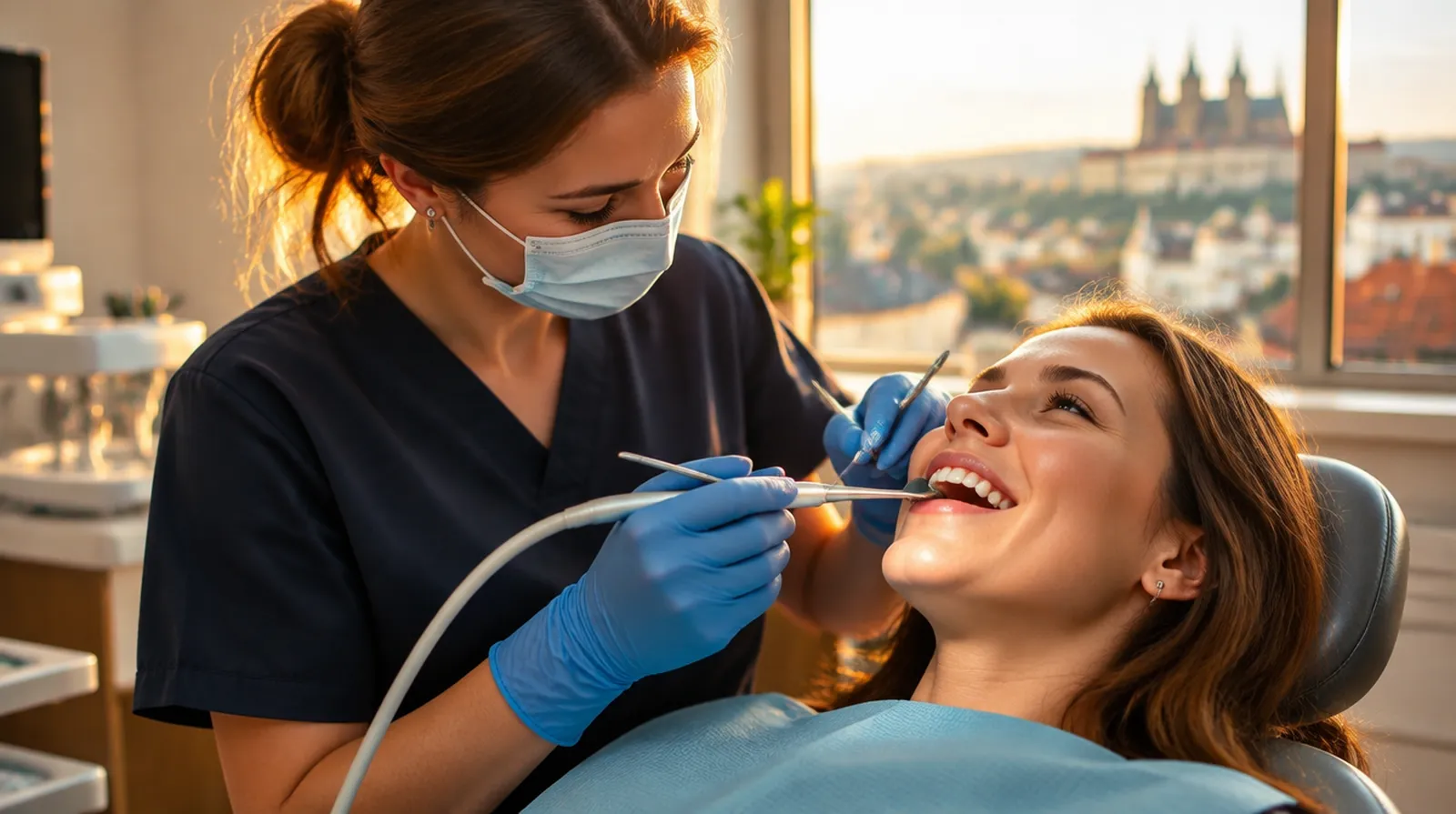
Cost per session and usual subsidies in Germany, as of October 2026.
| Example | Typical range |
|---|---|
| Standard cleaning at the dentist | about EUR 80 to 150 per session |
| Public health insurance subsidy, directly at the dentist | usually EUR 40 to 150 a year |
| Subsidy via bonus programme or health account | up to EUR 200 or more with some insurers |
| Budget in supplementary dental tariffs | often EUR 100 to 200 a year |
Costs and subsidies from published figures, as of October 2026.
The budget per tariff is a guide value from our quoting practice (Richtwert aus der Angebotspraxis); what your tariff pays is set out in its terms.
Worked example
How your public insurer, the supplementary tariff and you share the cost.
| Two sessions at EUR 110 each | EUR 220 |
| Public insurance subsidy, twice EUR 40 | EUR 80 |
| Remaining after the subsidy | EUR 140 |
| Paid by supplementary dental insurance, up to EUR 150 | EUR 140 |
You pay EUR 0 yourself. Without the public subsidy EUR 70 would remain with you.
Professional teeth cleaning (professionelle Zahnreinigung, PZR) is a private service in Germany. Dentists charge it per tooth under the fee schedule for dentists (GOZ), with a multiplier depending on effort. For a full set of teeth and a usual multiplier you will typically pay EUR 80 to 120, with air polishing or heavy deposits EUR 150 or more.
Public health insurance pays only for simple removal of hard tartar once a year. Thorough cleaning of all surfaces, polishing and fluoride treatment are not included.
| Type of cleaning | Usual cost per session |
|---|---|
| Simple cleaning, little plaque | about EUR 50 to 80 |
| Standard cleaning, full set of teeth | about EUR 80 to 120 |
| Complex cleaning with air polishing | about EUR 100 to 180 |
| Cleaning with periodontitis | about EUR 120 to 200 |
Many public health insurers (gesetzliche Krankenkassen) pay a voluntary subsidy, often EUR 40 to 75 per session for one or two sessions a year. Some only pay at partner dentists, others through a bonus programme or health account, sometimes considerably more.
Ask your insurer first. The subsidy costs you nothing, and some supplementary tariffs only pay what is left after the public share. If you have private health insurance instead, check your own tariff.
Tariffs handle cleaning in three ways: a fixed euro amount per year, a number of sessions or a percentage of the bill. A budget of EUR 100 to 200 a year covers two standard sessions if your public insurer adds something.
With many tariffs cleaning is covered straight away, without a waiting period. Others apply the general eight month waiting period or a cap on benefits in the first years that also affects cleaning.
| Rule in the tariff | What it means for you |
|---|---|
| Fixed amount, about EUR 150 a year | predictable, you pay the rest at expensive practices |
| One or two sessions a year | full bill paid, but no extra appointments |
| Percentage of the bill, about 80 percent | a share remains with you each time |
| Only the rest after the public subsidy | claim the public subsidy first |
If you only want cleaning covered, a tariff often costs more in premiums than it pays back. Good supplementary dental insurance costs about EUR 15 to 30 a month at age 35, so EUR 180 to 360 a year. Cleaning alone brings back at most EUR 100 to 200.
It makes sense if the tariff mainly covers expensive dentures such as implants or crowns well. Cleaning is then an extra that recovers part of the premium.
Independent reviewers consider it not clearly proven that professional cleaning prevents tooth decay better than the public tartar removal. It does help many people against plaque and gum inflammation.
Questions and answers
Usually once or twice a calendar year or up to a fixed amount. Some tariffs pay for any number of sessions as long as the budget lasts.
Not as a standard benefit. Many insurers pay a voluntary subsidy; the amount and conditions vary widely.
With many tariffs, no. Some apply the general eight month waiting period, so read the terms.
That depends on the tariff. Some count it towards the first years' maximums, others treat it separately.
Rarely. The premium is often close to the possible refund, and you then lack cover for expensive dentures.
For supplementary insurance, usually yes, any licensed dentist will do. Some public insurance subsidies are only paid at partner practices.
NAMMERT insurance broker
We compare insurers and come back to you, in English. Free; the insurer pays our fee.
Thank you, we have your request.
We will be in touch within one working day. If it is urgent: +49 3375 29 12 77.
All about this insurance: Dental insurance
Is dental insurance worth it in Germany?
What does supplementary dental insurance cover in Germany?
Supplementary dental insurance (Zahnzusatzversicherung) pays the part public health insurance …
How much does supplementary dental insurance cost in Germany?
Good supplementary dental insurance (Zahnzusatzversicherung) usually costs EUR 15 to 30 a mon …
Is supplementary dental insurance worth it in Germany?
Usually yes if you are in public health insurance, in your mid 30s or older and want high qua …
Is there a waiting period for supplementary dental insurance in Germany?
Many tariffs no longer have a waiting period; by law it may be up to eight months for crowns, …
Your broker: Norman Nammert, insurance broker licensed under section 34d(1) of the German Trade Regulation Act, trading as NAMMERT.
Broker register no. D-C08Q-TOSD4-37.
NAMMERT Assekuradeur GmbH is a separate company and does not arrange your contract.
Statutory disclosure (German) · Updated
Was this useful?