All about this insurance: Travel insurance
Which travel insurance do I need if I live in Germany?
Insurance broker / Insurance questions / Travel insurance
In short
It pays for acute treatment abroad: doctor, hospital, prescribed medicines, transport to hospital, emergency dental pain treatment and the medical flight home. It does not pay for planned treatment, dentures, glasses or, usually, conditions already under treatment. One sentence decides how good a policy is: repatriation when it is medically sensible, not only when it is medically necessary.
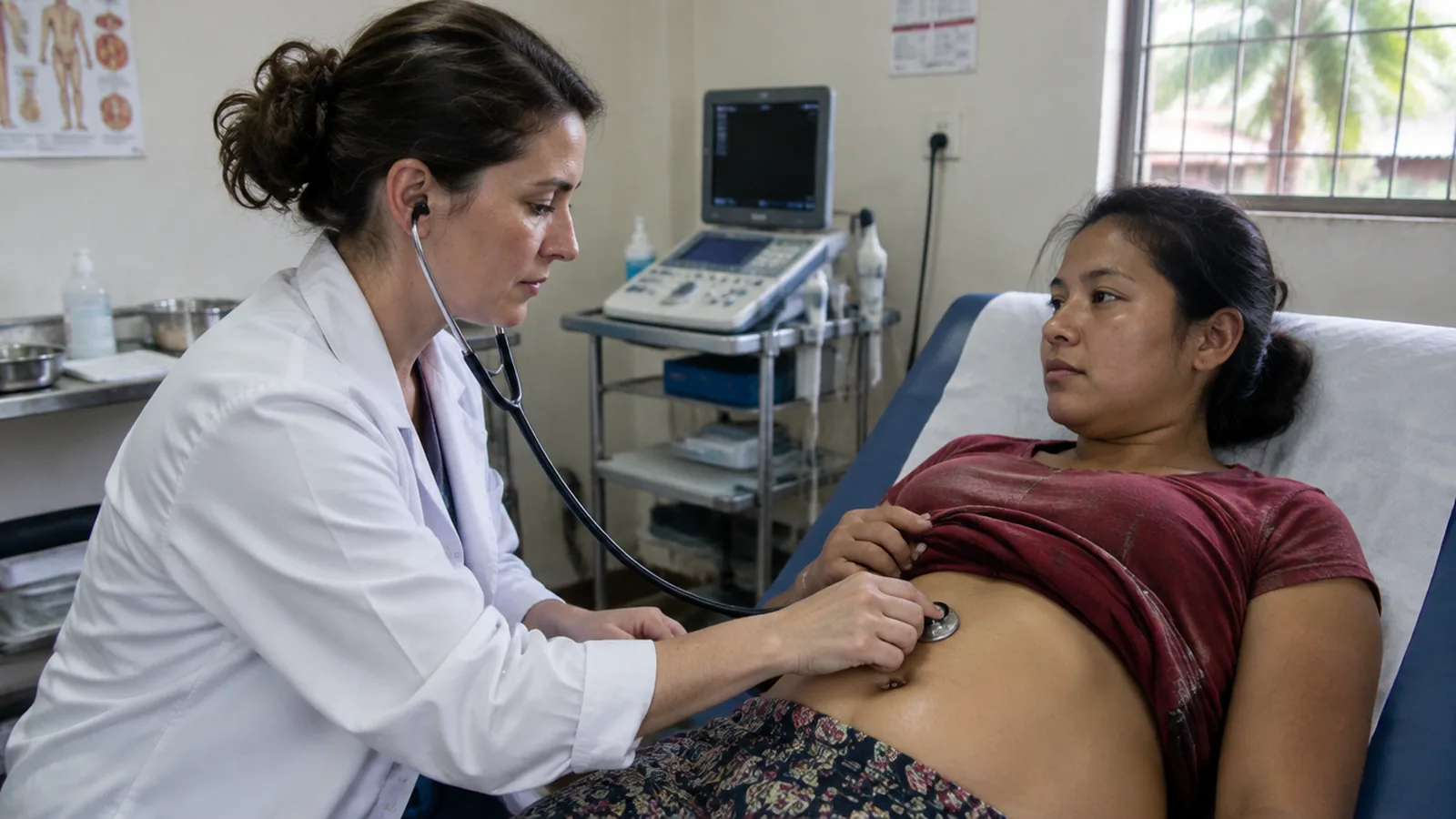
Published invoice amounts and transport costs, as of September 2026. They show which sums stay with you without cover.
| Example | Typical range |
|---|---|
| Outpatient doctor's visit outside Europe | about EUR 150 to 500, in the USA over EUR 800 |
| Hospital day outside Europe | about EUR 1,500 to 5,000, in the USA up to EUR 10,000 |
| Intensive care per day | about EUR 3,000 to 15,000 |
| Appendix operation | about EUR 5,000 to 25,000, in the USA EUR 30,000 to 50,000 |
| Helicopter rescue from a Greek island | about EUR 5,000 to 15,000 |
| Air ambulance from the USA to Germany | about EUR 60,000 to 80,000 |
| Intensive-care transport from the Canary Islands | around EUR 75,000 |
| Intensive-care transport from the Americas | around EUR 200,000 |
| Intensive-care transport from Australia or New Zealand | around EUR 400,000 |
Guide values as of September 2026 from published cost examples. The limits for dental treatment, repatriation of remains and search and rescue in the table are guide values from our quoting practice and differ in every tariff. What your contract pays is written only in your own policy wording, and we read it through with you.
Worked example
A published cost example, calculated with a tariff without a deductible and with repatriation included.
| Helicopter rescue | EUR 12,000 |
| Emergency room and X-rays | EUR 3,500 |
| Operation | EUR 25,000 |
| Three days in hospital | EUR 12,000 |
| Flight home with medical escort | EUR 15,000 |
| Total invoice | EUR 67,500 |
| Paid by German public health insurance | EUR 0, there is no agreement with the USA |
With medical costs and repatriation uncapped, the travel health policy reimburses the full EUR 67,500. Watch the rescue item: search and rescue often has its own limit, EUR 12,000 in one published tariff. Anything above that you pay yourself. Worked example using published guide values.
Cover applies to unforeseen, acute treatment: the doctor's visit, the hospital, prescribed medicines and dressings, transport to the nearest suitable hospital and the journey home if treatment has to continue there.
The limits are not in the brochure, they are in the policy wording (Bedingungen), and that wording is in German. Look for three numbers: the cap on medical costs, the limit for dental treatment and the limit for search and rescue.
| Benefit | Covered | Typical limit |
|---|---|---|
| Outpatient treatment by a doctor | yes | no cap, or a six-figure limit |
| Inpatient treatment in hospital | yes | nearest suitable hospital, room class depends on the tariff |
| Prescribed medicines and dressings | yes | only for the acute treatment, no stock supplies |
| Ambulance to hospital locally | yes | to the nearest suitable hospital |
| Medical flight home | yes | in many wordings only once it is medically necessary |
| Emergency dental pain treatment | capped | pain relief and simple fillings, often up to about EUR 500 |
| Dentures, crowns, bridges | no | excluded |
| Repatriation of remains | yes | transport home or local burial, often up to about EUR 10,000 |
| Search and rescue | depends on tariff | separate limit, often about EUR 5,000 to 12,000 |
| Planned treatment, check-ups, spa cures | no | excluded |
| Condition already under treatment | capped | acute deterioration usually yes, planned continuation no |
| Glasses, contact lenses, hearing aids | no | in some tariffs only after an accident |
| Pregnancy | capped | depending on the tariff only up to about week 36 |
| Alcohol, drugs, intent | no | benefit reduced or refused entirely |
| Treatment in your home country | no | there your normal health insurance applies |
This is the decisive point and it costs almost nothing in the premium. Medically necessary (medizinisch notwendig) means the transport must be unavoidable because local care is not sufficient. As long as the hospital abroad can treat you, you stay there.
Medically sensible and reasonable (medizinisch sinnvoll und vertretbar) means the transport is defensible and does you good, even if the local clinic could manage. That is how you get home to your family, your language and a follow-up you can organise. With the narrower wording you end up arguing over a medical opinion at the worst possible moment.
Everything planned is excluded: the operation you travel abroad for, the check-up, the spa cure, dentures, new glasses. Treatment in the country where your health insurance applies is excluded too, so a German policy does not cover treatment in Germany.
Pre-existing conditions are capped: an acute deterioration is usually covered, the planned continuation of ongoing treatment is not. Diving, climbing, motor sport and similar risks sit in the exclusions or need an add-on. With alcohol, drugs and intent insurers reduce or refuse the benefit. Pregnancy is covered only up to about week 36 depending on the tariff, and childbirth itself is not a travel claim.
The card on the back of your German health card (Europäische Krankenversicherungskarte) works in the EU, the European Economic Area, Switzerland and the United Kingdom. It gives you the state system's care under the rules of the country you are in. Whatever a local resident pays out of pocket, you pay too: co-payments, prescription charges, surcharges.
Three gaps are large. Private doctors and private clinics fall out entirely, and in holiday resorts those are often the practices that open first. The flight home is never paid. And outside the card's area it simply does not apply, so in the USA or Thailand German public insurance pays nothing.
| Point | European Health Insurance Card | Travel health insurance |
|---|---|---|
| Where it applies | EU, EEA, Switzerland, United Kingdom | worldwide depending on the tariff |
| Private doctor or private clinic | no | yes |
| Local co-payments | you pay them | usually reimbursed |
| Medical flight home | no | yes |
| Repatriation of remains | no | yes |
| Emergency line around the clock | no | yes |
Questions and answers
No. Many tariffs pay only once the transport is medically necessary. Good tariffs pay as soon as it is medically sensible and reasonable. That is the most important difference in the small print.
No. It applies only in the EU, the EEA, Switzerland and the United Kingdom, only with state providers and only on the terms of the country you are in. Co-payments, private clinics and the journey home stay with you.
An acute deterioration usually yes. The planned continuation of treatment on holiday, and trips taken in order to be treated, are excluded.
Only pain treatment and simple fillings, often with a limit. Crowns, bridges and dentures are excluded.
Ordinary holiday sport is covered. Diving, climbing, motor sport and similar risks are excluded or need an add-on, depending on the tariff.
Never in cases of intent. With alcohol and drugs insurers reduce or refuse the benefit depending on the wording. Tariffs differ widely here.
No. In the country where your health insurance applies, that insurance takes over and the travel policy does not. If your policy is German, Germany is not abroad.
Usually yes. Some insurers offer English service, but the German wording is what counts in a claim, so ask us when a clause is unclear.
NAMMERT insurance broker
We compare several insurers and come back with a proposal. Free for you; the insurer pays our fee. You can write in English.
Thank you, we have your request.
We will be in touch within one working day. If it is urgent: +49 3375 29 12 77.
All about this insurance: Travel insurance
Which travel insurance do I need if I live in Germany?
Do I need travel health insurance when I live in Germany?
Yes, almost always if you have public health insurance in Germany. It pays only limited costs abroad and never the fli …
How much does travel health insurance cost in Germany?
An annual policy (Jahresvertrag) for holiday trips costs about EUR 8 to 25 a year for one person and EUR 20 to 90 for …
Which travel health insurance do I need for a long stay abroad?
Up to about 56 days per trip a normal annual policy is enough. Stay longer and you need a separate long-term travel po …
NAMMERT Assekuradeur GmbH, insurance broker licensed under section 34d(1) of the German Trade Regulation Act, broker register no. D-C08Q-TOSD4-37. For boat and yacht insurance we act as underwriting agency, not as broker. Statutory disclosure (German) · Updated
Was this useful?