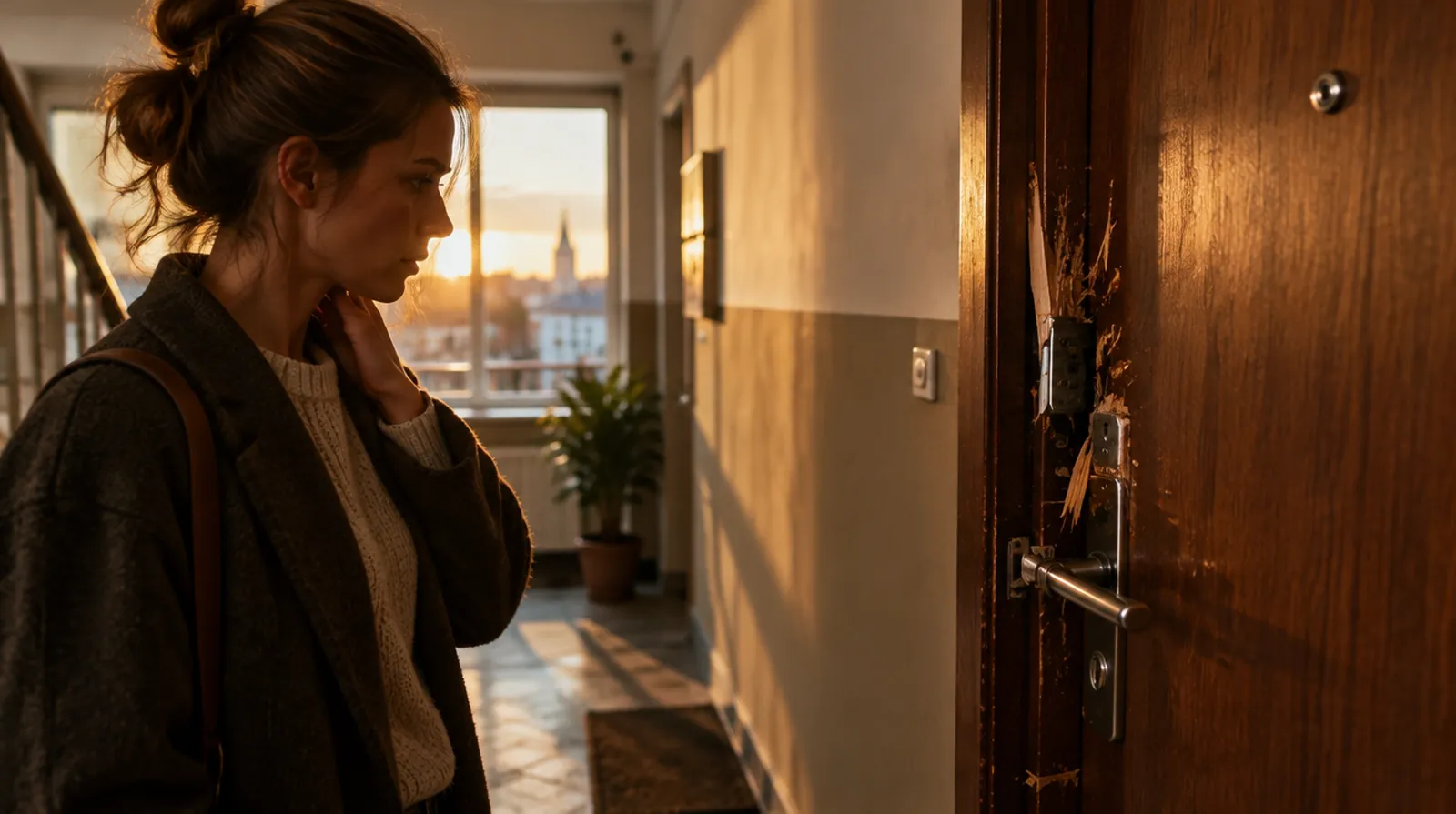
Burglary or simple theft: what does contents insurance cover in Germany?
In short
In Germany, contents insurance (Hausratversicherung) covers burglary (Einbruchdiebstahl): the thief breaks in, climbs in or enters with a false key or a tool. Simple theft (einfacher Diebstahl), where nothing is forced, is not covered in the basic policy. What it does pay beyond that depends on single clauses with their own limit, in the example tariff 1 percent of the sum insured or at most EUR 500.
Limits from a published tariff overview and premiums from publicly quoted examples, as of 2025 and 2026.
Example
Typical range
Contents insurance, 80 square metres, Dresden to Düsseldorf, no bike cover
about EUR 23 to 54 a year
Bike, simple theft, sum insured EUR 50,000
1 percent, so up to EUR 500
Trick theft inside the flat
1 percent of the sum, at most EUR 500
Theft from a car that was broken into
1 percent of the sum, at most EUR 2,500, valuables EUR 250
Theft in hospital or at work
up to EUR 500, valuables up to EUR 100
As of October 2026.
The limits come from one example tariff, other tariffs use other amounts.
Adding a bike module costs about EUR 20 to 60 a year for a bike worth EUR 1,000 to 3,000 (guide
value from our quoting practice).
We obtain the exact quote for you.
Worked example
Four thefts, four outcomes
Sum insured EUR 60,000, limits as in the example tariff above. Loss amounts are assumed values.
Burglary through the patio door, laptop and camera EUR 2,400
EUR 2,400
Locked e-bike stolen at the station, new price EUR 3,000
EUR 600 (1 percent of 60,000)
Fake meter reader steals jewellery worth EUR 1,500
EUR 500 (trick theft cap)
Handbag taken from the open hall, EUR 400
EUR 0 (simple theft)
Out of EUR 7,300 in losses the tariff pays EUR 3,500, minus any agreed deductible. The e-bike would have needed a higher bike limit or its own bike policy.
What counts as burglary
The model terms used by German insurers list exactly when a burglary has happened: the thief breaks into a room, climbs in, enters with a false key or a tool, breaks open a container, sneaks in and steals from a locked room, or uses force to keep the loot.
A real key can be enough if the thief got it by burglary or robbery first. If the key was simply stolen, the insurer pays as long as nobody made that theft possible through carelessness. Everything else is simple theft: the thief overcomes no obstacle.
Situation
Covered by the basic policy?
Patio door forced open, laptop gone
yes, burglary
Someone threatens you at home and takes jewellery
yes, robbery
Front door left open, handbag taken from the hall
no, simple theft
Tradesman pockets cash while working in your flat
no, simple theft
Fake meter reader talks his way in and steals
only with a trick theft clause, capped
Locked bike stolen at the station
only with a bike clause
Pickpocket on the train
no, robbery needs force against your resistance
When simple theft is covered after all
The model terms include clauses that bring in specific cases of simple theft: theft from a car that was broken into, from a sleeper compartment or ship cabin, trick theft inside your flat, theft of wheelchairs, walkers and prams, theft during a hospital stay, and garden furniture or laundry on your property. Bikes are added through a separate clause.
Each clause has its own cap, set by the insurer. The table shows how low these caps can be in a published tariff overview.
Clause
Limit in the 2025 example tariff
Bike, simple theft away from home
1 percent of the sum insured
Pram, walker, wheelchair
1 percent of the sum insured
Garden furniture, barbecue, laundry on the property
1 percent of the sum insured
Trick theft inside the flat
1 percent, at most EUR 500
Car that was broken into
1 percent, at most EUR 2,500, valuables EUR 250
Hospital, rehab clinic, workplace
up to EUR 500, valuables up to EUR 100
Where the line is strict
If you hand over jewellery or cash yourself after being deceived, for example to fake police officers at the door, this is not insured trick theft. The model terms exclude it explicitly.
Theft by guests, a cleaner or tradespeople inside your flat is simple theft. The German model terms have no separate clause for it, so the practical protection is to lock valuables away.
When you do not need an add-on
If you have no expensive bike, no garden and leave nothing valuable in the car, an extension adds little. The basic cover for burglary and robbery is then enough.
An add-on pays off where things regularly stand unprotected: bike, e-bike, pram in the stairwell, garden furniture. For an e-bike worth more than EUR 3,000 the percentage cap is often too low, so a higher bike limit or a separate bike policy is the better choice.
Step by step
Check your policy schedule for the theft clauses you have and their limits.
Compare the real value of your bike, pram, garden furniture and anything kept in the car.
For an expensive bike, raise the bike limit or look at a separate bike policy.
Lock the front door instead of just pulling it shut, and lock valuables away when guests or tradespeople are in.
After a theft, call the police straight away and list the missing items with receipts.
Checklist
Burglary, robbery and vandalism after a break-in in the basic cover
Bike clause with a limit that matches your bike
Trick theft inside the flat included
Theft from a car that was broken into with a sufficient limit
Garden furniture and laundry if you have a garden or terrace
Pram and walker if they stand in the stairwell
Common mistakes
Assuming every theft from your flat is a burglary, even if the door was open
Covering an expensive e-bike only through the percentage cap of contents insurance
Handing over jewellery after a deception and relying on the trick theft clause
Not keeping the receipt and frame number of your bike
Questions and answers
Frequently asked
Is theft from the cellar covered?
A lockable cellar on the property counts as part of the insured location.
If the thief breaks the lock, it is burglary.
If the cellar was open, it is simple theft.
Does contents insurance pay if a guest or cleaner steals something?
No, that is simple theft without any forced entry.
The German model terms have no clause for it.
What is trick theft?
The thief gets into your flat by deception and steals there.
With the matching clause this is covered up to a cap, at most EUR 500 in the example tariff.
If you hand things over yourself, the insurer does not pay.
Is pickpocketing covered?
No.
Robbery requires the thief to break your resistance by force or to threaten force.
An unnoticed grab into your bag is simple theft.
Am I covered in a hotel room?
Yes, through cover away from home (Außenversicherung).
For burglary the same conditions apply as at home, for example the room door being forced open.
Do I need extra cover for simple theft?
Only where things stand unprotected: bike, pram, garden furniture.
For what you keep inside your flat, the basic cover is usually enough.