All about this insurance: Travel insurance
Which travel insurance do I need if I live in Germany?
Insurance broker / Insurance questions / Travel insurance
In short
For a short trip inside Europe by healthy adults it often is. Otherwise usually not: cover normally applies only if you paid 50 to 100 percent of the trip with that card, often only for the cardholder, with cancellation caps of EUR 5,000 to 10,000 per person and a trip length limited to about 45 days. A separate travel health policy costs from about EUR 8 a year.
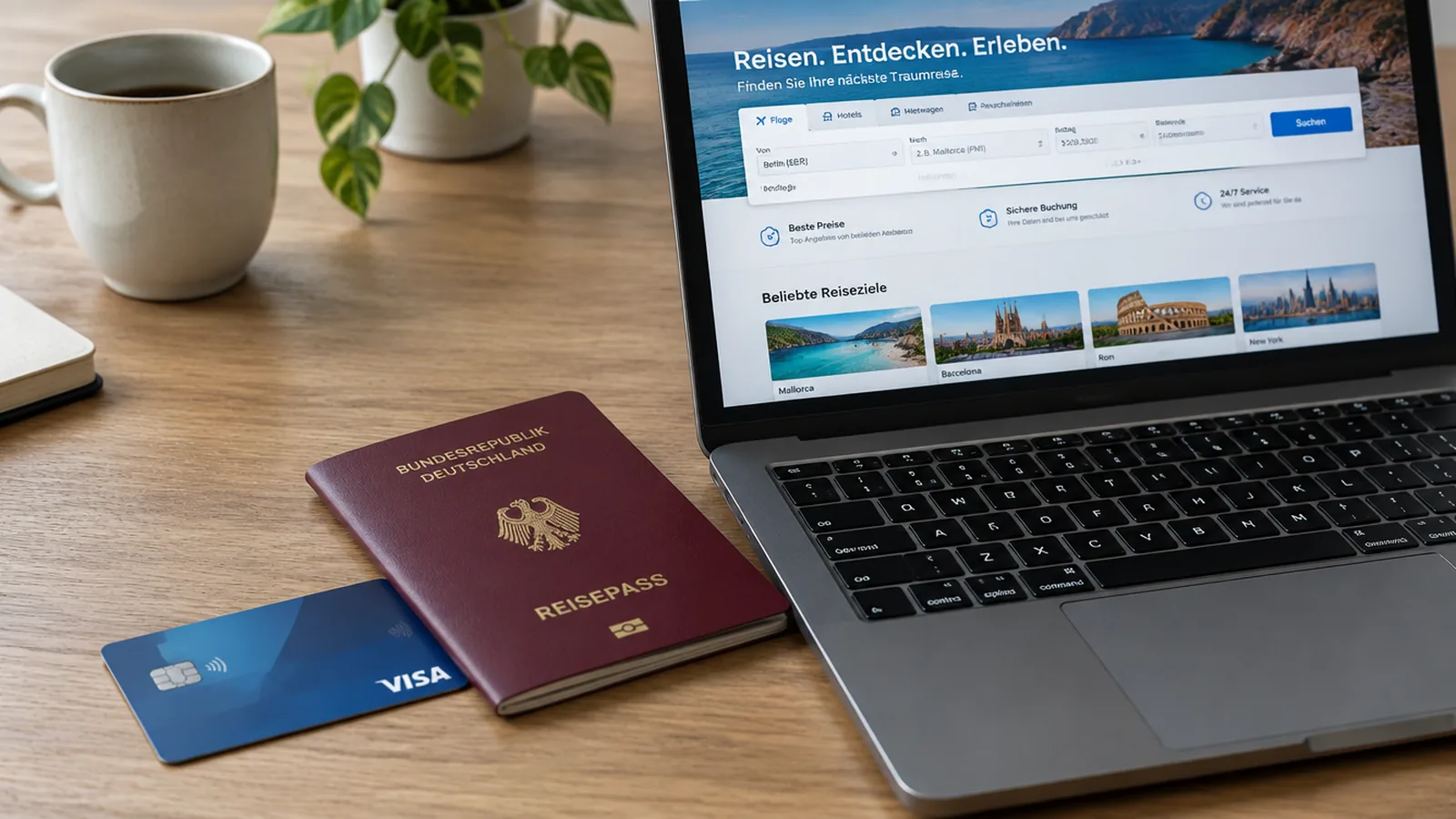
Annual card fees by class and premiums for separate travel policies, as of 2026.
| Example | Typical range |
|---|---|
| Card with no annual fee, usually without a travel package | EUR 0 a year |
| Mid-range card with a travel package | about EUR 60 to 140 a year |
| Premium or platinum card with a travel package | about EUR 600 to 720 a year |
| Separate annual travel health policy, one person | from about EUR 8 to 20 a year |
| Separate annual cancellation policy, one person | about EUR 40 to 125 a year |
| Typical limits inside card packages | cancellation EUR 5,000 to 20,000, deductible EUR 20 to 100, trip length 45 to 90 days |
Guide values as of September 2026 from publicly quoted fees and policy wordings. Which card offers which sum changes with every tariff round; only the wording for your own card is binding. The judgement on when a card is enough is a guide value from our advisory practice. We obtain the exact quote for separate policies.
Worked example
The card covers a lot, but only for one person and only if the trip was paid with it. Here is the sum.
| Annual fee of the premium card | about EUR 600 |
| Cancellation cover on the card | up to EUR 10,000, only if the trip was paid with this card |
| Partner without their own card | on many tariffs not insured |
| Separate annual cancellation policy for two people | about EUR 80 to 200 |
| Separate travel health policy for two people | about EUR 20 to 40 |
Holding the card only for the insurance means paying about EUR 600 for cover that costs about EUR 100 to 240 bought separately, then without a payment condition and with both people named. If you use the card anyway, insure only the partner. Worked example with guide values.
Card packages advertise large sums but tie them to conditions that often are not met in real life. The most common trap is the payment condition: pay part of the trip by bank transfer or with a different card and, under strict wording, you lose the whole cover.
The second trap is the limits. Many packages only cover trips up to a certain price, for example EUR 2,500, and only up to a certain number of days per trip. Neither figure appears in the advertising, only in the policy wording (Versicherungsbedingungen).
| Module | What card packages typically offer | What to watch out for |
|---|---|---|
| Travel health insurance | medical costs up to EUR 1 million, up to EUR 5 million on premium cards, repatriation sometimes unlimited | pre-existing conditions usually excluded, age limits often 70 or 75, treatment in the USA and Canada sometimes left out |
| Trip cancellation | EUR 5,000 to 10,000 per person, luxury cards up to EUR 20,000 | a cap on the trip price, often only trips up to about EUR 2,500, deductible EUR 20 to 100 |
| Trip interruption | on many cards not included at all | without it you have no cover from the day you leave |
| Luggage | limited sums per claim | deductible EUR 50 to 100, low sub-limits for valuables and electronics |
| Hire car excess | EUR 0 on premium cards, up to EUR 500 on basic cards | applies only if the rental was paid with the card |
| Trip length | 45 days per trip, premium cards 60 to 90, rarely up to 180 | longer trips fall out from day one |
| Travel companions | premium cards often include partner and children | on many cards only the cardholder is insured |
The policyholder is the bank and you are one of the insured persons. You cannot negotiate the wording and the bank can change it for the next term. If the card is cancelled, switched or blocked because of an unpaid balance, the cover ends with it, even for a trip you booked months ago.
Real help in an emergency is usually missing too. A card hotline blocks the card, it does not arrange a hospital or a flight home. Check whether a genuine medical emergency centre is named and reachable around the clock.
A trip to your home country counts as travel abroad, so it is covered in principle, but many card packages exclude treatment in your country of residence and some exclude the country that issued your passport. Read that clause before you rely on it for a visit to family.
If the card was issued outside Germany, the cover may be limited to trips starting in the issuing country. Policy wordings from German banks are normally in German only, and the German text decides a claim, so ask us to read the clause with you rather than working from a translation.
It is usually enough when everything lines up: a short trip inside Europe, healthy adults with no pre-existing condition, no expensive booking, the trip paid in full with the card, and you travel alone or every adult has their own card with the same cover.
In that case a second policy would be money spent twice. Still, download the wording and keep it with your travel documents, because in a claim the text decides, not the marketing page.
It falls short on long trips beyond the day limit, on far destinations with expensive treatment, with known pre-existing conditions, from about age 70, on expensive package holidays above the price cap, and whenever family or friends travel with you and are not included.
Certain sports and regions are regularly excluded as well: diving below a depth limit, mountaineering, motorsport, travel to areas under an official travel warning. And if you pay a deposit but not the full price with the card, the payment condition works against you.
A separate annual travel health policy costs from about EUR 8 to 20 a year for one person and about EUR 20 to 90 for a family. A separate annual cancellation policy runs at about EUR 40 to 125. Both apply no matter how you paid for the trip.
Do the honest sum: a premium card held only for the insurance costs more than EUR 500 a year, while the same modules bought separately usually cost EUR 50 to 250, without a payment condition and with everyone named in the policy. If you use the card anyway, treat the cover as a bonus and insure only the gaps.
Questions and answers
Usually yes. Many wordings require 50 to 100 percent of the price to go through that card, some the full amount in advance.
On many cards only the cardholder. Premium cards often include partner and children, but only a limited number of people.
Often EUR 5,000 to 10,000 per person, up to EUR 20,000 on luxury cards. A separate cap on the trip price usually applies as well.
Only up to the day limit, often 45 days per trip and 60 to 90 on premium cards. For a semester abroad or a long journey you need your own policy.
Often not. Known and chronic conditions are regularly excluded, and separate limits apply from about age 70.
The cover ends with the card, including for trips you booked earlier. It belongs to the card, not to you.
Often not. Check that explicitly, otherwise you have no cover for unused services from the day you leave.
NAMMERT insurance broker
We compare several insurers and come back with a proposal. Free for you; the insurer pays our fee. You can write in English.
Thank you, we have your request.
We will be in touch within one working day. If it is urgent: +49 3375 29 12 77.
All about this insurance: Travel insurance
Which travel insurance do I need if I live in Germany?
When is trip cancellation insurance worth it?
Trip cancellation insurance (Reiserücktrittsversicherung) makes sense if you book expensive trips well in advance or c …
Do I need travel health insurance when I live in Germany?
Yes, almost always if you have public health insurance in Germany. It pays only limited costs abroad and never the fli …
What does travel health insurance cover?
It pays for acute treatment abroad: doctor, hospital, prescribed medicines, transport to hospital, emergency dental pa …
NAMMERT Assekuradeur GmbH, insurance broker licensed under section 34d(1) of the German Trade Regulation Act, broker register no. D-C08Q-TOSD4-37. For boat and yacht insurance we act as underwriting agency, not as broker. Statutory disclosure (German) · Updated
Was this useful?