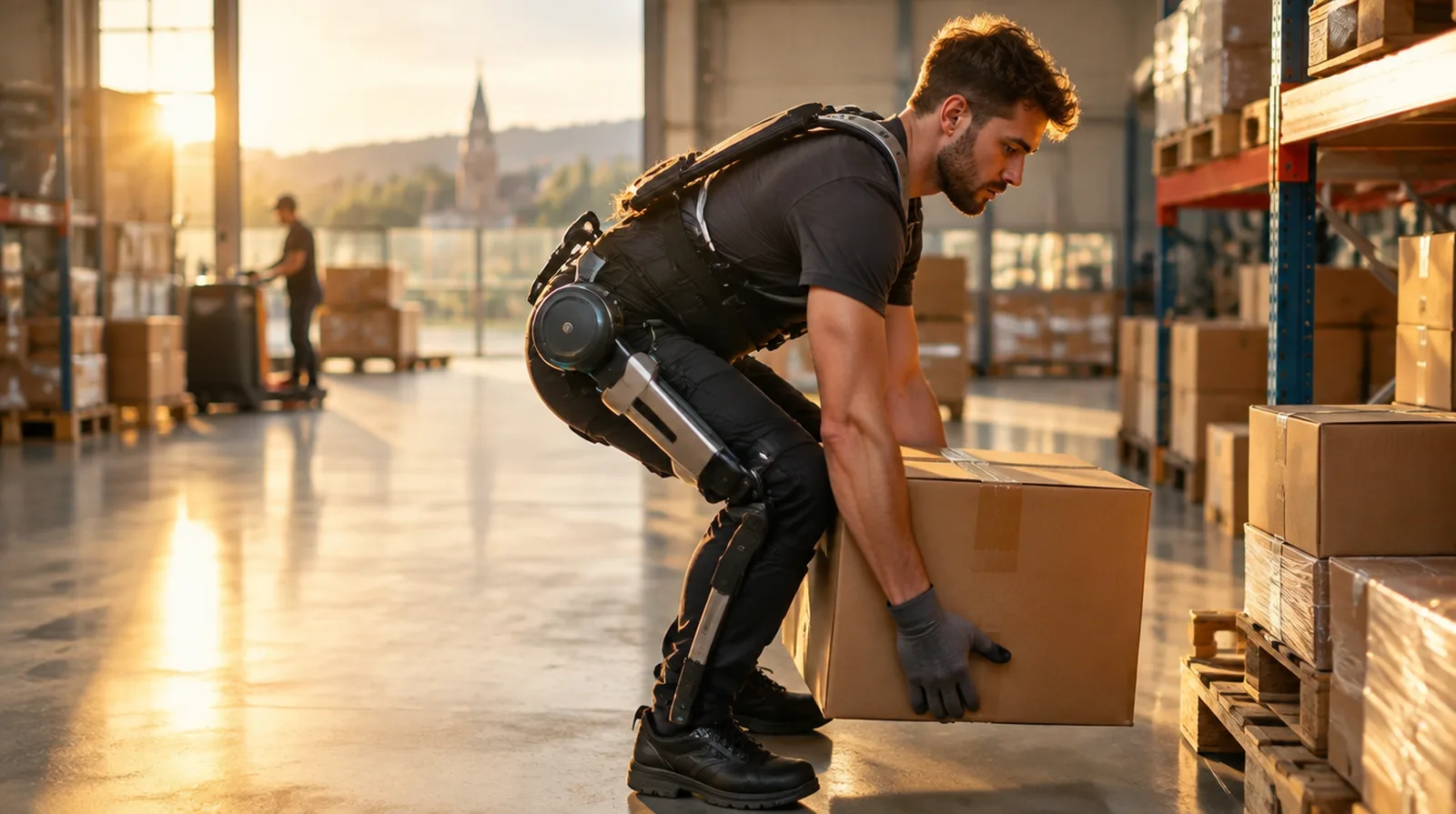
Who pays if an exoskeleton or a smart prosthesis fails?
In short
Who pays if an exoskeleton or a smart prosthesis fails? If your health insurer provided it, the insurer also pays for repair and replacement. If a defect injures you, the manufacturer is liable without fault under the German Product Liability Act. At work, the statutory accident insurer (Berufsgenossenschaft) pays. If you injure someone else, your personal liability cover pays, about EUR 40 to 120 a year.
Legal expenses for a family, private, work and traffic
about EUR 251 to 978 a year
Guide values, October 2026, from published examples.
Device price and losses in the worked example are guide values from broker practice.
Worked example
Microprocessor knee locks up
A prosthesis approved by the health insurer locks because of a software error. The wearer falls, breaks her wrist, and her EUR 700 smartphone is ruined.
Repair or replacement of the prosthesis
health insurer
Treatment of the wrist
health insurer, recovered from the manufacturer
Pain and suffering, lost earnings
manufacturer under product liability
Smartphone worth EUR 700
manufacturer pays EUR 200, EUR 500 deductible
The health insurer looks after the aid, the manufacturer after the consequences of the defect. The wearer herself bears EUR 500 on the phone and her time.
When your health insurer paid for the aid
A microprocessor prosthesis or a medical exoskeleton is a medical aid (Hilfsmittel). Under section 33 SGB V your claim against statutory health insurance also includes necessary adjustment, repair and replacement, plus maintenance and safety checks where needed.
If the smart prosthesis fails, contact the medical supply store and your health insurer first. The insurer may also lend aids, in which case the device belongs to it and it arranges the replacement. Whether an exoskeleton is approved at all is decided case by case.
What happened
Who usually pays
Prosthesis or exoskeleton faulty, approved by health insurance
health insurer through repair or replacement
Fall caused by a defect, you are injured
manufacturer under product liability, health insurer pays first
Fall with an exoskeleton at work
Berufsgenossenschaft as a work accident
You knock over a passer-by with the prosthesis
your personal liability insurance, if you are liable
Device bought privately, outside warranty
you or a device insurance
When a defect in the device injures you
If a defective product injures someone, the manufacturer is liable without fault under section 1 of the Product Liability Act (Produkthaftungsgesetz). It pays treatment, loss of earnings and, under section 8, compensation for pain and suffering. Your health insurer pays the treatment first and recovers it from the manufacturer (section 116 SGB X).
The act does not pay for the smart prosthesis or exoskeleton itself, only for other privately used items, and you bear EUR 500 of that. For the device, statutory warranty and the manufacturer's guarantee apply. Medical devices are also regulated by the EU Medical Device Regulation 2017/745.
Software errors and the new product liability law
Many exoskeletons and smart prostheses control joints through sensors and software. On 8 October 2026 the Bundestag passed a new product liability law that is due to take effect on 9 December 2026. It expressly covers software and makes it easier for injured people to prove their case.
Devices placed on the market before that date stay under the old law. Keep the delivery note, serial number and software version of your prosthesis so it is clear later which law applies.
Exoskeletons in the workplace
In logistics, care and industry, staff wear exoskeletons that support the back and shoulders. If such an exoskeleton injures you at work, it is a work accident, and the Berufsgenossenschaft pays treatment, rehabilitation and possibly a pension.
Your employer is then liable to you for the injury only in case of intent (section 104 SGB VII). If the exoskeleton had a design defect, the Berufsgenossenschaft can recover its costs from the manufacturer.
Private insurance for people with a smart prosthesis
Personal liability insurance matters for people with a prosthesis or exoskeleton just as for everyone else: if you fall onto someone or damage their things, it pays when you are liable. Private accident insurance pays for permanent disability after a fall, regardless of who was at fault.
Disputes with a manufacturer over a defect need expensive expert reports. Legal expenses insurance with a damages module covers these costs if the dispute arises after the policy started.
When you do not need extra cover
If statutory health insurance approved your smart prosthesis, you do not need your own device insurance for repair or replacement. Such a policy only makes sense for devices you bought yourself, for example a sports or leisure exoskeleton that health insurance does not pay for.
Advice for people with an exoskeleton or prosthesis
Norman Nammert works as an insurance broker (Versicherungsmakler) and can check whether your policies for personal liability, accident and legal expenses fit your medical aid. The commission is paid by the insurer, so the advice is free for you.
Step by step
Do not open the faulty device yourself and take photos of its condition.
Inform the medical supply store and your health insurer at once and ask for a replacement.
Have injuries documented by a doctor.
Inform the manufacturer in writing, giving serial number and software version.
After an accident at work, tell your employer so the accident report goes to the Berufsgenossenschaft.
Checklist
Approval letter from the health insurer filed
Serial number and software version noted
Service appointments kept
Personal liability cover in place
Accident insurance with a suitable disability sum checked
Legal expenses cover with a damages module
Common mistakes
Repairing or modifying the faulty device yourself
Not reporting an accident at work as a work accident
Buying expensive device insurance for an aid provided by health insurance
Not keeping receipts and the software version
Questions and answers
Frequently asked
Does health insurance pay to repair my smart prosthesis?
Yes, if it approved the prosthesis as a medical aid.
The claim covers adjustment, repair and replacement (section 33 SGB V).
Do I get compensation for pain and suffering if an exoskeleton fails?
Yes, if a defect in the device injured you.
The manufacturer is liable under product liability law without you having to prove fault.
Who pays if I knock someone over with my prosthesis?
If you are liable, your personal liability insurance pays.
If a defect was the cause, it can recover the money from the manufacturer.
Does the manufacturer replace the broken prosthesis itself?
Not under product liability law, which only covers damage to other items.
For the device, warranty, guarantee and, for medical aids, health insurance apply.
What if my employer provides the exoskeleton?
An accident with it is a work accident and the Berufsgenossenschaft pays.
Your employer is liable to you for injuries only in case of intent.
Does the new product liability law apply to my prosthesis?
Only if it was placed on the market from 9 December 2026.