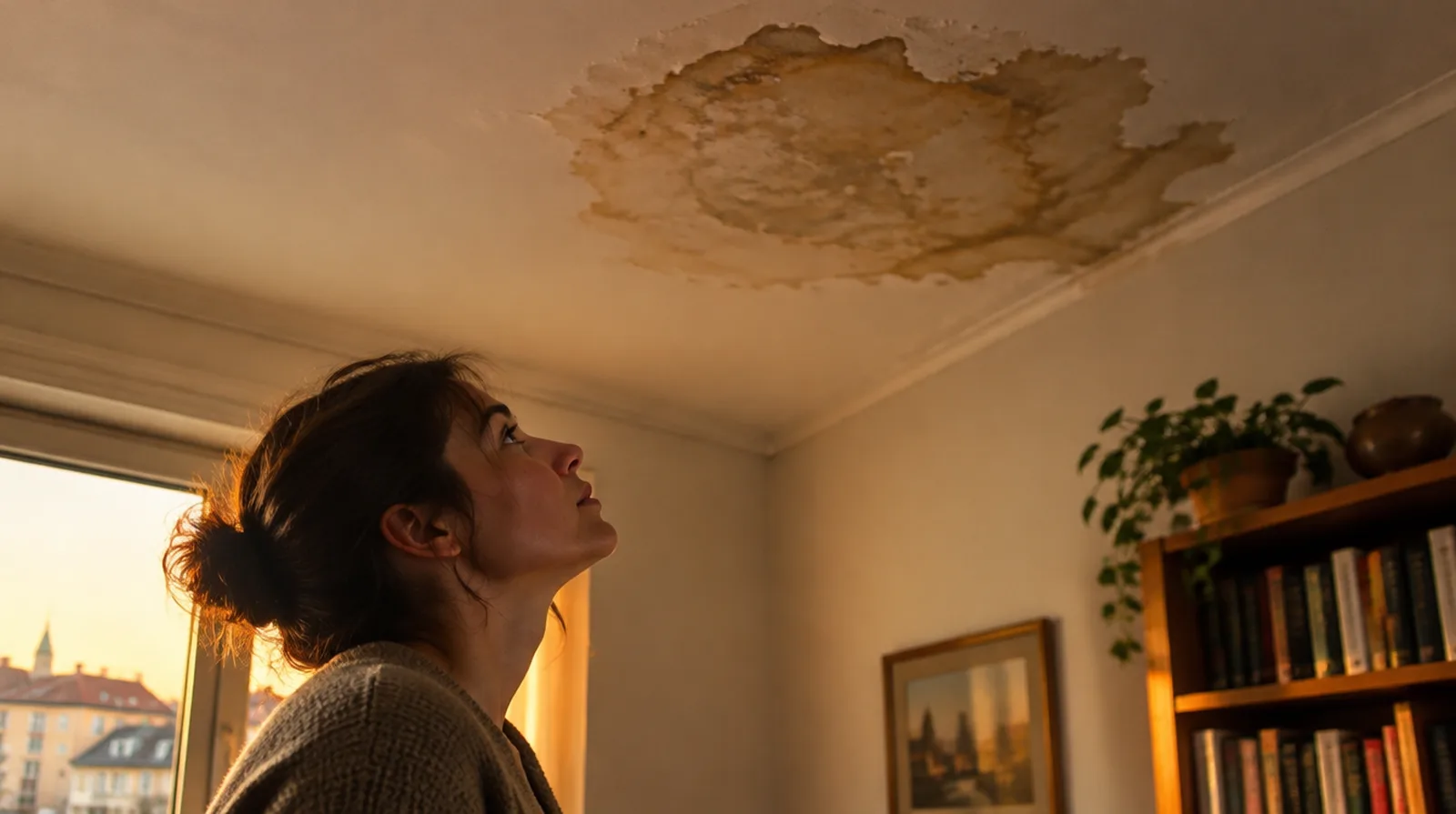
Who pays when water from the neighbour's flat comes through the ceiling?
In short
Who pays when water from the neighbour's flat comes through the ceiling? In Germany the building's buildings insurance pays for ceiling, walls and floors if escaping pipe water is the cause, such as a burst pipe. Your contents insurance replaces your furniture. If the neighbour was at fault, for example with an overflowing bath, they are liable, usually through their personal liability insurance.
What water damage through the ceiling costs in Germany, based on industry figures and trade prices, 2026.
Example
Typical range
Average pipe water claim on residential buildings
around EUR 4,300
Pipe water claims 2024 in total
around EUR 4.9 billion
Leak detection, depending on method
about EUR 200 to 600
Drying, area up to 20 square metres
about EUR 400 to 800
Drying, area up to 50 square metres
about EUR 1,000 to 1,500
As of October 2026, from industry statistics and published trade prices.
The average is calculated from total claims cost and number of claims.
The figures in the example are guide values from our quoting practice.
Worked example
Rented flat on the second floor, washing machine hose split upstairs
How the damage splits between the different policies.
Filling and painting the ceiling, drying
about EUR 2,000, buildings insurance
Replacing the landlord's laminate
about EUR 1,500, buildings insurance
Sofa, carpet and television
about EUR 2,500, your contents insurance at replacement value
Rent reduction for six weeks, bedroom unusable
pro rata depending on the restriction
You only pay any excess on your contents insurance. Without contents insurance you would only have a claim against the neighbour, and that requires fault.
First the cause, then the insurance
When water from the neighbour's flat comes through your ceiling, the first question is where it comes from. A burst pipe, a leaking radiator or a split washing machine hose are pipe water (Leitungswasser). The building's buildings insurance is responsible, whichever flat the water escaped in.
With an overflowing bath or a tap left running, whether buildings insurance pays depends on the terms, and the neighbour has usually also been negligent. Rain coming through a leaking roof over several floors is not pipe water.
Who pays for which part of water damage from above
Water damage from the flat above usually affects three areas: the building, your belongings and your living situation. Each has its own insurance, so you often report the damage to more than one place.
Damage
Responsible
Note
Ceiling, walls, screed, fitted flooring
the building's buildings insurance
report via landlord or property manager
Furniture, carpets, clothes, electronics
your contents insurance
pays replacement value
Hotel if the flat is uninhabitable
your contents insurance, depending on the policy
note the limits in the terms
Lost rent for a letting owner
buildings insurance, lost rent under A 12
limited in time
Your loss if the neighbour is at fault and you have no contents cover
neighbour's personal liability insurance
current value only
Tenants: what to do and what you do not pay
As a tenant you pay nothing for the wet ceiling below the neighbour's flat. The landlord must keep the flat fit for use (section 535 Civil Code) and have the water damage repaired. Tell them in writing at once so they can involve the buildings insurer.
While water damage from above limits the use of your flat, you may reduce the rent appropriately (section 536 Civil Code). Report your damaged belongings to your contents insurer.
Owner-occupied flats: the association and the excess
In an owners' association (Eigentümergemeinschaft) the association insures the building, usually through the property manager. The manager reports the water damage to ceiling and screed to the joint buildings insurance, even if the water came from the neighbour's flat.
Disputes often arise about the excess and about parts in separate ownership such as floor coverings, especially when the water came from the neighbour's flat. The declaration of division and the owners' resolutions decide.
When the neighbour is personally liable
The neighbour is only liable for your water damage if at fault, meaning intentionally or negligently (section 823 Civil Code). That is the case with an overflowing bath, for example. With a sudden burst pipe in the wall there is usually no fault, so your own insurance pays.
If the neighbour's liability insurance pays, it only covers the current value of your belongings. Your contents insurance pays replacement value. So report your belongings to your own contents insurer first; it can recover the money from the neighbour later.
Step by step
Switch off electricity in wet rooms and alert the neighbour or caretaker.
Mop up water and move furniture out of the wet area.
Photograph ceiling, floor and damaged items.
As a tenant inform the landlord, as an owner the property manager, in writing.
Report your belongings to your own contents insurer.
Note the neighbour's name and liability insurer.
Checklist
Cause of the water damage known
Landlord or property manager informed in writing
Contents insurer notified
Damaged items photographed and kept
Receipts for valuable items found
Rent reduction announced if rooms cannot be used
Common mistakes
Throwing damaged furniture away before the insurer has seen it
Relying only on the neighbour's liability cover and accepting current value
Having the ceiling repaired yourself as a tenant
Reporting the damage weeks later
Questions and answers
Frequently asked
Does the neighbour's insurance have to pay?
Only if the neighbour was at fault.
The building itself is covered by the building's buildings insurance anyway.
Who pays for my furniture after water damage from above?
Your contents insurance, at replacement value.
Without it, only the neighbour's liability cover if they are at fault.
Can I reduce my rent as a tenant?
Yes, as long as the water damage limits the use of the flat.
Who pays for the drying equipment?
Drying ceiling, walls and screed is part of the building damage and goes through the building's
buildings insurance.
What if the neighbour has no liability insurance?
Then they are personally liable if at fault.
Your own contents insurance still pays and recovers the money from them.