Home / Renting a boat
Renting or borrowing a boat in Germany: who is liable if something goes wrong?
Most people who go boating in Germany do not own a boat. In a survey commissioned by the German automobile club ADAC in January 2026, 51 per cent said they charter or hire their boat, 25 per cent use a boat belonging to friends, acquaintances or family, and only 12 per cent mostly go out in a boat of their own. Two thirds prefer day trips or evening outings.
If you are renting or borrowing a boat, you are relying on someone else's contract and someone else's insurance. Many people only find out what those say after something has gone wrong. This page looks at three typical cases in Germany: the day boat from a hire company, the houseboat on a charter certificate and the boat a friend lends you.
Source of the figures: ADAC press release of 6 August 2026 (in German), survey by Nordlight Research in January 2026.
Case 1
The day boat from a hire company on a lake
An electric boat or a small motorboat for a few hours, paid for at the hut on the jetty. In Germany you usually need no licence for it, because the engine stays below 11.03 kW, or 15 hp, and below 7.5 kW continuous output for an electric motor. On inland waterways the person at the helm of a motorboat still has to be at least 16 years old.
Before you cast off
- Ask whether the boat has third-party liability cover. Without it, you pay for damage to another boat or to a swimmer out of your own pocket.
- Photograph the boat all round before you step aboard: hull, rubbing strake, cushions and engine. The pictures carry the date and time, which is enough as evidence.
- Ask where the lifejackets are kept and take a properly sized one aboard for every child.
- Check how far you may go and which areas are off limits, such as bathing zones, reed beds or nature reserves.
- Read what the hire agreement says about damage to the boat. Some hire companies charge for every scratch, others only up to a fixed amount.
If something goes wrong
If you hit a jetty or another boat, you are liable as the skipper for the damage you caused. If the boat has liability cover, that policy usually also protects the skipper the hire company has let take the helm.
Liability cover never pays for damage to the hired boat itself. The hire company will claim that from you, as far as the agreement allows.
Report any damage straight away, while you are still at the jetty. Note the names and phone numbers of witnesses and take photos of the spot.
Case 2
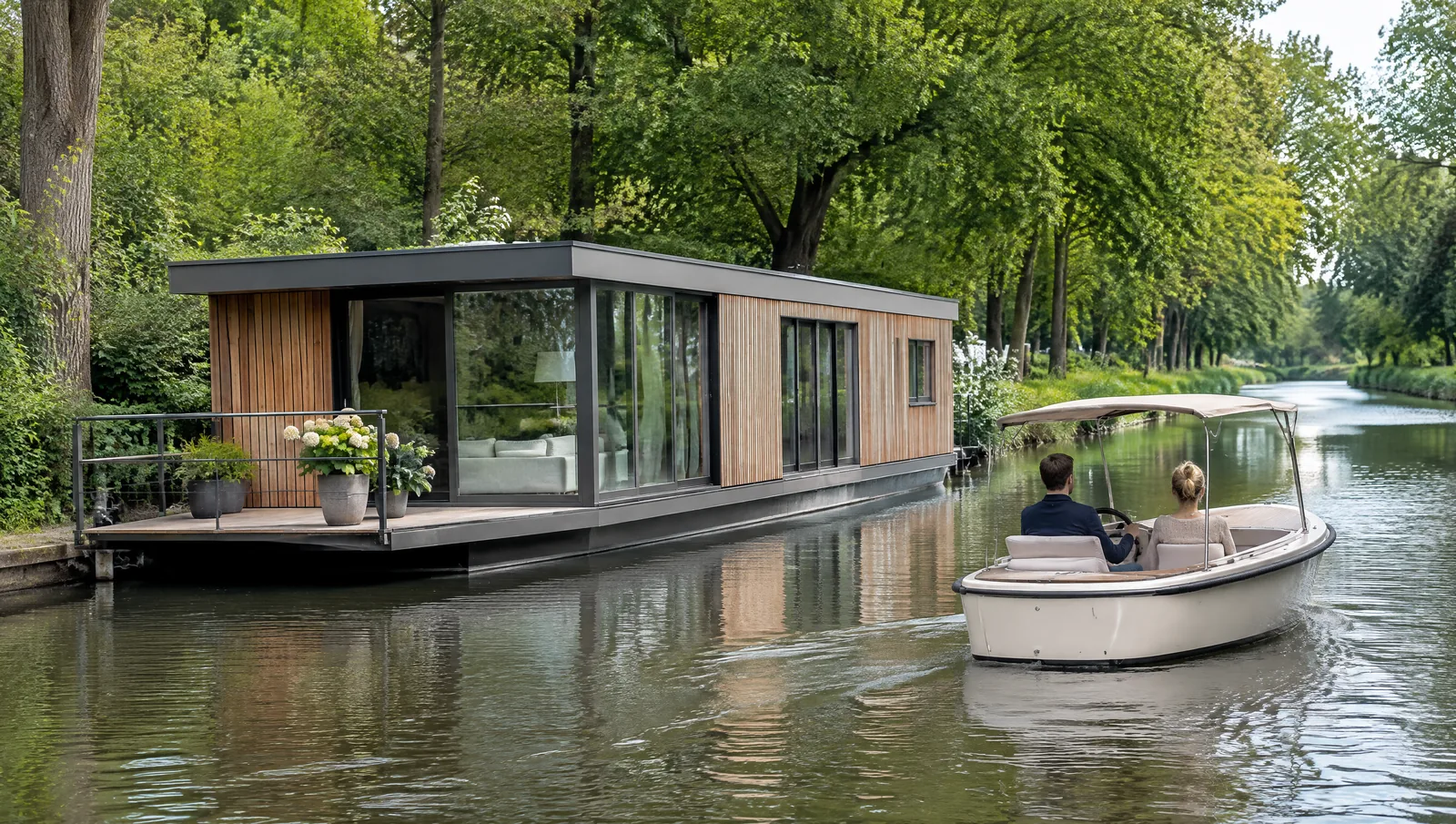
The houseboat on a charter certificate
A week on the Müritz, the Havel or the Spree without a boating licence. This is possible with a charter certificate, which the hire company issues after a briefing. According to ADAC, the Mecklenburg Lake District and the waters around Berlin and Brandenburg are the most popular boating areas in Germany.
Before you cast off
- The charter certificate only covers boats under 15 metres that do no more than 12 km/h and carry no more than 12 people, and only on the waters approved for it. It is not valid on the Rhine. Ask to be shown the limits on the chart.
- Ask how much the deposit is and what the hire company is allowed to keep it for.
- Go through the handover report item by item and only sign for what you have seen yourself. Damage that is not listed there is easily blamed on you when you return the boat.
- During the briefing, practise mooring and going through a lock yourself rather than just watching.
- Ask whom you can reach in the evening or at the weekend if the engine fails or the boat runs aground.
If something goes wrong
Locks are a typical place for damage on inland waters: the boat tilts, a line jams, the hull scrapes along the wall. Hold the lines loosely in your hand and never make them fast.
How far you are liable for damage to the houseboat depends on the hire agreement. Liability is often limited to the deposit unless you acted with gross negligence. Read that clause before you sign.
The deposit can be insured. A deposit policy refunds what the hire company keeps after damage, often minus an excess. It does not replace liability cover for damage to others.
Case 3
The boat a friend lends you
A friend lets you have their motorboat for the weekend, with no contract and no money changing hands. Under German law that is a loan, not a rental. That is exactly why nobody thinks beforehand about what happens if something is damaged.
Before you cast off
- Check whether you need a licence for this boat. If you do not hold one, the owner's insurer may refuse to pay, and the owner breaches their own policy conditions.
- Ask whether the owner's liability cover extends to other skippers. Many boat policies cover anyone who takes the helm with the owner's knowledge and consent. Ask for that to be confirmed.
- Ask whether the boat has hull cover and what the excess is. That amount is what friends are most likely to argue about after damage.
- Agree briefly in writing who bears what if something is damaged. A chat message is enough.
If something goes wrong
Damage to other boats, jetties or people is a matter for the owner's liability cover, provided you were allowed to take the helm and held any licence required.
Damage to the borrowed boat itself is a matter for the owner's hull cover, not for liability cover. Your personal liability policy often does not help either: many exclude motorboats or damage to borrowed property.
Whether the hull insurer later recovers the money from you depends on the owner's policy and on how the damage happened. Anyone who acts with gross negligence, for example after drinking, should expect it.
What to check in your own policy
If you own a boat yourself, look at whether your liability cover also applies when you rent or charter another boat privately, and for how many days. Some policies include this, others do not.
If you lend or hire out your own boat now and then, check whether your hull cover allows it, for how many days a year, and whether it has to be agreed in advance.
Whoever takes the helm of your boat must be allowed to do so and hold any licence required. Making sure of that is usually one of your duties as the owner, even when you are not aboard.
Frequently asked questions about renting a boat in Germany
Do I need a licence to rent a boat in Germany?
Not for boats with an engine of no more than 11.03 kW (15 hp), or up to 7.5 kW continuous output for an electric motor. You may skipper a houseboat with the hire company's charter certificate, but only on the waters approved for it. Lake Constance has stricter rules: a motorboat over 4.4 kW already needs a Lake Constance skipper's licence there.
Who pays if I damage a jetty with a rented boat?
You are liable as the skipper for the damage to the jetty. If the rented boat has liability cover, that policy usually pays. A boating liability policy of your own that includes rented boats may also step in.
Does my personal liability insurance cover a borrowed boat?
Often not. Many personal liability policies exclude motorboats or only cover small boats up to an engine limit. Damage to the borrowed boat itself is usually not covered there at all. It is worth reading your own policy before the first trip.
Can I insure the deposit when I charter a boat?
Yes, with a deposit policy. It refunds what the hire company keeps after damage, often minus an excess. It does not replace liability cover for damage to others.