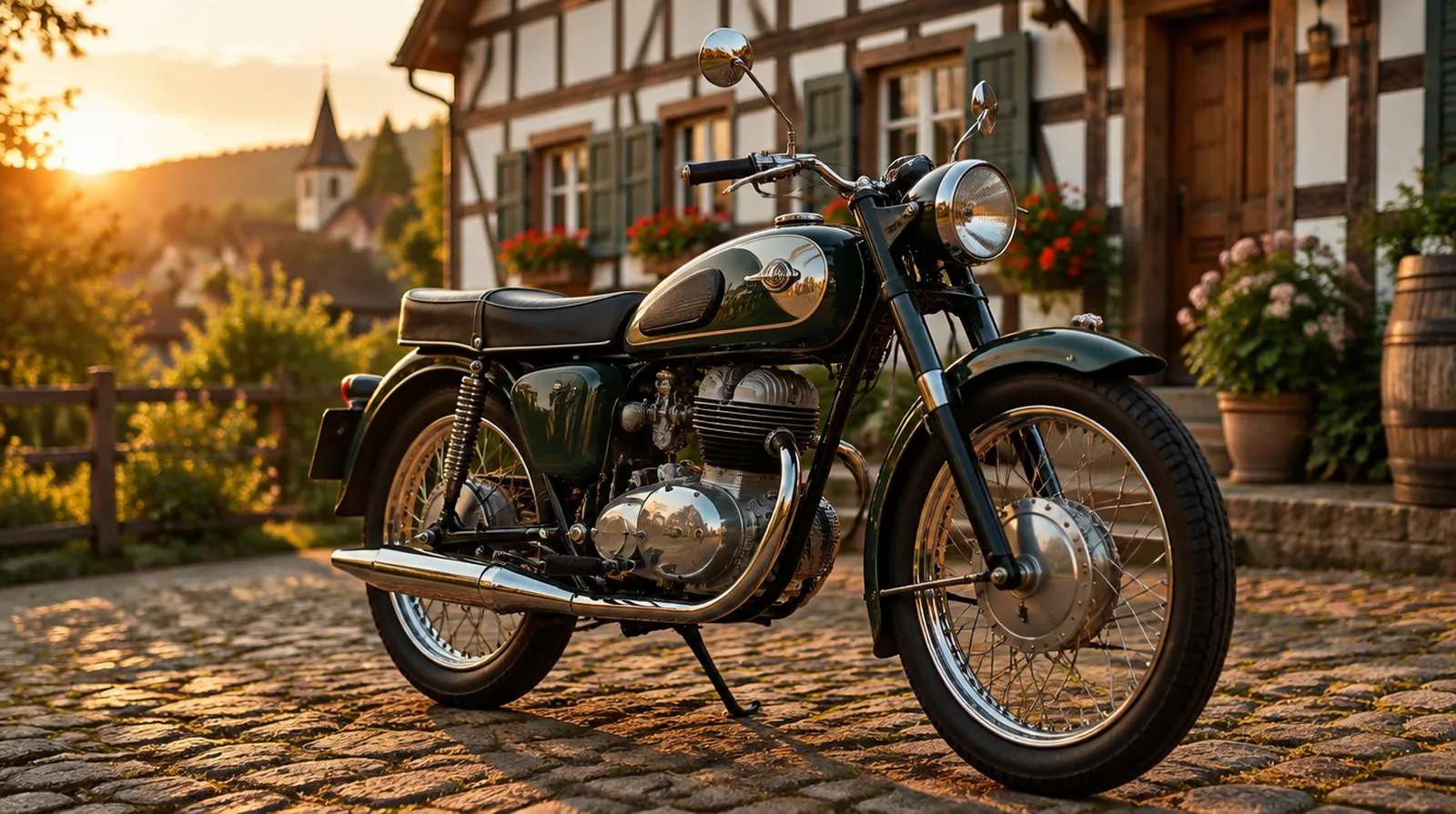
In Germany a classic motorcycle needs motor liability cover (Kfz-Haftpflicht) like any registered bike. Classic tariffs charge about EUR 50 to 120 a year for it, partial cover (Teilkasko) adds roughly EUR 30 to 90. After 30 years you can apply for the H plate. In a classic tariff, a claim is based on the appraised value, not the low current value of an old bike.
Guide figures from published price ranges and cost information for classic motorcycles in Germany.
Example
Typical range
Classic motorcycle, liability only in a classic tariff
about EUR 50 to 120 a year
Partial cover on top of liability
about EUR 30 to 90 a year
Full package with comprehensive cover
about EUR 150 to 250 a year
Road tax with H plate for a motorcycle
EUR 46.02 a year
Short report or full appraisal
about EUR 90 to 180, full appraisal about EUR 300 to 600
As of October 2026.
The ranges depend on value, power, rider profile and region.
Norman Nammert can obtain a quote for you as an insurance broker (Versicherungsmakler);
the insurer pays the commission, so it costs you nothing.
Worked example
Four cylinder from 1978, market value EUR 9,000, ridden April to October
This is how the yearly cost of a typical classic motorcycle with H plate adds up.
Liability in a classic tariff
about EUR 50 to 120
Partial cover based on the appraised value
about EUR 30 to 90
Road tax with H plate
EUR 46.02
Short report, once
about EUR 90 to 180
About EUR 126 to 256 a year plus the one off report. After a theft the agreed EUR 9,000 counts instead of a low current value.
Liability is compulsory for old bikes too
A classic motorcycle falls under the same Compulsory Insurance Act (Pflichtversicherungsgesetz) as a new one. The legal minimums are EUR 7.5 million for personal injury, EUR 1.3 million for property damage and EUR 50,000 for pure financial loss.
Classic tariffs usually offer much higher limits. For a bike that only comes out at weekends, the price difference is small, but in a serious accident it matters a lot.
What the H plate means
German registration rules (FZV) define a classic vehicle as one first put on the road at least 30 years ago, largely original, well preserved and kept as part of motoring heritage. An expert checks this in a classic vehicle report under section 23 of the StVZO.
With an H plate a motorcycle pays a flat EUR 46.02 road tax a year. For small bikes up to 125 cc this rarely pays off, because normal tax is already low. Many insurers do not require the H plate for their classic tariff, but they do look at age and condition.
Value is what counts in partial and full cover
A standard motorcycle policy pays the replacement value at the time of the claim. For a 45 year old bike, the insurer often puts that lower than what you would pay to buy one today.
Classic tariffs agree the value in advance, usually from an appraisal (Wertgutachten). Some only require an appraisal above a market value of EUR 20,000 and add a 20 percent buffer for rising prices. Ask whether market value or replacement value applies.
Cover
What it does for a classic motorcycle
Liability (Haftpflicht)
damage to others, required for registration
Partial cover (Teilkasko)
theft, fire, storm, hail, animal collisions; in many classic tariffs also vandalism
Full cover (Vollkasko)
also accidents you cause, usually with a higher excess
Storage cover (Ruheversicherung)
protects the deregistered bike in the garage or during restoration
Typical conditions of classic tariffs
Classic tariffs are cheap because they expect low mileage and careful owners. Common conditions are a minimum age for the motorcycle and the rider, a yearly mileage limit and a second vehicle for everyday use.
If you ride your classic motorcycle to work every day, it does not fit a classic tariff. A normal motorcycle policy is the honest choice then, even if it costs more.
When you do not need a classic tariff
A cheap older bike that you ride daily is usually well covered by a standard policy with liability and perhaps partial cover. Paying several hundred euros for an appraisal makes no sense then.
It gets expensive the other way round: a rare classic motorcycle worth EUR 15,000 in a standard policy. After a theft only the current value counts, and what it is worth to collectors is lost.
Seasons and winter storage
Most classic bikes spend the winter in a garage. Many classic tariffs charge only for the months in which the motorcycle is registered.
During the break, many policies keep the bike protected against fire and theft through storage cover, as long as it stands in a garage or an enclosed space. Check that this fits where you keep your motorcycle.
Step by step
Check the first registration date: 30 years is the threshold for the H plate.
Have the condition and value assessed in a report.
Choose a classic tariff that fits your mileage and your everyday vehicle.
Agree the value basis: market or replacement value, with a buffer.
Clarify storage cover for the winter and the garage.
Checklist
Liability with a high limit
Partial cover including vandalism if the bike is parked outside
Appraised value written into the policy
Mileage limit fits your rides
Storage cover for deregistered months
Appraisal renewed when prices for your model rise
Common mistakes
Keeping a valuable classic motorcycle in a standard policy that only pays current value
Not renewing the appraisal although prices for the model have gone up
Using a classic tariff and still riding the bike every day
Leaving original parts and accessories out of the value
Questions and answers
Frequently asked
How do I insure a classic motorcycle without an H plate?
Many classic tariffs do not require the H plate, only a minimum age and good condition.
Whether you take the H plate is mainly a road tax decision.
When is a motorcycle a classic in Germany?
For the H plate it must have been first put on the road at least 30 years ago.
Some insurers accept younger bikes in classic tariffs.
Can I keep my no claims bonus?
Classic tariffs often charge fixed premiums without a no claims class (Schadenfreiheitsklasse).
That suits newcomers, but a bonus from your car is usually not carried over.
I brought my classic bike from abroad. What do I need?
It needs German registration, and for the H plate a classic vehicle report.
Arrange the classic tariff first,
because the registration office wants the insurer's electronic confirmation (eVB number).
Does the insurance pay the collector value?
It pays the agreed value.
Sentimental value is never insured, the documented market value is.