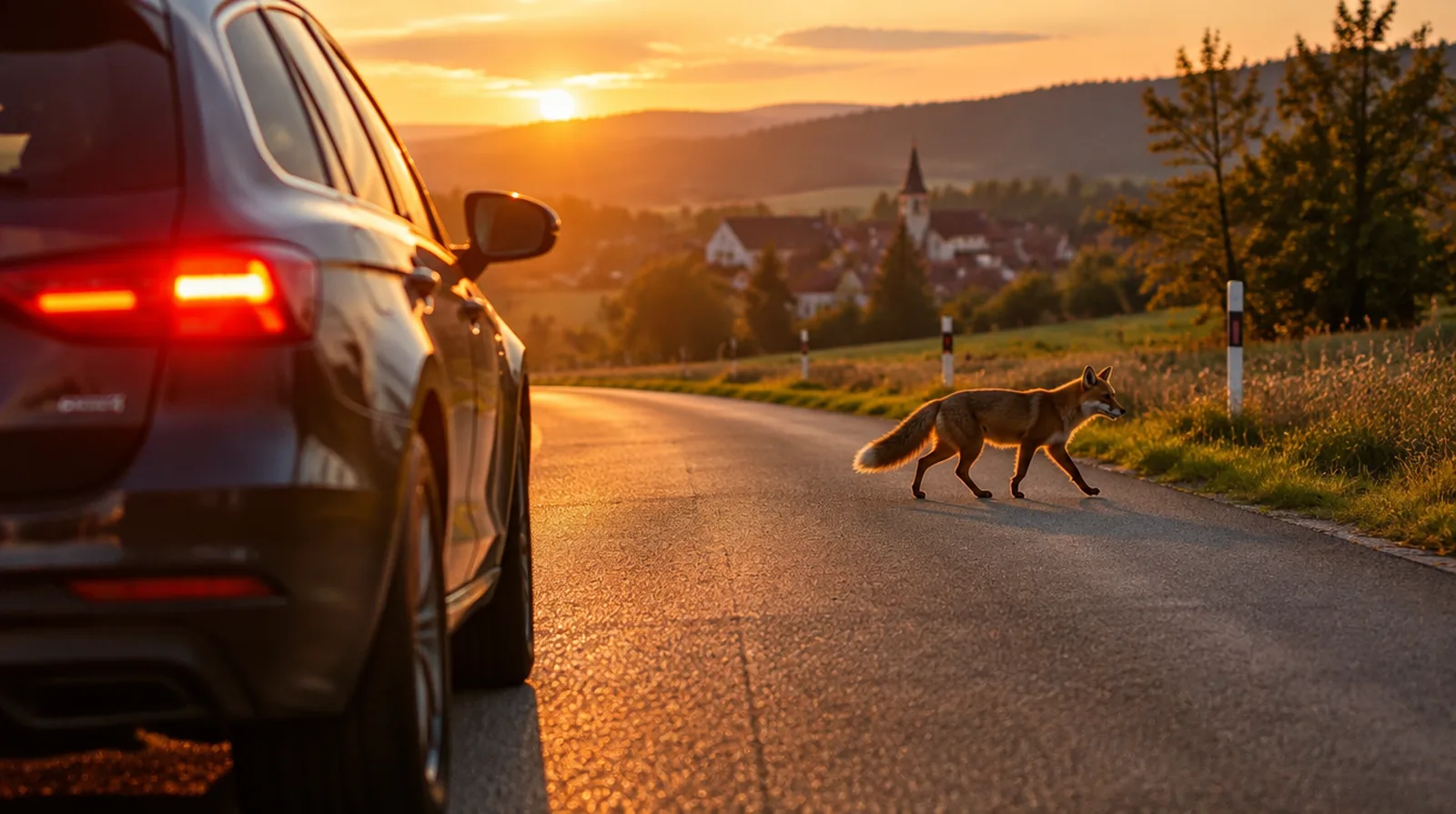
Who pays if a dog or cat runs in front of my car in Germany?
In short
If a dog or cat runs in front of your car in Germany, the animal's keeper is liable for the damage under section 833 of the Civil Code, usually through their dog or personal liability insurance. Because your car carries its own operating risk, the damage is often shared. Partial cover (Teilkasko) only pays if it includes animals of all kinds, as dogs and cats are not game. Otherwise only comprehensive cover pays.
Premiums and claim amounts relevant to an accident with a dog or cat in Germany.
Example
Typical range
Dog liability insurance for the keeper
about EUR 35 to 150 a year
Liability with partial cover, average
about EUR 450 a year
Liability with comprehensive cover, average
about EUR 590 a year
Average animal collision claim with hull cover 2024, game
around EUR 4,100
Premiums from published market overviews,
claim average from the insurance association's game accident statistics, as of October 2026.
The split in the worked example is a guide value from quoting practice, courts decide case by case.
Worked example
Unleashed dog on a village road
A dog without a lead runs onto the road, you brake and hit it at 40 km/h. Bumper and headlight are broken.
Repair to the car
about EUR 2,400
Share paid by dog liability at 75 to 25
about EUR 1,800
Rest via partial cover with animals of all kinds, deductible EUR 150
about EUR 450
Your own share
EUR 150, no-claims class unchanged
With animals of all kinds cover you only pay the deductible. Without it about EUR 600 stays with you, or you use comprehensive cover and lose no-claims years.
The keeper of the dog or cat is liable
German civil law makes an animal's keeper liable for damage it causes, even without any fault. If a dog or cat runs in front of your car and you hit it, or swerve and crash, you can claim your loss from the keeper. Dog liability insurance is compulsory in many German states, and cats are usually covered by the owner's personal liability insurance.
But as a car keeper you are also liable for your car's operating risk. When the animal's risk and the car's risk meet, the loss is shared according to section 17 of the Road Traffic Act. An unleashed dog weighs heavily against its keeper, driving too fast weighs against you.
Situation
Who pays for your car
Dog with a known keeper
the dog owner's liability insurance, often partly
Cat with a known keeper
the owner's personal liability, often partly, liability more disputed
Keeper unknown
your own hull cover, if you have it
Partial cover with animals of all kinds
partial cover, no loss of no-claims years
Partial cover for game only
not partial cover, only comprehensive cover with loss of no-claims years
Why partial cover often does not pay
The German model terms for partial cover only insure collisions with furred game (Haarwild) as defined in the Federal Hunting Act, such as deer, wild boar, fox or hare. Dogs and cats are not included.
Many policies extend cover to animals of all kinds (Tiere aller Art). Then partial cover also pays for a dog, cat or horse without affecting your no-claims class. Without this extension, only comprehensive cover pays, and you lose no-claims years.
Swerve or brake?
If you swerve hard for a cat and hit a tree without touching the animal, things get difficult. Many courts consider risky swerving for small animals disproportionate. Then neither the keeper pays in full nor partial cover, only comprehensive cover.
With a large dog swerving can be justified, because the impact itself would be dangerous. The safe rule: brake hard, keep your lane, sound the horn.
What to do at the scene
Stop, secure the scene and look after the animal. If it is alive, call the police, who will contact a vet or animal rescue and help find the keeper. A collar or dog tag often shows an address.
Take photos of the car, the animal and the road, and note witnesses. Do not just drive off: a dog or cat is someone else's property, and leaving an injured animal behind can be prosecuted as animal cruelty.
When animals of all kinds cover is worth it
If you often drive through villages, residential areas with cats or along pastures, the extension makes sense and is cheap in many policies. It saves you the loss of no-claims years under comprehensive cover.
With an old car without hull cover you do not need it, you only have the claim against the keeper. If you have a dog yourself, check your dog liability insurance: if it runs in front of a car, it pays the driver's loss.
Step by step
Stop, hazard lights on, high visibility vest, secure the scene.
Check on the animal, call the police or animal rescue if it is injured.
Find the keeper through the collar, neighbours or the police.
Take photos and note witnesses.
Claim from the keeper and their insurer, and tell your own hull insurer at the same time.
Checklist
Partial cover including animals of all kinds
Name, address and insurer of the animal's keeper
Photos of the animal, the car and the road
Witnesses and police report if the animal was injured
Your own dog liability if you keep a dog
Common mistakes
Driving on after the collision
Swerving dangerously for a cat
Agreeing a payment with the keeper without any record
Assuming partial cover pays for every animal
Questions and answers
Frequently asked
What should I do if a dog runs in front of my car and the owner is there?
Get the owner's name, address and liability insurer, take photos and note witnesses.
You do not have to sign any admission of fault.
Does the dog owner have to pay the whole damage?
Often not.
Your car's operating risk is taken into account,
but with a dog running loose the keeper usually bears the larger share.
Is a cat owner liable too?
In principle yes, the law does not distinguish between animals.
Because drivers must expect cats roaming free, the split often goes against you,
and finding the owner is hard.
Does partial cover pay if I hit a dog?
Only if your policy includes animals of all kinds.