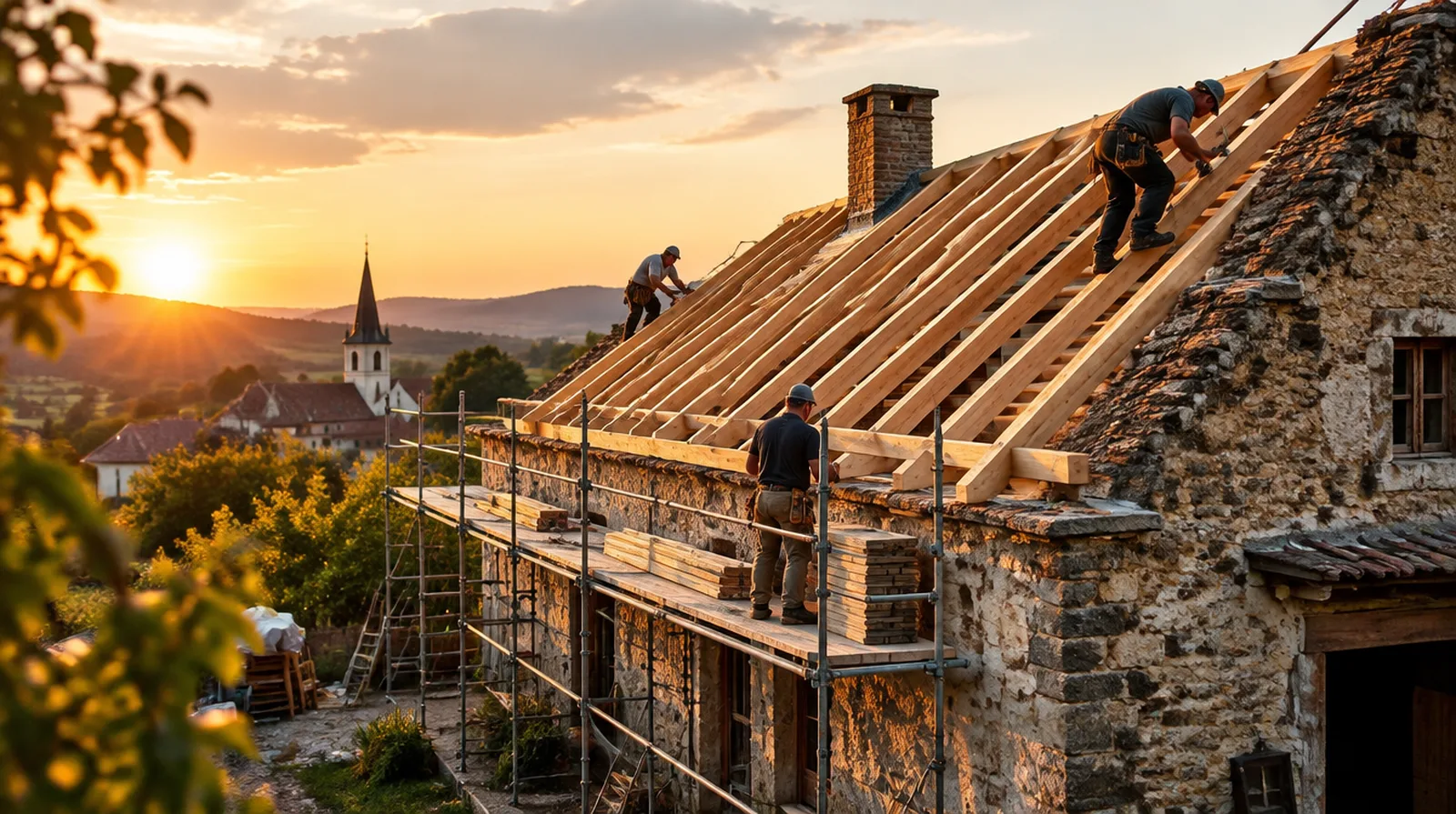
Is builder's risk insurance worth it for renovations and alterations?
In short
Is builder's risk insurance worth it for renovations and alterations? Yes, once the work touches the structure, the roof or outer walls, but only with cover for the existing building. Without it only the new work is insured, not your house. For a building sum of 100,000 to 250,000 euros the basic cover usually costs a few hundred euros. For a new bathroom or new floors you do not need it.
Premiums from published examples and insurer documents in Germany, as of October 2026. Few public price examples exist for alterations.
Example
Typical range
New build reference, building sum 250,000 to 400,000 euros
about 170 to 500 euros once
New build reference, building sum 250,000 euros, low cost policy
from about 220 euros once
Alteration, building sum 100,000 euros, without old building
about 150 to 300 euros once
Surcharge for the old building add on, depending on level and limit
about 100 to 400 euros
Excess for damage to the old building in one insurer's form
10 or 20 percent, at least 500 euros
The figures for the 100,000 euro alteration,
the old building surcharge and the example are guide values from our quoting practice.
The other figures come from the sources listed.
Your premium depends on the works, building sum and old building limit; we obtain the exact quote.
Worked example
Loft conversion in a 1965 house, 120,000 euro building sum, old building insured on first loss for 150,000 euros
In November a storm tears the temporary cover off the open roof. Rain soaks the new insulation and runs into the ceilings and floors of the upper storey.
Damage to the new insulation
assumed 4,000 euros
Damage to the old building, upper storey
assumed 18,000 euros
Excess on new work
500 euros
Excess on old building, 10 percent
1,800 euros
Payout with old building cover
19,700 euros
Without the old building add on, the policy would have paid only for the insulation, 3,500 euros. The 18,000 euros on the old building would have stayed with the owner if the roofer had secured the cover properly.
Why renovations carry a different risk
In a new build only the new house is at risk. In an alteration the existing building is usually worth far more than the new work. If the temporary cover tears during a loft conversion and rain runs two floors down into ceilings and floors, the damage to the old building is often five figures, while the new insulation is cheap.
Builder's risk insurance (Bauleistungsversicherung) without cover for the old building only pays for the insulation. For renovations and alterations the question is not whether you buy a policy, but whether and how the existing building is included.
Three levels of cover for the existing building
Insurers offer the existing building as an add on in several levels. The limit is usually agreed on a first loss basis (Erstes Risiko): up to that amount the insurer pays without checking for underinsurance, above it nothing.
Level
What is covered
Useful for
Collapse
partial or total collapse of the old building, also a neighbour's house if its structure is touched
underpinning, openings in load bearing walls
Collapse plus damage
also damage caused by the works and by burst pipes, storm and hail
loft conversion, opened roof or facade
Comprehensive
also other sudden damage to the old building, except fire
full refurbishment, valuable fittings
What your buildings insurance still does during the works
Depending on the scope of the works, your buildings insurance (Wohngebäudeversicherung) may give reduced cover during the renovation, for example if the house is empty or the roof is open. It is not designed for building works anyway. The old building add on is meant to close exactly this gap.
Agree in writing with both insurers who carries which damage before work starts. Fire usually stays with the buildings insurance, which also has higher limits for firefighting and clean up costs.
When builder's risk cover is not worth it
For interior work that does not touch the structure, roof or facade, the risk is small: new bathroom, windows replaced one for one, floors, wiring. Damage a firm causes to your house is a matter for its business liability insurance, and the firm carries its own work until acceptance anyway.
With a low building sum and a short build, the effort is often out of proportion. A building that will be demolished cannot be insured as an existing building.
What the insurer wants to know
For the old building add on, insurers ask about the type of work, such as underpinning, openings in load bearing walls or opening the roof, about the age and fittings of the house, and whether a structural engineer is involved. Some want photos, a site plan and a description of the works.
Many ask whether a condition survey (Beweissicherungsgutachten) was made before work started. It is worth having even without insurance: it records the state of your house and the neighbour's and avoids later arguments about which cracks are new.
How high the limit for the old building should be
The limit does not need to cover the whole house. Think about what would be damaged in a realistic worst case: in a loft conversion usually the top floor and the one below, with underpinning the affected side of the building. Set that rebuilding value with a margin.
Step by step
Check whether the structure, roof or outer walls are touched.
Tell your buildings insurer before work starts and ask what it still covers.
Choose the old building level to match the works and set the limit.
Arrange a condition survey of your house and the neighbour's.
Take out the policy before the first intervention.
Checklist
Old building expressly included, not only the new work
Level matches the works, collapse cover for underpinning
Limit covers the realistic maximum damage
Excess for the old building known
Fire covered by the buildings insurance
Condition survey made before work starts
Common mistakes
Buying builder's risk cover without the old building and feeling safe
Not telling the buildings insurer about the renovation
Setting the old building limit too low because it is first loss
Overlooking the percentage excess on old building damage
Questions and answers
Frequently asked
Is the existing building covered automatically?
No.
Only the new work is insured.
The existing building needs its own add on with its own limit.
What does first loss mean for the old building?
The insurer pays up to the agreed limit without checking whether the whole house is worth more.
Anything above the limit you pay yourself.
Do I also need builder's liability insurance for a full refurbishment?
Yes, if your personal liability policy does not cover the building sum.
Builder's risk insurance does not pay for damage to others, such as passers by or neighbours.
Are cracks in the neighbour's house covered?
Collapse of a neighbouring house can be included if its structure is touched.
Other damage to neighbours is a liability matter.
Is it worth it for an energy upgrade with new external insulation?
With scaffolding up for weeks it can make sense against storm and vandalism.
Without touching roof or structure, the old building add on matters less.
When do I need to take it out?
Before the first intervention.
Damage that happened before the policy started is not covered.