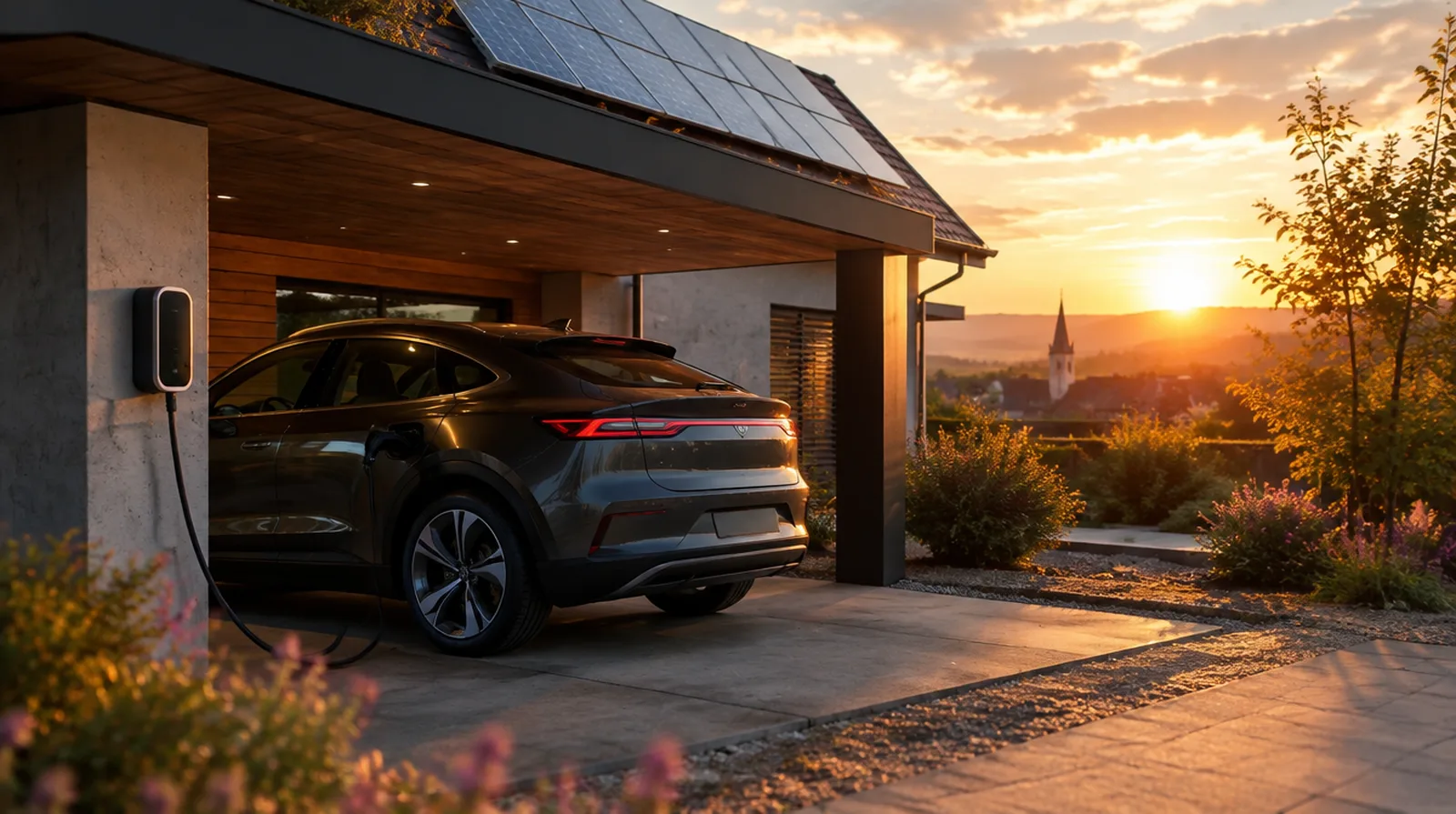
Is my electric car insured when it feeds power back into the house?
In short
Is my electric car insured when it feeds power back into the house? Partly. If the car catches fire while feeding power back, partial cover (Teilkasko) pays, and buildings insurance pays for the house. Liability for damage to the home installation is still unclear. No insurance pays for faster battery wear, and a suitable wallbox costs three to four times as much as a normal one.
Feeding power back affects car insurance, buildings insurance and the wallbox itself.
Example
Typical range
Typical 11 kW wallbox including installation
about EUR 1,200 to 3,500
Bidirectional wallbox
initially 3 to 4 times the price of a normal one
Solar add-on in buildings insurance, wallbox often includable
about EUR 35 to 120 a year
Mid-range electric car, liability and comprehensive
about EUR 500 to 900 a year
Battery add-on
about EUR 20 to 40 a year extra
Guide values, October 2026, from published examples.
Car value and losses in the worked example are guide values from broker practice.
Worked example
Garage fire while feeding power back
An electric car worth EUR 40,000 supplies power to the house in the evening. A fire starts in the garage and destroys the car, the wallbox and the garage door.
Electric car
partial cover, minus deductible
Garage and door
buildings insurance
Bidirectional wallbox
buildings insurance, if reported with the right value
Soot on the neighbour's house
liability unclear, inform both liability insurers
Your own losses are well covered by partial cover and buildings insurance. The only open question is which liability insurer pays for damage to others.
What happens technically when the car feeds power back
With bidirectional charging, the electric car releases stored power again. There are three levels: power for a single device through a socket on the car, power for your own house through the wallbox, and power back into the public grid.
For insurance this makes a difference: the closer the electric car is connected to the home installation, the more policies are involved in a claim, namely car insurance, buildings insurance and possibly liability cover.
Car insurance when the electric car powers the house
Comprehensive cover (Kasko) pays according to the event, not the purpose: a fire or a short circuit in the wiring is a partial cover claim, even if the car is supplying power to the house at that moment. The battery is included in almost all Kasko policies.
Motor liability is trickier. The Compulsory Insurance Act describes use of a vehicle as use as a means of transport. It does not expressly say whether damage caused by feeding power back falls under this, and motoring experts also regard liability for damage to the installation as open.
What happens
Who usually pays
Electric car catches fire in the garage while feeding power back
partial cover for the car
Fire spreads to garage and house
owner's buildings insurance
Fault in the bidirectional wallbox without fire
often none, only the maker's warranty
Battery loses capacity through frequent discharging
no insurance, only the maker's warranty
Fire spreads to the neighbour's house
motor or personal liability, to be clarified case by case
The battery and the manufacturer's warranty
A battery losing capacity over time is not an insured event. The manufacturer's warranty applies instead, usually 8 years or 160,000 km with around 70 percent remaining capacity. With bidirectional charging, the battery is charged and discharged more often than for driving alone.
Experts consider it still uncertain how manufacturers will handle the warranty when the car feeds power back. Get written confirmation that your car is approved for this with your wallbox.
Wallbox and buildings insurance
A permanently installed wallbox usually counts as part of the building and is covered by buildings insurance (Wohngebäudeversicherung) against fire, lightning, storm and water. A bidirectional wallbox is much more expensive, so tell your insurer about the higher value.
Short circuits in the device, operating errors or theft are often not in the basic cover. A solar or technology add-on can include the wallbox. If you rent, talk to your landlord and his insurer as well.
What German law settled in 2026
Since January 2026 no grid fee is charged on power fed back from an electric car into the grid. Car batteries are now treated like stationary storage. The double electricity tax only falls away if you run your own solar system.
The legislator has not settled the insurance questions around feeding power back. Until it does, clear agreements with your insurers are your best protection.
When nothing changes for you
If you only use the socket on the car, for example for a kettle when camping, your insurance hardly changes. And as long as your car or wallbox cannot feed power back at all, you need to do nothing.
Advice on using your car as a power store
Norman Nammert works as an insurance broker (Versicherungsmakler) and can check whether your policies for car, buildings and liability insurance fit together if your electric car feeds power back into the house. The commission is paid by the insurer, so the advice is free for you.
Step by step
Ask the manufacturer in writing whether your car may feed power back with your wallbox.
Have the bidirectional wallbox installed by a qualified electrician.
Report the value of the new wallbox to your buildings insurer.
Ask your car insurer in writing whether it treats damage while feeding power back as use of the vehicle.
File the insurers' answers with your policy documents.
Checklist
Manufacturer approval for feeding power back
Partial or full comprehensive cover including the battery
Wallbox reported to buildings insurance
Solar or technology add-on checked
Written answer from the car insurer
Smoke detector in the garage
Common mistakes
Assuming Kasko pays for battery wear from feeding power back
Installing a bidirectional wallbox without reporting its value
Feeding power back without the manufacturer's approval
Leaving the liability question until after a loss
Questions and answers
Frequently asked
Does partial cover pay if the car catches fire while feeding power back?
Yes, fire is a partial cover claim whether the car is driving, charging or supplying power.
Your deductible is subtracted.
Do I have to tell my car insurer that I feed power back?
Ask in writing whether it treats damage while feeding power back as use of the vehicle.
That way you know where you stand before a loss.
Does the warranty pay if the battery ages faster?
That depends on the manufacturer and is still uncertain.
Get written approval for your model and wallbox.
Is a bidirectional wallbox covered by buildings insurance?
If permanently installed, usually yes, against fire, lightning, storm and water.
Report the higher value to avoid underinsurance.
Do I pay grid fees on power I feed back?
Not since January 2026.
The double electricity tax only falls away with your own solar system.
What applies to tenants?
If the garage and house belong to your landlord,
damage to them goes through his buildings insurance.
Agree the installation of a bidirectional wallbox with him beforehand.