Thames estuary: masts come down, the closed area stays
After 82 years the most conspicuous mark in the Thames estuary is being removed, while the prohibited area around the wreck stays exactly as it was. The rule outlives its visible sign.
Law NAMMERT Assekuradeur GmbH
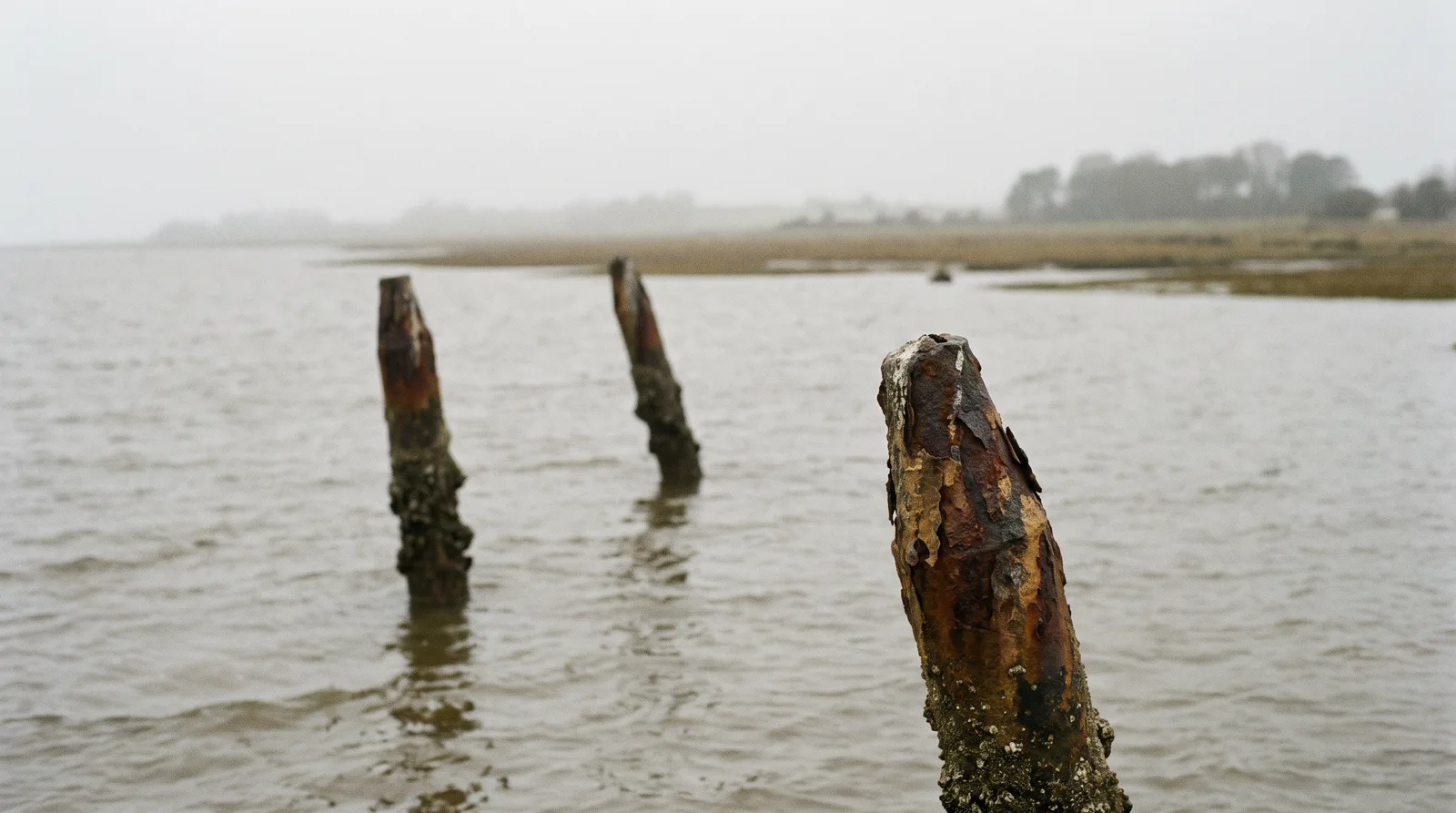
A cargo ship carrying wartime munitions has lain on the bottom roughly 1.5 miles off Sheerness since 1944. The UK Department for Transport puts the remaining quantity at around 1,400 tonnes. Since early September 2026 a specialist contractor has been cutting away the wreck's three masts below the waterline, with 9.5 million pounds of government funding, and the work is expected to finish by the end of September if the weather allows.
For anyone navigating the estuary the key sentence in the official announcement is this: the existing exclusion zone around the wreck remains in place after the masts have gone. The site is designated under the Protection of Wrecks Act 1973, and entering the prohibited area without written permission is a criminal offence. The area is charted and marked in the water by four lit cardinal buoys and twelve red danger buoys.
What changes is not the rule but its visibility. Until now the masts stood above the water as a mark that any helmsman could keep in sight without looking at a plotter. That orientation aid disappears while the prohibition stays, so from now on the boundary is shown by buoys, chart and electronics alone.
The practical lesson reaches well beyond the Thames. Closed areas that show nothing remarkable on the surface belong in the planning done at the chart table, not in a decision taken at the wheel. Whether the zone is temporarily larger while the work continues is not stated in the official announcement; the reliable source for that is the current notices to mariners issued by the responsible harbour authority.
What this means for owners
Entering a legally closed area is the kind of decision an insurer will look at closely after a claim, because most marine policies expect the crew to observe navigational prohibitions. The useful question to put to your own insurer is a simple one: what happens to a claim if the damage occurs inside a charted prohibited area, and does it matter whether the entry was deliberate or accidental. The answer differs between houses, and it is much easier to obtain before a passage than afterwards. Anyone routing through the Thames estuary should read the current notices to mariners and apply the chart corrections before leaving.
This paragraph is our view as an underwriting agency, not part of the news. What your own policy covers is written in your own terms; when in doubt, call us.
Where this comes from
- Department for Transport und Maritime and Coastguard Agency, Mitteilung zum Beginn der Mastentfernung
- GOV.UK, SS Richard Montgomery: background information
- Marine Industry News, Mast removal begins on sunken WWII bomb ship in Thames
The text above is our own. The sources listed supplied the facts and the figures, not the wording.