Cruising yacht sank in the South Pacific after whale strike
The Australian cruising yacht Tai Tam has sunk in the South Pacific after a whale strike. Her crew of four set off their beacon early and were lifted from their liferaft by a container ship about 17 hours later.
Technology NAMMERT Assekuradeur GmbH
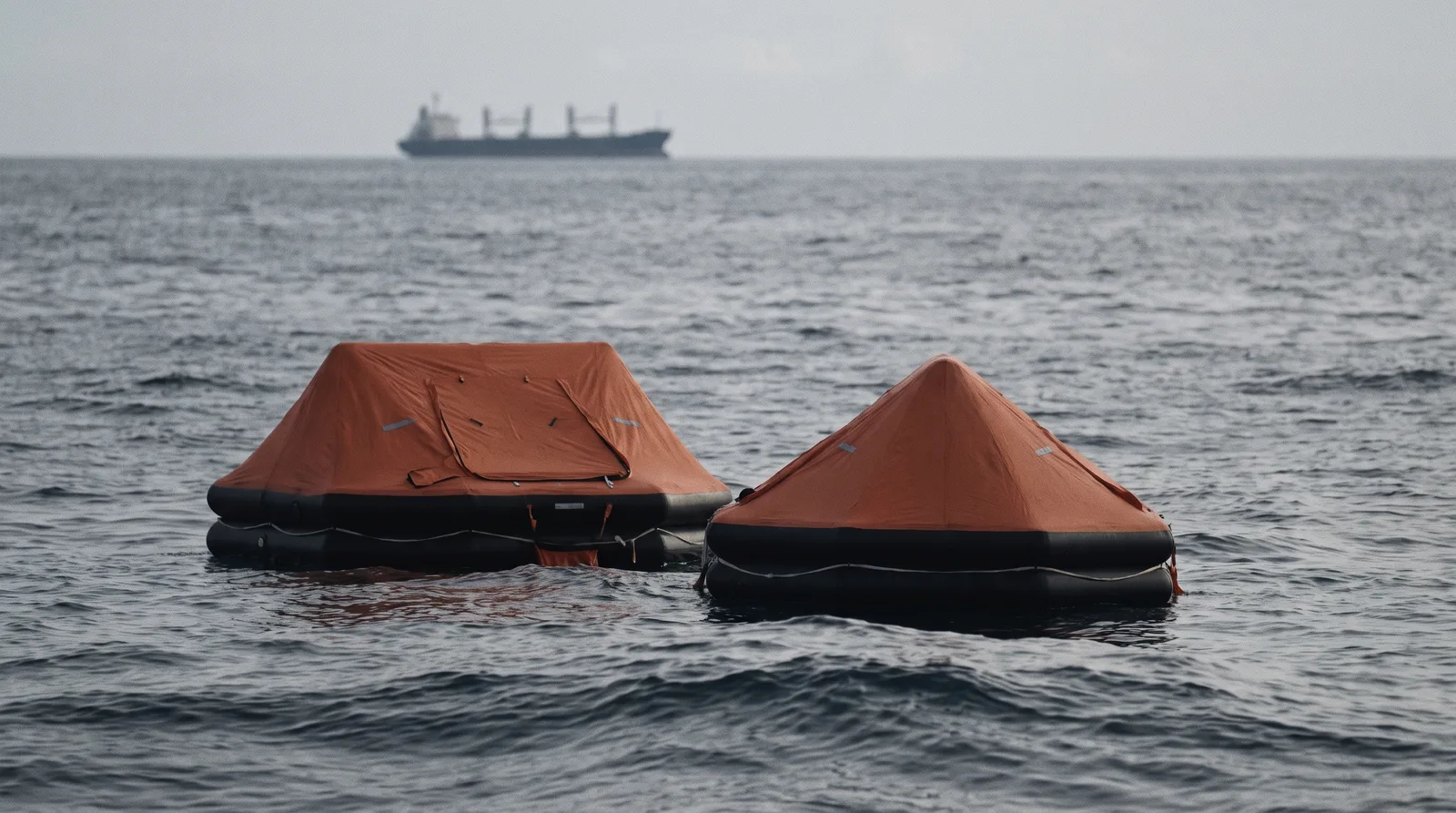
Tai Tam, an Australian cruising yacht, a 15.5 metre Oceanis 51.1 from series production, sank in the South Pacific after a whale strike on Saturday 26 September 2026. She was sailing about 250 nautical miles north of Norfolk Island with four people on board: two Australians, a New Zealander and a French national. All four were rescued.
The crew describe a loud, wrenching impact, after which the helm was completely locked and the yacht could no longer be steered. Water came in faster than they could stop it. Around half an hour after the impact they activated their EPIRB. New Zealand's Rescue Coordination Centre sent a Royal New Zealand Air Force P-8A Poseidon, which located the sailors and kept radio contact while nearby ships were diverted.
At about 06:00 on Sunday the container ship Sofrana Surville took the four aboard from their liferaft, roughly 17 hours after the strike. The yacht went down. Which whale hit her is unclear: the crew report sperm whales close by, but nobody saw the animal that struck the boat, and the German magazine YACHT states that there is no reliable information on the species.
Whale strikes on ocean passages are rare but keep happening, and they tend to take out rudder and hull at the same time. What saved this crew had been prepared long before: a beacon that worked at once, a serviced liferaft and the decision to step off in time. One of the sailors said that a day earlier the weather would have made the outcome very different.
What this means for owners
A whale strike far offshore usually ends in a total loss, and the questions that follow are about paperwork that no longer floats. Owners of sailing yachts and catamarans heading off on long passages or deliveries should check three things with their insurer before leaving: whether the agreed cruising area includes the route, what insured value is on file and whether a collision with a marine animal falls within the perils named in their terms. Keep proof that the liferaft and EPIRB were serviced, because after a sinking that question comes up. Photos and an equipment list stored ashore replace the records that go down with the boat.
Our view as an underwriting agency, not part of the news. Your own policy wording decides.
Where this comes from
- Source: YACHT, 29.09.2026: Wal-Kollision, vier Segler im Südpazifik gerettet
- Source: Marine Industry News, 02.10.2026: Sailors watch as Beneteau Oceanis 51.1 sinks after whale strike
The text is our own; the sources supplied the facts and figures, not the wording.
