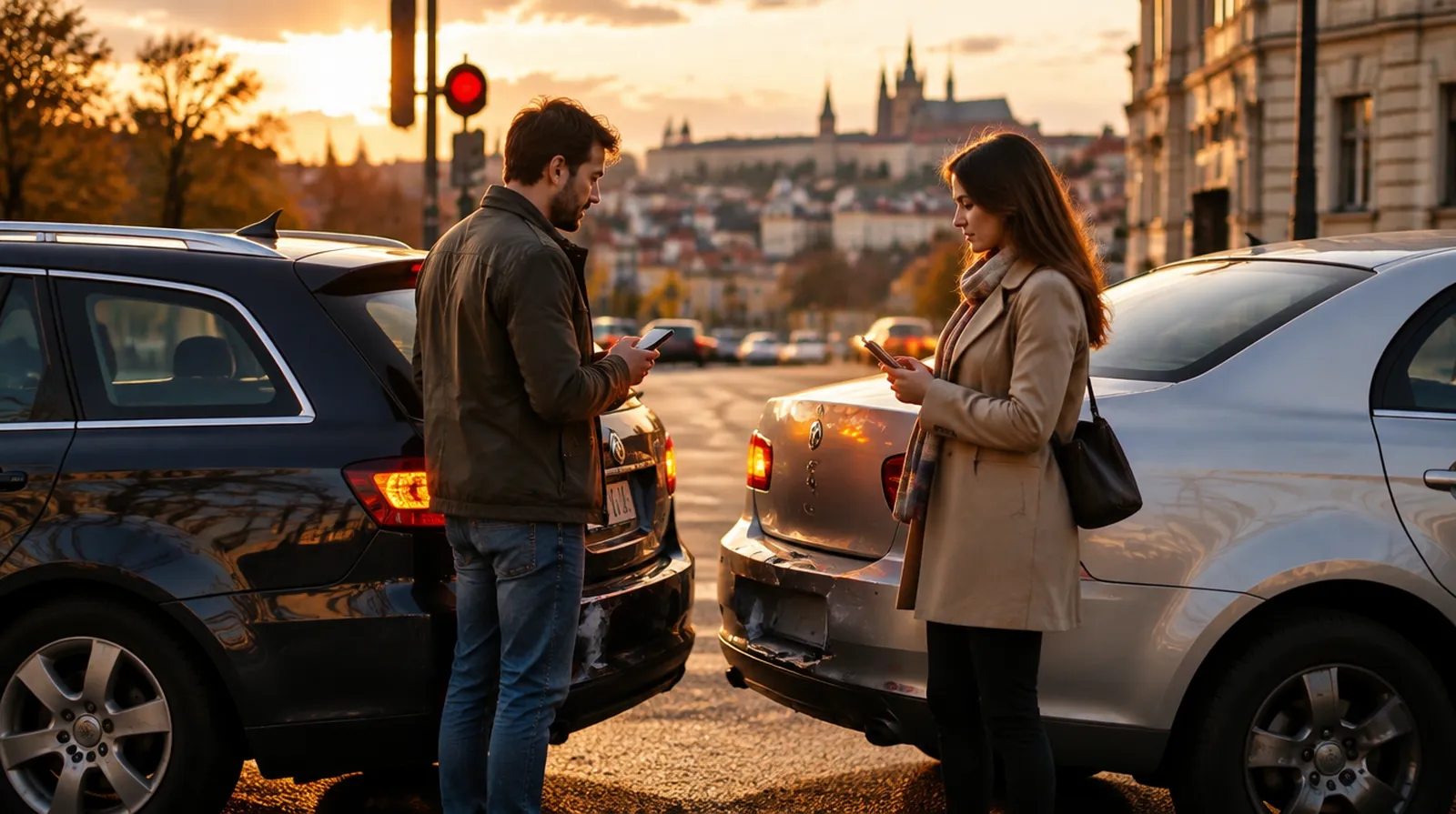
Who pays after a rear-end collision in Germany? Almost always the liability insurer (Kfz-Haftpflicht) of the driver who hits the car in front. Courts first assume the driver behind kept too little distance. If the front driver braked hard without a compelling reason, liability is often shared, roughly 70 to 30. The driver behind gets their own damage paid only through comprehensive cover (Vollkasko).
Published figures on liability splits and claims after a rear-end collision in Germany.
Example
Typical range
Front driver brakes hard without reason, higher regional court ruling
about 70 to 30 against the driver behind
Lane change with unclear sequence
often 50 to 50
Loss of use for cars, groups A to L
23 to 175 euros a day
Threshold for your own assessor at the other side's cost
about 750 euros of damage
Vollkasko deductible for your own damage
usually 150 to 1,000 euros
As of October 2026, from traffic law guides.
Liability splits are individual court decisions, not fixed rules.
The deductible and the worked example are a guide value from quoting practice.
We are happy to calculate what a rear-end collision means for your policy.
Worked example
Rear-end collision in city traffic, front driver stops at an amber light
The front driver stops correctly, the driver behind hits the car. The front car, a five year old compact, has a damaged tailgate, and the repair takes five days.
Repair of the front car according to the assessor
about 3,500 euros
Assessor
about 600 euros
Loss of use, 5 days at 43 euros
215 euros
Flat fee for expenses
about 25 euros
Own damage of the driver behind, Vollkasko with 300 euro deductible
about 2,000 euros, 300 euros of it paid by the driver
The liability insurer of the driver behind pays the front driver about 4,300 euros. The driver behind pays the deductible and is downgraded in both liability and Vollkasko. Calculation with guide values.
Why the driver behind usually pays
German road traffic rules (Straßenverkehrs-Ordnung, section 4 paragraph 1) require enough distance to stop even if the car ahead brakes suddenly. When a rear-end collision happens, courts therefore first assume that the driver behind followed too closely or was not paying attention. Lawyers call this prima facie evidence (Anscheinsbeweis).
For the front driver this means they only need to show a typical rear-end collision. The driver behind must then prove it happened differently. If they cannot, their liability insurer pays the front driver's full damage.
When the front driver shares the blame
The same rule forbids the driver in front to brake hard without a compelling reason. A compelling reason is a danger to people or a threat of serious damage. Braking to avoid a speed camera does not count, braking for a small animal usually does not either.
If the driver behind can prove such braking, the damage is split. Drivers who brake fully on an open road without need often carry about 30 percent in court rulings. With a lane change shortly before the crash and an unclear sequence, courts often end at 50 to 50. If the front car rolls backwards, the front driver can be fully liable.
Situation
Typical split
Who pays what
Classic rear-end collision at lights or in a jam
100 percent driver behind
liability insurer of the driver behind pays everything
Front driver brakes hard without reason
often about 70 to 30
both liability insurers pay their share
Lane change just before, sequence unclear
often 50 to 50
damage is split
Front car rolls or reverses
up to 100 percent front driver
front driver's liability insurer pays
Chain collision, order of impacts unclear
often split based on an expert report
an assessor reconstructs the impacts
What you can claim as the front driver
The liability insurer of the driver who hit you pays your repair, and for damage above about 750 euros also an independent assessor (Gutachter) of your choice, plus towing, loss in value and a flat fee for expenses. If you are injured, medical costs and compensation for pain and suffering (Schmerzensgeld) are added.
While your car is off the road you choose: a rental car or loss of use compensation (Nutzungsausfall). Loss of use follows a table and is about 23 to 175 euros a day depending on the vehicle group. You do not need your own insurer for this, and your no-claims class (SF-Klasse) stays untouched.
What the driver behind pays themselves
If you caused the rear-end collision, your liability policy is downgraded because it pays the other side. Your own car is only covered by Vollkasko, minus the deductible and with a further downgrade. With partial cover (Teilkasko) or liability only, you pay your own repair.
For small claims it can pay off to refund the other driver's damage yourself and avoid the downgrade. This is usually possible within six months after the claim is settled. Compare it with the higher premiums of the coming years.
Evidence after a rear-end collision
Whether the prima facie evidence holds depends on proof. Photos of the final positions, names of witnesses and dashcam footage help both sides. Do not say at the scene that it was your fault, even if you drove into the car in front.
If you are the front driver and the other side wants to split liability, get advice. If the case is clear, the other driver's liability insurer also pays your lawyer's fees.
Step by step
Secure the scene, hazard lights on, put on a hi vis vest.
Take photos of both cars, their final positions and the surroundings.
Note names, addresses, number plates and insurers of the other party and witnesses.
Do not sign any admission of guilt, even if you hit the car in front.
Report the claim to your insurer within a week; as the victim, also to the other insurer.
Checklist
Photos and witnesses secured
Other party's details complete
Own assessor appointed for damage above about 750 euros
Rental car or loss of use chosen, not both
As the driver behind: paying yourself compared with the downgrade
Common mistakes
Admitting fault at the scene before the sequence is clear
Accepting the other insurer's assessor as the front driver
Taking an expensive rental car although shared liability is possible
Braking hard without reason to avoid a speed camera
Taking no photos and later being unable to prove the other driver's lane change
Questions and answers
Frequently asked
Is the driver behind always at fault in Germany?
Usually, but not always.
If the front driver brakes hard without reason, changes lanes just before or rolls backwards,
they are fully or partly liable.
Will my premium go up if I was the front driver?
No, if you are not at fault.
Your damage is paid by the other driver's liability insurer.
Only shared liability can affect your policy.
Does the other insurer pay compensation for whiplash?
Yes, for proven injuries.
See a doctor after the accident and have your symptoms documented.
What if I hit someone who braked for no reason?
You must prove the sudden braking, ideally with witnesses or a dashcam.
If you succeed, damage is often split around 70 to 30.
Who pays in a chain collision?
It depends on who hit whom first.
An assessor reconstructs the impacts; if it stays unclear, damage is often split.
Do I have to call the police after a minor rear-end collision?
Not necessarily, if nobody is hurt and you exchange details.
Call them if the sequence is disputed, someone is injured or the other driver leaves.