Magazine / Magazine
Refitting a boat over winter: when a new engine increases the risk
Over winter the bigger outboard goes on the transom and the lithium bank goes under the berth. Whether refitting a boat increases the risk is decided by a clause few owners ever read.
11 October 20267 min readNAMMERT Assekuradeur GmbH
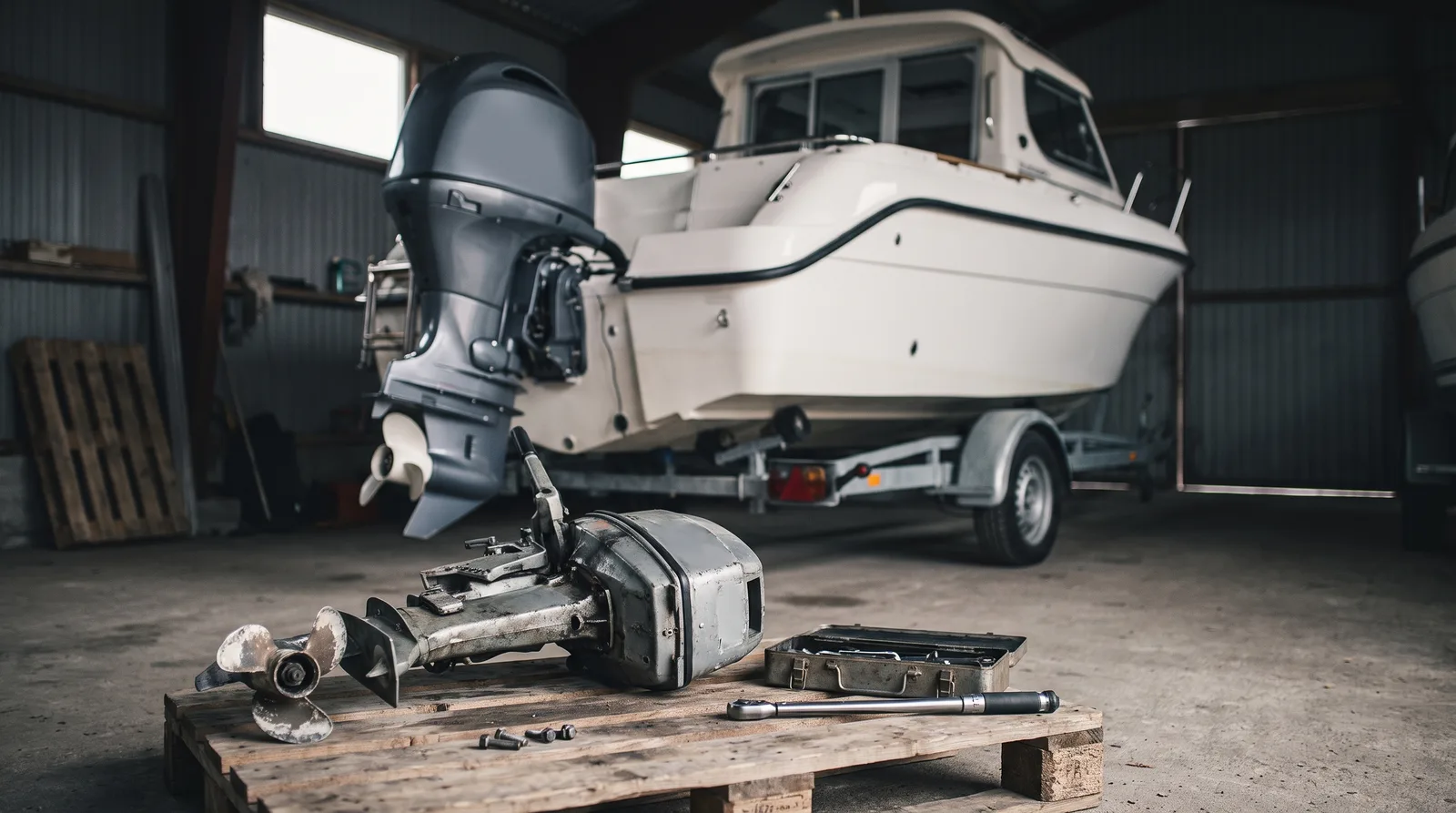
Winter storage is when boats get refitted, not just serviced. A motor boat gets a bigger outboard, a sailing yacht a new inboard diesel or a lithium battery bank, a small trailer boat an electric drive. For the insurer, refitting a boat over winter matters when the new engine or equipment increases the risk. Most hull wordings deal with this in a clause on increase of risk, and German law sets the frame for it in sections 23 to 27 of the Insurance Contract Act (VVG). The German wordings quoted here are examples of how such a clause reads, not a description of any one policy.
A typical definition: there is an increase of risk when, after the contract is made, circumstances change so that a loss, a larger loss or an unjustified claim becomes more likely. It is especially likely where something changes that the insurer asked about before writing the risk. Engine power is the classic example, because many proposal forms ask for it and use it to price the liability cover. Going from 60 to 150 horsepower changes a fact the contract was built on. Whether a given refit counts is not something the owner can safely decide alone, which is why the question belongs before the work starts.
Many wordings say plainly that the owner may not increase the risk without the insurer's prior consent, and that this includes letting a third party do it, such as the yard. If the owner only realises afterwards, the change must be reported without delay. In practice the call to the insurer comes before the job sheet is signed, not after the first trip in spring. Instead of cancelling, an insurer may ask for a higher price or exclude the increased risk; under the German wordings, a rise of more than 10 percent or an exclusion gives the owner the right to cancel within a month.
The consequences show up after a loss. Where an owner deliberately kept quiet, the insurer can refuse to pay; where the owner was grossly negligent, the payment can be reduced in proportion to the fault, and under the German wordings the owner has to prove that gross negligence was absent. The claim survives to the extent the owner proves the change did not cause the loss. A storm pushing the boat against the shed wall in February has nothing to do with the engine. A collision at full speed with the new engine is a different matter.
The second question is value. A new engine makes the boat worth more, and many hull wordings tie the sum insured to the total value of the boat after alterations, adjustable at any time on an invoice or a survey. Some wordings go further: an increase in value through alterations must be reported, and the added value is only insured once the work has been documented. An owner who files the invoice but never sends it has paid for the value without insuring it. Look in the contract for the clause on the insured value and the word alterations.
Electric drives and lithium batteries bring their own clauses. Where a wording has a special clause for electric or hybrid boats, it often applies only if the boat is shown as such in the schedule, and typical exclusions cover the owner's own work on the battery and drive systems without CE certification. On the liability side, an increase of a declared risk is often included, but not for craft that require compulsory insurance, and the boat may only be helmed with whatever licence the authorities require. If the bigger engine pushes the boat over a licensing threshold, the licence comes before the first trip.
Worth checking
Common questions
Do I have to tell my insurer about a bigger engine?
In most hull wordings, yes, and before it is fitted. Engine power is usually something the insurer asked about, and a change to it can count as an increase of risk that needs prior consent.
What happens if I did not report the refit and then have a claim?
Depending on the wording, the insurer may refuse payment for deliberate silence or cut it for gross negligence. The claim usually survives if the owner can prove the change did not cause the loss.
Does the sum insured rise automatically after a refit?
Usually not. Many wordings link it to the boat's total value after alterations but only adjust it on an invoice or survey, so the added value is not insured until it has been reported.
Related