Magazine / Magazine: Policy and market
Lost overboard: what to check about loose gear in your hull wording
Gear that goes over the side is usually gone for good. Whether a hull wording treats it as a loss at all depends on one short exclusion that many owners only read afterwards.
9 November 20266 min readNAMMERT Assekuradeur GmbH
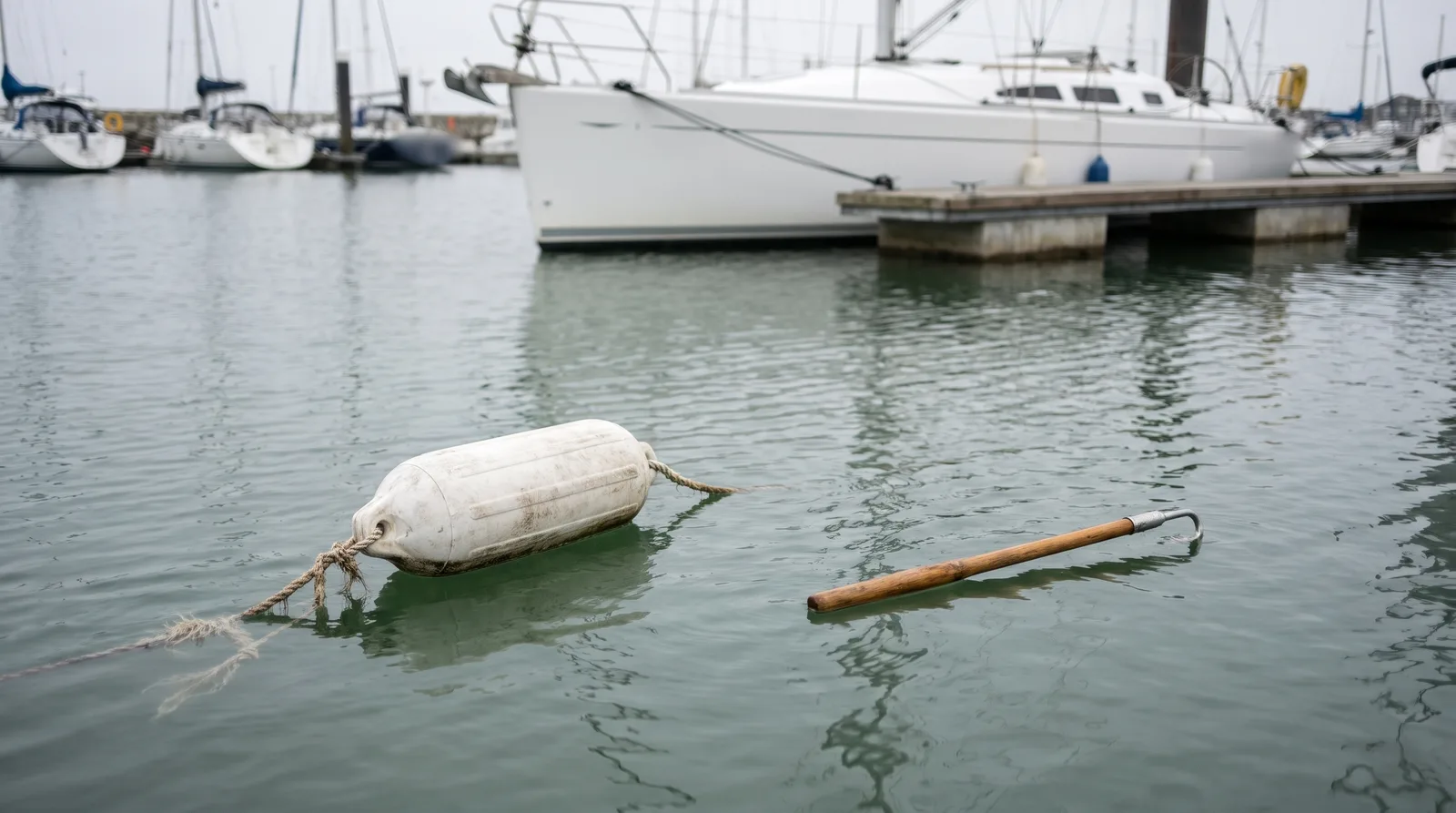
A pair of binoculars slides off the cockpit bench while coming alongside, a fender comes untied while warping the boat and drifts away, a phone drops between pontoon and hull while the boat is being cleared out. In November, when sailing yachts, motor boats and houseboats are emptied and lifted out for the winter, gear is lost overboard more easily than at any other time. What to check about loose gear in your hull wording comes down to two questions: is the item insured while it is on board, and what happens once it is in the water.
The first question is answered in the description of what the policy insures. The section on the insured property may list the vessel with everything permanently fitted, the machinery, and the navigation equipment, often naming items such as handheld VHF radios, night vision devices and binoculars. Inventory such as lifejackets, cool boxes, lights and covers may be listed as well. Read this section closely: if an item is not named or not fitted, it may not be part of the insured property in the first place, and nothing else in the contract changes that.
The second question is answered in the exclusions, and this is where the decisive sentence sits. Look for wording along the lines of no indemnity for loss or falling overboard of loose objects of any kind. Where such an exclusion exists, the handheld VHF is insured while it lies on the chart table and stops being insured the moment it drops into the harbour. Check how the wording defines loose: equipment that serves the boat but is not permanently attached is often exactly what the exclusion has in mind. In practice this matters more than the sum insured.
Personal belongings are a separate heading. Some hull wordings exclude them entirely, others include phones, glasses, towels and laptops up to a limit, often expressed as a percentage of the sum insured with a minimum and a maximum per claim. Where they are included, check which causes are named, for example an accident to the vessel, storm, lightning, fire, explosion or theft. A phone that simply slips out of a jacket pocket fits none of these, and an exclusion for loose objects lost overboard would apply on top.
Two situations are less clear cut. When a boat capsizes or collides and gear goes over the side as a result, there is both an accident and a loss overboard; how a wording deals with that combination is rarely spelled out, so the claim should always be reported and assessed rather than written off. The same goes for an anchor left on the seabed after a chain fails: whether that counts as a loose object is a question for the wording and the claims handler, not something to settle alone on the pontoon.
Winter storage adds a related duty. Some wordings only pay for theft of loose parts if they were properly packed, covered and lashed, or locked inside the vessel. Some also extend cover to equipment removed and kept in a locked room or building ashore, often only after other insurance. Finally, tenders, paddle boards, surfboards, diving gear and fishing equipment are in some wordings insured only when they are declared with their own sum in the schedule. If they are not listed there, the exclusion for loss overboard never even comes into play.
Worth checking
Common questions
My handheld VHF fell into the harbour while coming alongside. Is that a claim?
That depends on the exclusions in the wording. Where there is an exclusion for loss or falling overboard of loose objects, the radio is insured on board but not once it is lost in the water.
Does the exclusion still apply if the boat capsizes?
A capsize is usually an insured accident, but a wording rarely says how that interacts with an exclusion for loss overboard. Report such a loss in full and let the claims handler assess it rather than deciding alone.
Are phones and glasses on board covered by hull insurance?
Some hull wordings exclude personal belongings entirely, others include them up to a limit per claim and only for named causes. Check the section on personal effects and the limit stated in the schedule.
Related
