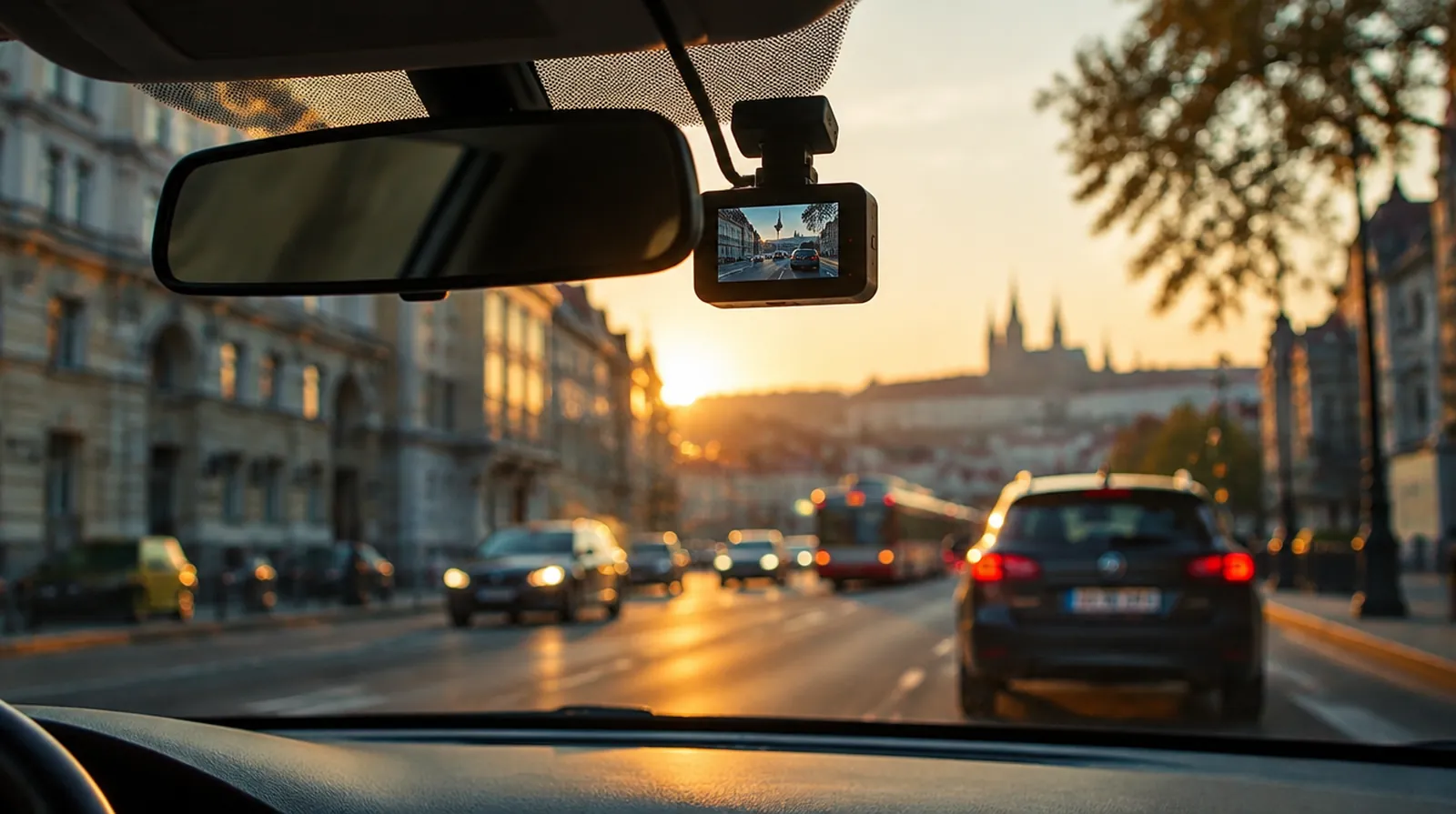
Can I use dashcam footage as evidence after an accident in Germany?
In short
Can I use dashcam footage as evidence after an accident in Germany? Yes. On 15 May 2018 the Federal Court of Justice ruled that a civil court may use it, even if continuous recording breaches data protection law. Only short, event-triggered recording is allowed. For continuous filming, the data protection authority in Lower Saxony, for example, sets fines of around EUR 500.
Device prices from a recent test and fines set by the data protection authority, as of 2026.
Example
Typical range
Dashcam, basic model with good night recording
about EUR 100
Dashcam, premium models
about EUR 350 to 600
Subscription for cloud or parking surveillance, depending on model
about EUR 2.99 to 24.99 a month
Fine for private drivers filming continuously, Lower Saxony
around EUR 500, EUR 1,000 or more if deliberate or repeated
Prices from a test published on 26 November 2025, fines according to the Lower Saxony authority,
June 2024.
Authorities in other federal states may act differently.
The amounts in the worked example are guide values from quoting practice.
Worked example
Disputed lane change without witnesses
Another car moves into your lane on the motorway, and each driver says the other was at fault. Your damage comes to EUR 6,000.
Damage to your car
EUR 6,000
No proof, assuming a 50/50 split
EUR 3,000 from the other side, EUR 3,000 for you or your Vollkasko
Vollkasko for your share
EUR 500 excess plus a no-claims downgrade
With usable video showing the lane change
EUR 6,000 from the other side
The video can make a difference of EUR 3,000 here, without a downgrade in your own policy. A camera costing EUR 100 to 350 has then paid for itself, provided it was set up correctly.
What the Federal Court of Justice decided
In the case before the court, two drivers disputed a lane change. The claimant's dashcam had recorded the whole journey. The court found this continuous recording unlawful under data protection rules but still admitted it as evidence.
The reason: in German civil proceedings a data protection breach does not automatically make evidence unusable. The court weighs the interests. The accident happened on a public road, accidents happen fast and drivers often lack proof, so the interest in the evidence prevailed.
Important: the ruling did not make dashcams legal. It only said that a court may use the footage. Whether it does so in your case is still decided case by case.
Which settings are allowed
Unlawful is the usual loop recording, where the camera films for hours and only overwrites when the card is full. A camera that films the street while the car is parked also records without a reason.
Event-triggered recording can be lawful. The authority in Lower Saxony does not pursue a pre-recording buffer of up to 30 seconds if the camera only saves permanently on impact, hard braking or at the push of a button. Clips without an accident must be deleted without delay.
The GDPR also requires information for the people you film. Keep a sheet in the car with your name, address, the purpose (securing evidence), the legal basis and the storage period, and hand it over after an accident.
Setting
Data protection
Evidence in court
Loop recording for hours
unlawful, fine possible
often still usable
Buffer up to 30 seconds, saved on impact
not pursued in Lower Saxony
usable
Parking mode filming the street
no reason, unlawful
case by case
Video online with number plates
an additional breach
does not help your case
What it can cost you
In Lower Saxony, fines for private individuals are based on EUR 500. They rise for deliberate or repeated breaches, long recordings, several cameras or videos published to make money. No penalty points are recorded in the driving register.
A video can also work against you. If it shows that you were speeding or ran a red light, the authority reports serious offences. The court also sees everything on the footage.
Dashcams and your car insurance
German motor liability or comprehensive cover (Vollkasko) does not require a dashcam, and a camera does not automatically lower your premium. It mainly helps in disputed cases: lane changes, right of way, a rear-end collision after sudden braking. Without witnesses it is often your word against theirs.
Do not post the video and do not pass it to people who are not involved. Save the accident clip, tell your insurer and your lawyer about it and let them decide whether to use it in the proceedings.
When you do not need a dashcam
If you drive rarely, mostly on familiar routes, and have comprehensive cover with a low excess, you do not need a camera. In clear cases, such as running into a stationary car, the situation is usually obvious without video.
A correctly set up dashcam makes sense for high-mileage drivers, commuters in dense city traffic and anyone who has already lost a dispute about how an accident happened.
Step by step
Set the camera to event recording: short buffer, permanent saving only on impact, hard braking or at the push of a button.
Switch off parking mode if it films the street, and switch off sound.
Keep an information sheet with name, address, purpose, legal basis and storage period in the glovebox.
After an accident, save the clip immediately and make a copy.
Tell your insurer and your lawyer about the video, do not publish it.
Delete clips without an accident without delay.
Checklist
No loop recording lasting hours
Impact sensor active and not too sensitive
Parking mode off or aimed only at your own car
Information sheet in the car
Accident clip saved, copy kept outside the camera
Nothing uploaded to social media
Common mistakes
Believing the 2018 ruling made dashcams generally legal
Sharing the accident video online with visible number plates
Letting the card keep running after the accident until the clip is overwritten
Forgetting that the video also shows your own offences, such as speeding
Leaving parking mode to film the street permanently
Questions and answers
Frequently asked
Are dashcams banned in Germany?
No, the device itself is not banned.
What is unlawful is continuous recording without a reason.
Short, event-triggered recording can be lawful.
Does the court have to watch my video?
Not necessarily.
It decides case by case whether to use the footage.
Since the 2018 ruling, the interest in evidence often prevails after road accidents.
May I give the video to my insurer?
To settle your own accident, that is the usual route.
Pass on only the accident clip, not the whole journey.
May I post accident videos on social media?
As a rule no, if people or number plates can be recognised.
Publishing is an additional data protection breach.
Do I get penalty points for a dashcam?
No.
The Lower Saxony authority imposes fines under data protection law;
no points are entered in the driving register.
Is parking mode allowed?
If the camera films public space while parked,
it counts as recording without a reason and is unlawful.
Do the same rules apply abroad?
No, every country has its own rules.
The Austrian authority names about one minute before the accident as the storage limit,
and press reports say Portugal bans even carrying one.
If in doubt, switch the camera off before the border.