Magazine / Magazine: Policy and market
Abandoning a yacht at sea: what happens to the boat afterwards
Stepping off a sinking yacht onto a lifeboat is the right call when lives are at stake. But the boat drifts on, can be found and is still yours. Which clauses in a policy deserve a closer look.
18 November 20267 min readNAMMERT Assekuradeur GmbH
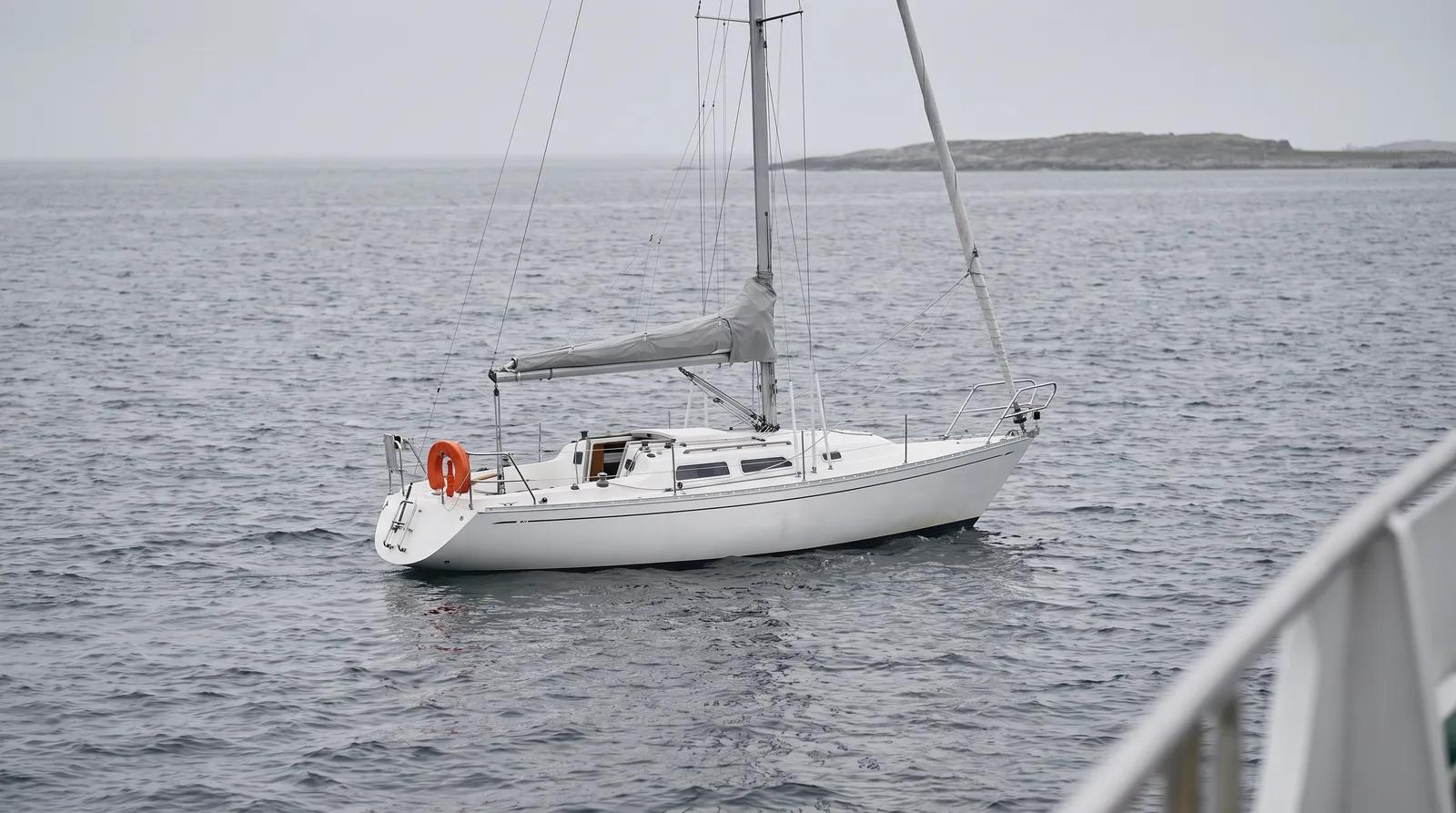
On 30 September 2026 a solo sailor ended up abandoning a yacht at sea, about 14 nautical miles east of Whalsay in Shetland. His 9 metre sailing yacht under the Norwegian flag had come across alone from Bergen, the wind was southeasterly force 7 to 8, and water kept rising inside the boat. After a Pan-Pan call he stepped straight across to the Lerwick lifeboat and was landed unhurt. The yacht was last seen drifting east towards Out Skerries; what happens to the boat afterwards was still unknown when we reported the case on 11 October.
Nobody should question the decision to leave. A life comes first, and no insurer expects a skipper to stay aboard a boat that is filling with water. But for the owner the story does not end on the lifeboat. An abandoned yacht has not sunk and does not belong to nobody. It keeps drifting, it may go aground, hit a fish farm or another vessel, or be towed into harbour by a fishing boat, and in most legal systems it remains the owner's property. Three questions follow, and none of them answers itself.
The first is cause. Hull policies usually list insured perils, and the wording on accidents, storm and sinking is where a claim like this is decided. Look for whether an accident peril exists at all, whether sinking after a collision with floating debris is named, and how storm is defined. Many German wordings, for example, only count wind from force 8 on the Beaufort scale as storm, so a gale of force 7 to 8 turns on the official reading. Then check wear and tear: a corroded seacock or a perished hose is usually excluded as the failed part itself, while the question of whether the resulting flooding is treated differently varies from wording to wording, as does any exclusion for poor maintenance.
The second question is where the boat is. Policies often contain a rule for stolen boats that turn up again, typically a period after which the owner no longer has to take the boat back. A yacht left behind in distress has not been stolen, so such a rule may not apply, and many wordings have no fixed period after which a missing boat counts as a total loss. Weather, drift and reports from the coastguard and fishing fleet then decide. It is worth reading whether your insurer reserves the right to take over the boat against payment of its insured value, because that settles who owns the wreck if it is found later.
If the yacht is found, salvage follows. Whoever secures a drifting boat may claim a salvage reward under the law of the coastal state; in Germany that is sections 574 and following of the Commercial Code (HGB), and many countries apply the International Convention on Salvage of 1989. Read how your policy treats salvage: some wordings only mention salvage and wreck removal ordered by a state or an authority, with a fixed limit, and treat a private salvor's claim at most as a cost of minimising the loss. In practice that means one thing. Before you agree to any salvage terms, call your insurer and get instructions.
The third question concerns other people. A drifting sailing yacht is a hazard to navigation, and if it damages a pier, a fish farm or another boat, the injured party will turn to the owner. Hull cover normally excludes third party claims, so the answer lies in the liability section: does it cover liability arising from owning and keeping the boat, not only from using it? How far an owner who had to leave his boat in distress is liable is a matter for the law of the place, and we leave it open here. The question mostly concerns sailing yachts and motor yachts on delivery trips and long passages; on inland waters such a case hardly ever occurs.
Whatever the wording, the duties after a loss look much alike: report it promptly and in writing, do what is reasonable to limit the damage, follow the insurer's instructions, answer questions fully, do not sell a recovered boat before the claim is accepted, and allow a survey before any repair. The record that helps most is made while still at sea: position, time, wind, the water level inside the boat and the reason for leaving, written down as early as possible.
SeriesPart 4 of 9
Blue water and abroad: what decides your cover under way
All parts at a glance
- Insurance for bluewater sailors
- A customs deadline moves the route, and the route touches the cruising limits
- Whale strike on passage
- Abandoning a yacht at sea
- Atlantic rally or crossing alone
- Chartering: the deposit, the skipper, the handover
- Renting a small boat in Spain from October
- Towed in by Spain's rescue service
- Lake Garda's cleaning rule for visiting boats
Worth checking
Common questions
Is an abandoned yacht still my property?
In most legal systems, yes. Leaving a boat in distress is not giving up ownership. That is why a finder can claim a salvage reward and why liability for the drifting boat stays with the owner.
When does a missing yacht count as a total loss?
Many policies set no fixed period for this. Rules on recovered boats often apply only to theft. For a yacht left at sea, weather, drift and reports from the authorities decide, so read your wording and ask your insurer early.
What should I check in my policy before a long passage?
How accident, storm and sinking are defined, how wear and tear and poor maintenance are excluded, how salvage and wreck removal are treated, and whether the liability section covers owning and keeping the boat as well as using it.
Related
