Magazine / Magazine
Lake Garda's cleaning rule for visiting boats: what to check in your insurance before 2027
Trailering a boat to Lake Garda will need proof of cleaning from 2027. The fine is the smallest worry. The bigger question is what a policy says about breaking local rules.
2 October 20267 min readNAMMERT Assekuradeur GmbH
On 29 April 2026 the regional council of Veneto unanimously passed an interregional law on navigation on Lake Garda. One sentence matters most to owners: the hulls and engines of all craft arriving from other bodies of water must be cleaned before they are launched. According to the region, the duty applies from 1 January 2027. It is backed by all three authorities around the lake, Lombardy, Veneto and Trentino, because Garda borders all of them. Boats kept permanently on the lake are not the target. The rule is about the ones that come and go.
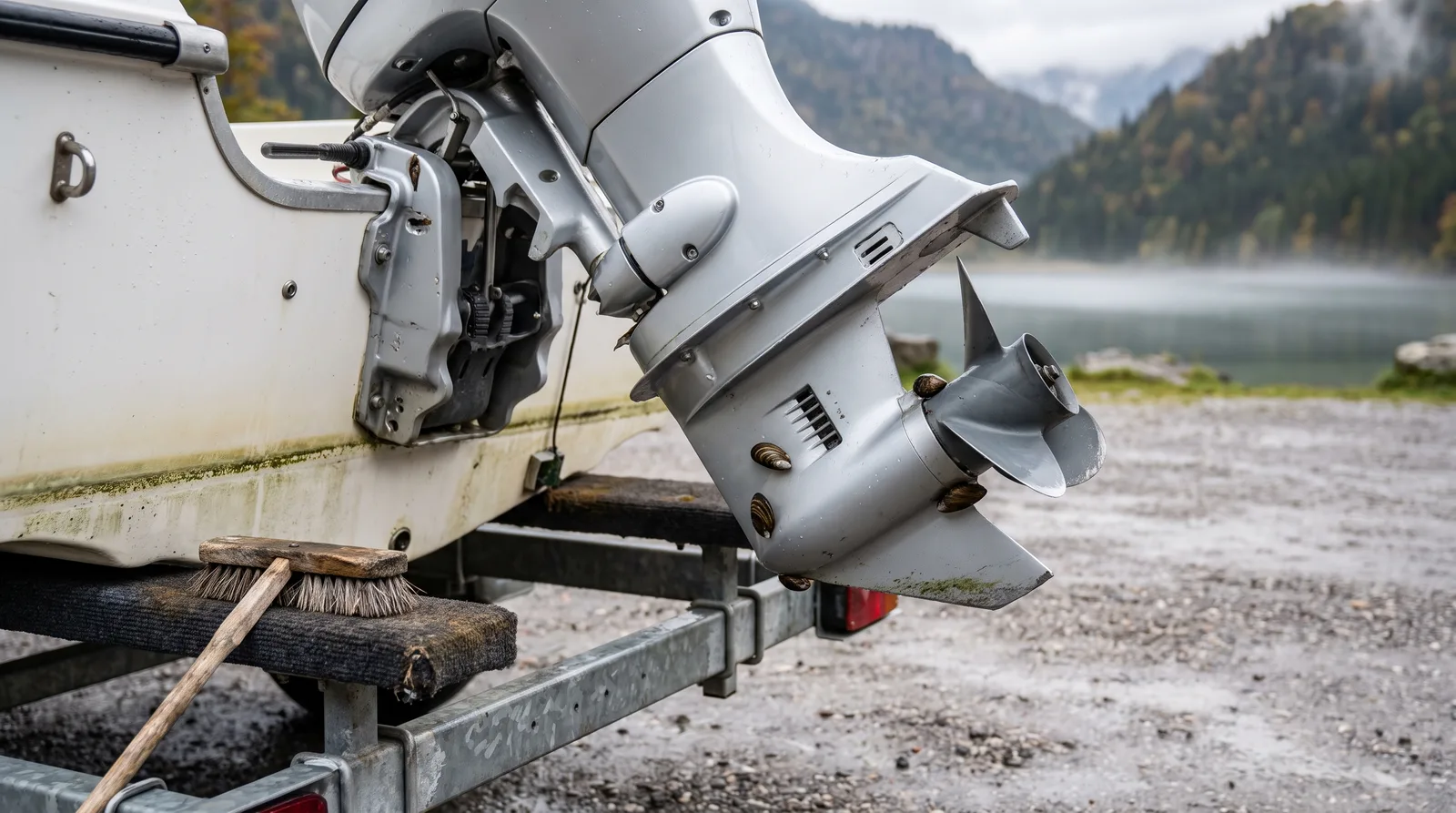
The reason is biological. Invasive mussels, above all the quagga mussel, travel as larvae and young animals in the fouling on the bottom, in the gearcase and in the cooling water. A trailer boat can get from Lake Constance or a Bavarian lake to Garda in a day, which makes it the perfect carrier. The German motoring club ADAC lists lakes such as Constance, Chiemsee, Como and Iseo as typical origins, gives a range of fines from 414 to 2,066 euros, and names Veneto's regional law no. 6 of 5 May 2026 as the legal basis there. How proof will look, which yards may certify the cleaning and what it costs had not been settled when the club reported.
Start with the easy part of the insurance question: no insurer pays a fine. It is a penalty, not a loss. The more interesting clause sits in hull cover. Many boat policies exclude loss caused by a breach of official regulations, and the German wordings we work with contain exactly such an exclusion. Read the precise words in your own contract. If it says caused by, the insurer has to link the breach to the damage. A missing cleaning certificate does not cause a storm loss on a mooring or a collision while berthing. If the wording is broader and speaks of losses occurring while regulations are breached, the picture changes, and that is worth knowing before the trip rather than after a loss.
Liability cover touches the matter in a clause few people read. German boat policies often include public law duties to remediate environmental damage under the EU Environmental Liability Directive, which counts harm to protected species, natural habitats and waters. Such clauses usually require the damage to be sudden, accidental and unintended. Mussels growing on a hull for weeks and riding along are the opposite of sudden. Many wordings also carve out anyone who deliberately ignores rules made to protect the environment. Whether an authority would ever pursue a single owner for remediation is an open question. The point is simpler: knowingly launching an uncleaned boat is the one scenario where such a clause will not help.
Then there is the journey, for a trailer boat the riskiest stretch of the year. Look in your wording for three things. First, whether transit by road is included, often phrased as transport by suitable means. Second, whether there is an exclusion for improper loading or securing, which is common and turns a loose strap into an uninsured loss. Third, the geographical limits. Some policies define inland waters narrowly, by country or by named rivers and lakes, and an Italian lake may need to be added. The schedule is the document that settles it, not the brochure.
Those affected are mainly trailer boats and small cabin cruisers, inflatables with an outboard, jet skis and racing dinghies travelling to regattas at Riva or Torbole. A sailing yacht with a permanent berth on the lake is outside the rule as long as it stays there. Autumn is a better moment to clean than spring: the boat comes out of the water anyway, fresh fouling comes off more easily, and whatever is left dries out over winter. A yard that cleans the boat should give you a receipt. If its pressure washer damages the gelcoat, that is a matter for the yard's own liability insurance first, and the receipt shows who had the boat and when. Flushing the engine yourself and running the water pump dry is mechanical breakdown, which many hull wordings exclude.
Worth checking
Common questions
Will my insurer pay the fine if I am caught without a cleaning certificate?
No. A fine is a penalty for breaking a rule, not damage to your boat or to someone else. Neither hull nor liability insurance is designed to pay it, whichever company you are with.
Does launching an uncleaned boat void my hull cover?
That depends on the wording. If the exclusion covers loss caused by a breach of regulations, the insurer must show the breach caused the loss. A storm on the mooring has nothing to do with a cleaning receipt. Broader wordings exist, so read yours.
My boat lives on Lake Garda all year. Does the rule apply to me?
Going by what the region has published so far, no. It targets boats brought in from other waters. If you take the boat to Lake Maggiore for a week in summer, it counts as arriving from elsewhere when it comes back.
Related