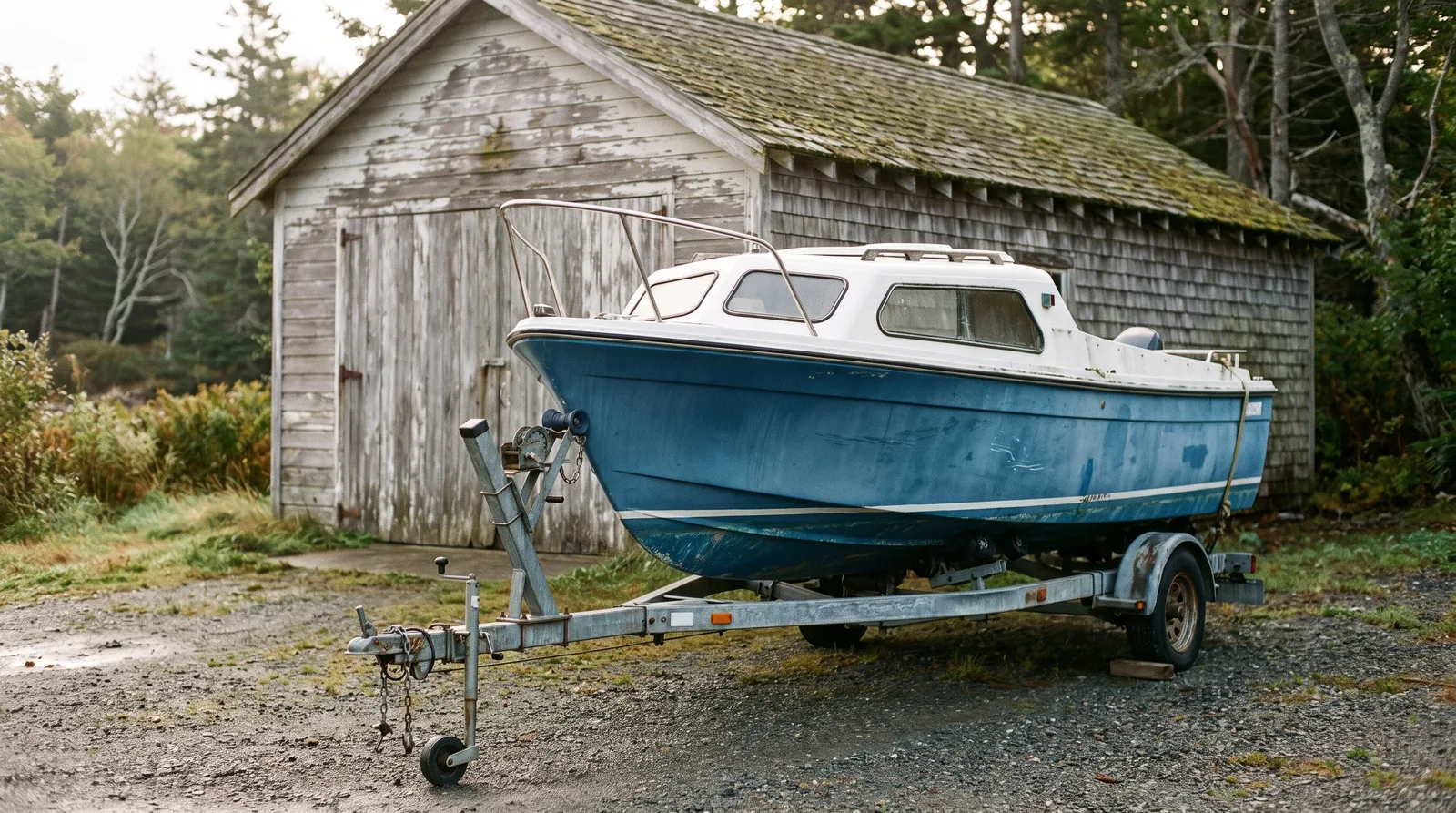
Bayliner Capri 2052 insurance check: what the policy should say about this boat
Part 1 of the series. We have not driven the Bayliner Capri 2052; we look at the details a policy for this motor boat should get right.
11 October 20266 min readNAMMERT Assekuradeur GmbH
This is the first of four articles about one boat, the Bayliner Capri 2052, a motor boat that is typically moved on a trailer. The idea comes from the multi-part boat tests that boating magazines run. One thing is different, and it belongs at the very top: we have not driven this boat, not a single metre. This is not a sea trial. We say nothing about how the Capri 2052 handles, how it is built or what its quality is like, because we do not know. This insurance check looks at the paperwork instead: the proposal form, the policy schedule and the questions that come up after a claim. The model is one of the boats on the NAMMERT books, which is why it opens the series. The question throughout is what the policy should say about this boat.
The first thing to check is the name. Paperwork for this model reaches us under several spellings: Capri LS 2052, 2052 Capri Cuddy, Capri 2052 LS, Capri 2052 CK, 2052 LS and plain 2052. That is more than a cosmetic issue. A policy describes one specific boat, and after a claim someone will compare what is written in the policy with what is lying at the pontoon. Use the designation exactly as it appears on the bill of sale or the registration papers, and add the hull identification number. The HIN is what tells two boats with the same name apart, for instance when a stolen boat turns up again months later.
The second point is the engine. A motor boat of this class may have an inboard engine with a sterndrive or an outboard on the transom, and many hull wordings treat the two differently. A built-in engine is usually part of the boat and of its sum insured. An outboard is often a separate item that has to be named, with its own value, in the schedule; if it is missing there, it may not be insured at all. Many wordings also carry a security condition, such as no payment for an outboard that was not locked with a security bolt or kept in a locked building. Enter make, power and serial number in full, and read the outboard clause before the first trip.
Third, who may drive. Liability wordings typically say that the boat may only be used by an authorised skipper, meaning someone who uses it with the owner's knowledge and consent, and only with whatever licence the authorities require. Hull wordings often contain an exclusion for damage caused by a person without the licence that is mandatory for that boat or that cruising area. Licensing rules differ from country to country and sometimes from lake to lake, and a boat that needs no licence at home may need one abroad. If you lend the boat to a friend for the weekend, find out first whether they hold the right certificate for that water, because the duties after a claim usually apply to them as well.
Fourth, the cruising area. With a trailer boat it is tempting to name only the lakes near home, and then the summer holiday goes to the Adriatic. Hull policies usually work with defined navigation limits, from inland waters to coastal seas such as the Baltic or the Mediterranean, up to worldwide. A boat insured for inland waters only is outside the contract on the Croatian coast. Some wordings allow a short extension for a few weeks a year, others only accept waters outside the limit if this was agreed in advance and in writing. Look at the exact wording, not at the map in your head. The fourth part of this series returns to trailering and trips abroad.
Fifth, the level of hull cover. Basic cover is often limited to named perils such as storm, lightning, fire, explosion and theft of the whole boat. Grounding, collision, sinking as the result of an accident, vandalism and theft of parts tend to appear only in the wider cover levels. For a motor boat that spends its days on shallow lakes and at slipways, that difference matters more than any other line in the policy. The insured value also depends on the cover chosen: a market value worked out at the time of loss, or an agreed value fixed when the contract is signed. How to set that value is the subject of the second part of this series; typical damage and what the wording says about it follow in the third.
One more line deserves a look before the first afternoon with guests: who is protected if someone on board gets hurt. Personal accident cover attached to a boat policy may protect only the owner, the owner and close family, or every authorised person on board, and the wording says which. The sum insured is sometimes split between all persons on board at the time of the accident, and the cover is often tied to the use of the boat, not to every hour of the day. Check this before the season starts, not after the first claim.
Insurance checkPart 1 of 4
Bayliner Capri 2052: an insurance check
All parts at a glance
- Bayliner Capri 2052 insurance check
- Bayliner Capri 2052 insurance check
- Bayliner Capri 2052 insurance check
- Bayliner Capri 2052 insurance check
Worth checking
Common questions
Is this a sea trial of the Bayliner Capri 2052?
No. We have not driven the boat and say nothing about handling, build or quality. The series only looks at what a policy for this motor boat should contain and where the wording usually draws its lines.
The registration says 2052, the bill of sale says Capri 2052 LS. Does that matter?
Not if the hull number and engine details match. Use the full designation in the policy and add the HIN, which tells the boat apart from every other boat with the same name.
Is an outboard automatically part of the hull cover?
Not necessarily. Many wordings only include an outboard that is named in the schedule with its own value, and some add a security condition such as a locking bolt. Read that clause before the first trip.
Related