Bayliner Capri 2052 insurance check: typical damage and what the wording says
Part 3 of the series: damage that can happen to a motor boat of this size and where the wording usually draws the line. No verdict on the model itself.
11 October 20267 min readNAMMERT Assekuradeur GmbH
The third part of this series is about damage, and one point comes first: what follows applies to the type of boat, not to the model. We do not say that a Bayliner Capri 2052 suffers certain damage more often than other boats, and we have not driven it. We describe what can happen to a motor boat of this size that is used on lakes, rivers and near the coast and is often launched from a trailer, and where a typical hull or liability wording draws its lines. The answer depends heavily on the cover level, and that is the real subject here. This insurance check stays with the wording.
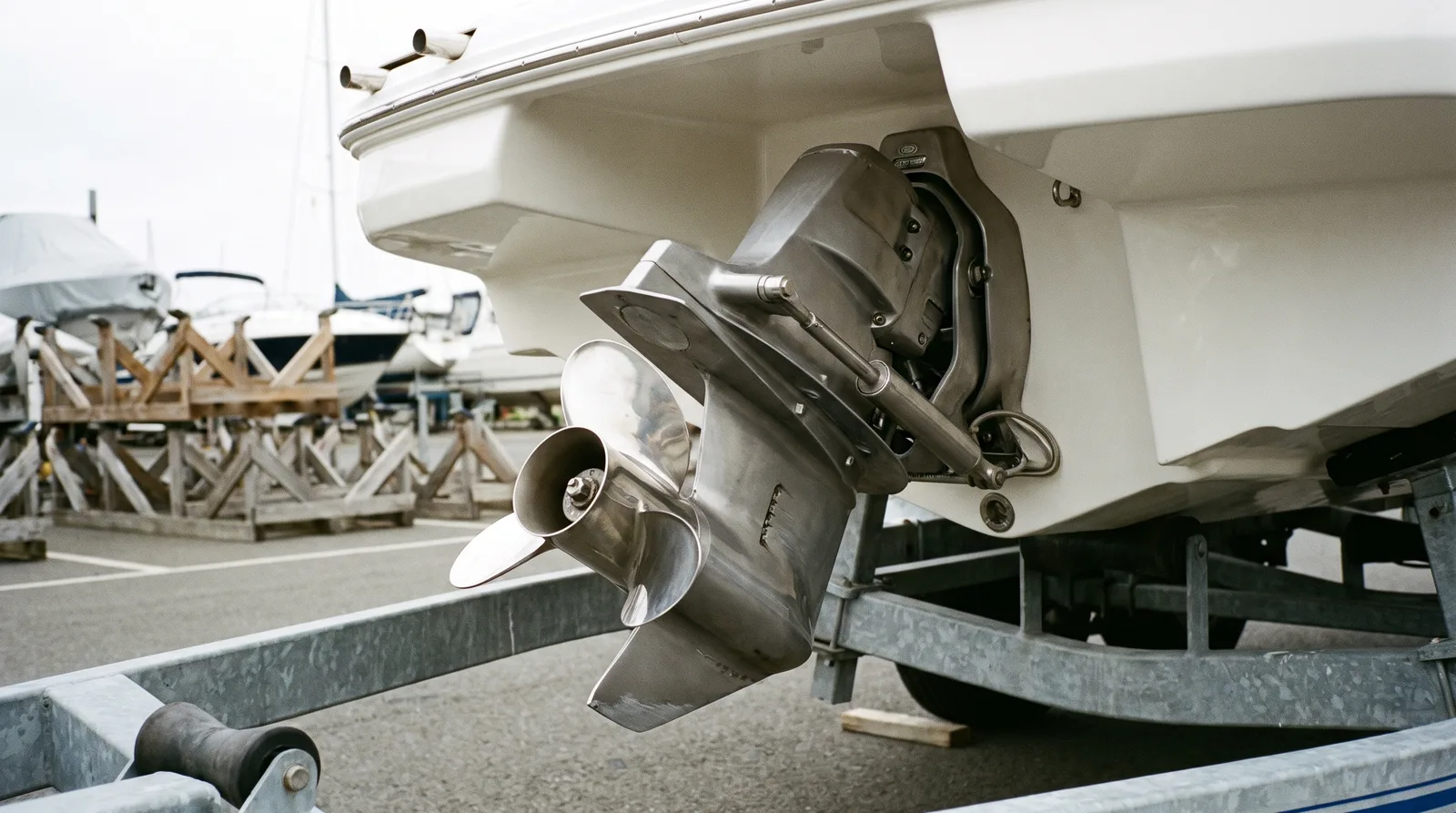
One kind of damage keeps coming back with this type of boat: grounding. A motor boat with a sterndrive or an outboard carries its most sensitive part at the very bottom, and on shallow lakes, sandbanks and in bays an unseen rock is enough. Wider hull cover usually treats grounding as an accident; basic cover often names only storm, fire and theft and leaves grounding out entirely. Some policies also pay for an inspection after a reported grounding, sometimes up to a limit and sometimes without deductible. Report a grounding even when nothing is visible at first, because a crack in the drive housing often shows up later and the claim then depends on when it was reported.
Propeller and drive are where accident and wear meet most closely. A blade bent after contact with a rock or driftwood is a collision with a fixed or floating object, and wordings with accident cover normally treat it as such. Almost every hull wording, however, carries an exclusion for operational damage to machinery and its consequences, for wear and tear on the part itself, for poor maintenance and for corrosion and cavitation. A drive that gives up after years without an oil change is not an accident, even when it happens on the water. Some policies offer an optional machinery extension for internal failures, usually tied to professional servicing and an age limit for the engine.
A rope round the propeller is a special case. A drifting line or a piece of net wrapped round propeller and drive is an external event, and under accident cover it is usually treated as a collision with a floating object. Whether the damage to seals or gearbox really comes from it has to be proved, though. Keep the rope, photograph it on the drive and let the insurer inspect before repairs start; most wordings make that a duty after a claim. Running on with a vibrating drive makes the damage worse and can raise the question of gross negligence. How a policy treats gross negligence, whether by a proportional reduction or a waiver up to a limit, is worth reading before the season.
At the berth, the main risk for an unattended motor boat is water. Sinking as the result of an accident is covered under accident cover. A burst hose is more complicated: many wordings exclude the failed part itself as wear but cover consequential damage to the boat. Rainwater collecting in an open cockpit is usually a weather exclusion unless a storm caused it, and a blocked drain may count as poor maintenance. Salvage and wreck removal ordered by an authority can cost more than the boat is worth; check whether the policy pays such costs on top of the hull sum and up to which limit.
A boat sitting on its trailer can be driven away together with the trailer. Basic hull cover often protects only against theft of the whole boat. Theft of parts, break-ins and vandalism tend to appear only in the wider cover levels. Look out for security conditions: many wordings pay nothing for theft if the boat was stored ashore on an unfenced site, or if the trailer had no hitch lock and the boat was not chained to it. Theft and vandalism usually have to be reported to the police immediately, and in a marina often to the harbour office as well.
Finally, damage to others: a swimmer, a boat at anchor, a pontoon. Liability cover pays for the owner's legal liability arising from keeping and using the boat, and a good wording also says that the insurer examines liability, rejects unjustified claims and settles justified ones. A common exclusion surprises families: claims by relatives living in the same household. For them, personal accident cover is the place to look, and the wording says whether it protects only the owner, close family or everyone authorised on board. Water skiing and towing a tube follow in the fourth part of this series.
Insurance checkPart 3 of 4
Bayliner Capri 2052: an insurance check
All parts at a glance
- Bayliner Capri 2052 insurance check
- Bayliner Capri 2052 insurance check
- Bayliner Capri 2052 insurance check
- Bayliner Capri 2052 insurance check
Worth checking
Common questions
Does the Bayliner Capri 2052 often suffer drive damage?
We say nothing about that, deliberately. The series describes damage that can be typical for a motor boat of this type, not weaknesses of the model, and we have no view on the quality of the boat.
Is a propeller bent in a grounding covered?
Under hull cover that includes accidents, a grounding that caused the damage is usually treated as an accident. Basic cover limited to storm, fire and theft often leaves it out. The list of insured events at the start of the wording gives the answer.
A swimmer is brushed by the boat while mooring. Who pays?
That is a liability claim against the owner or skipper. Liability cover examines whether there is liability, rejects unjustified claims and settles justified ones, subject to the exclusions such as claims by relatives in the same household.
Related