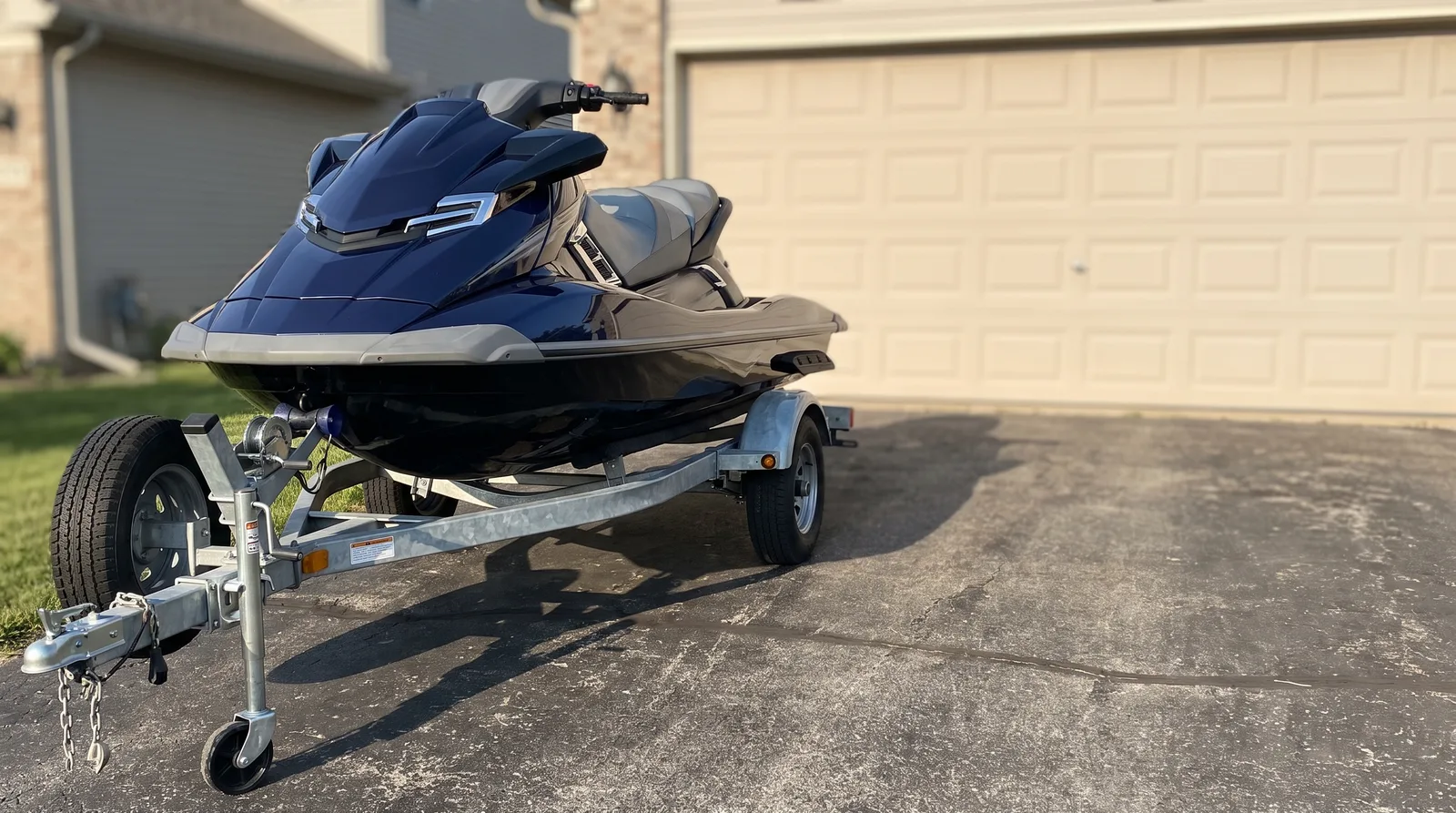
Sea-Doo RXP-XRS 300 insurance check: what the policy should say about the jet ski
Nobody here has ridden the Sea-Doo RXP-XRS 300, and this is not a test. Part one of this insurance check looks at what a policy should say about this jet ski.
11 October 20267 min readNAMMERT Assekuradeur GmbH
First, to avoid any misunderstanding: nobody on our side has ridden a Sea-Doo RXP-XRS 300 for this piece. This insurance check is not a ride test and says nothing about handling, build quality or finish. It looks at the machine from the angle an insurance intermediary can judge: what the policy should say about this jet ski. The model is insured with NAMMERT and appears in the records of the house; it belongs to the RXP-X / RXT-X 300 range, built from 2012 to 2023. The series has four parts, and it begins with the paperwork, because every later claim goes back to what was declared at the start.
The name alone deserves a check. Six different spellings of this model have been recorded, among them RXP-X 300, RXP 300 RS and RXP-XRS 300 W. That is normal rather than careless: the bill of sale, the dealer invoice, the registration and the proposal form often describe the same jet ski in different ways. What matters in the contract is not the neatest spelling but that the craft can be identified beyond doubt. So the hull identification number and the engine number belong on the proposal next to the model name, copied exactly as they appear on the craft and in the documents. After a theft, the hull number is often the most reliable way to match a recovered machine to its owner.
The same care applies to engine data and everything else the insurer asks. Most wordings contain a duty of disclosure: questions put in writing before the contract is concluded must be answered fully and truthfully, typically engine output, year of build and modifications. Wrong or incomplete answers about material facts can entitle the insurer to withdraw from the contract. If you are unsure of a figure, take it from the manufacturer's documents or the invoice rather than guessing. Later changes, such as work on the engine, are usually an increase in risk that has to be reported. How modifications affect the insured value is the subject of the second part of this series.
The most important entry is the type of craft. Many wordings treat a jet ski as a category of its own rather than as a small motor boat, with a separate jet ski clause that changes the general terms in several places: how the deductible is applied, what has to be done to secure the craft against unauthorised use, and specific exclusions for engine and hull. Some personal accident covers also attach extras to jet ski riders only, for example a higher benefit for a head injury if a helmet was worn. A jet ski declared as a motor boat would therefore run under rules that were not written for it. Check that the policy schedule names the craft as a jet ski or personal watercraft.
Then the question of who may ride. Liability wordings typically require an authorised rider, meaning someone using the craft with the owner's knowledge and consent, who also holds whatever licence the authorities require for that water. Hull wordings commonly exclude damage caused because an unqualified person rode without the officially required licence. Which licence is needed depends on the country and the water; on holiday the rules of the host country apply. Anyone lending the jet ski to a friend should therefore ask to see the licence first. Passengers and personal accident cover are the subject of the third part.
The cruising area is written into the schedule, and it should match where the jet ski is actually used. Typical options run from inland waters through the North Sea and Baltic, the Mediterranean and the European Atlantic coast up to worldwide. A craft kept on a lake at home but taken to the Adriatic in summer needs the Mediterranean in the contract, and going beyond the agreed area usually has to be arranged in advance. Finally the level of cover: narrower hull covers often list only natural hazards, fire, explosion and theft of the whole craft, while broader ones add accident, collision, grounding, theft of parts and malicious damage. Part three shows what that means for typical jet ski claims, part two how the value is set.
Insurance checkPart 1 of 4
Sea-Doo RXP-XRS 300: an insurance check
All parts at a glance
- Sea-Doo RXP-XRS 300 insurance check
- Sea-Doo RXP-XRS 300 insurance check
- Sea-Doo RXP-XRS 300 insurance check
- Sea-Doo RXP-XRS 300 insurance check
Worth checking
Common questions
Does the policy have to say RXP-XRS 300 exactly?
No. What matters is that the craft can be identified without doubt. Use the spelling from the bill of sale or invoice and add the hull and engine numbers; then a different spelling elsewhere causes no confusion after a claim.
Can I simply insure the jet ski as a motor boat?
That is not advisable. Many wordings contain a separate jet ski clause with its own rules on deductibles, security and exclusions, and some accident covers grant extras only to jet ski riders. Declaring the craft correctly makes the right rules apply.
May a friend ride my jet ski?
Usually yes, if the friend rides with your consent and holds the licence required for that water. Hull wordings commonly exclude damage caused by an unqualified rider without the required licence, so look at the licence before handing over the key.
Related