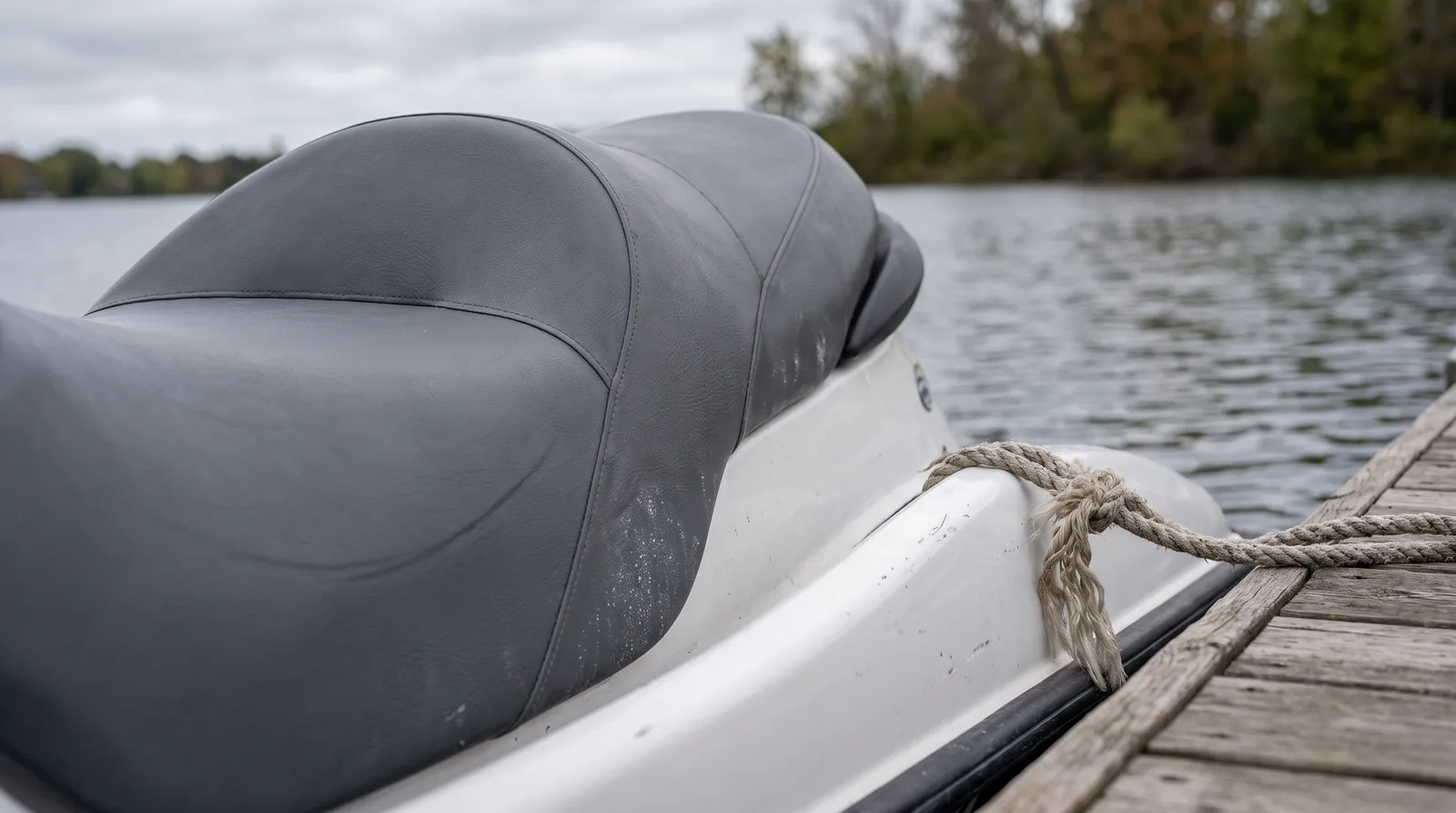
Sea-Doo RXP-XRS 300 insurance check: setting the insured value of the jet ski
The value written into the contract decides what is paid after a total loss. Part two of this insurance check on the Sea-Doo RXP-XRS 300 explains agreed value, cash value, accessories and the trailer.
11 October 20267 min readNAMMERT Assekuradeur GmbH
Part one of this series looked at what the policy should say about the Sea-Doo RXP-XRS 300. This second part deals with the figure that does the most work in it: the insured value, and with setting it correctly. The ground rules of the series still apply. Nobody here has ridden the machine, it is not being rated, and no market price or sum is given. What follows is how the value of a jet ski is usually set in a hull policy and what owners should look for. The range was built from 2012 to 2023, so every one of these machines is now several years old, and that is exactly when the way the value is defined makes the biggest difference.
Narrower hull wordings insure the actual cash value: the amount needed on the day of the loss to replace the craft with one of the same kind and quality, less a deduction for age, wear and use. The sum insured is then only the upper limit. Many such wordings add a depreciation scale by age, for instance no deduction for the first years and then rising percentages after three, five and ten years. For a jet ski of this range that means the scale will almost always apply, however well the machine has been looked after. If your policy works on cash value, find the scale in the wording and work out where your craft sits on it today.
Broader wordings use an agreed value. The sum written in the schedule is accepted by both sides as the insured value, so the figure is settled when the contract is made rather than argued over after a claim. Look at three further points. First, how partial losses are paid: some policies pay repairs without deduction for age, others apply a scale there too. Second, whether the insurer can raise underinsurance, which reduces a payment in proportion when the sum is too low. Third, whether the wording attaches conditions to a total loss for older craft, such as proof that the machine was actually replaced. For a jet ski from the early years of this range, the third point deserves a careful read.
What belongs in the value is defined at the start of the hull wording. Typically the craft is insured with everything permanently fitted, its machinery and technical equipment and its accessories. Other items often need their own entry and their own sum insured: the boat trailer, a jet ski dock or floating pontoon, and water sports equipment. Personal belongings may be excluded entirely or covered only up to a small limit. For the owner that means at least three separate lines in the schedule: the jet ski, the trailer and the dock, each with its own amount. If one of them is missing, it is usually not insured at all, whatever its value.
The trailer deserves a second look, because on a jet ski it is in use almost every time the craft goes out and often covers more road miles than the engine runs hours. In the hull policy it normally counts only if it has its own sum insured. Check the deductible too: jet ski clauses frequently apply it to every claim, including total loss and theft, and may exclude the discounts other craft receive after claim free years. When you set the value, factor that deductible in from the start. How the trailer has to be secured against theft and how its liability is handled is the subject of the fourth part of this series.
That leaves modifications and how the value develops. Anyone who upgrades the engine, the intake or the electronics changes the overall value, and many wordings tie the sum insured to the value after modifications, with an increase possible on presentation of invoices or a survey. Some policies cover an increase in value from a modification only if it was reported and documented. Upgrades that raise performance can also count as an increase in risk that must be declared. In practice: keep the invoices, report the work, adjust the sum. If the sum is too low, money is missing after a total loss, and since the sum also sets what you pay each year, a yearly comparison with the craft is worth the few minutes it takes.
Insurance checkPart 2 of 4
Sea-Doo RXP-XRS 300: an insurance check
All parts at a glance
- Sea-Doo RXP-XRS 300 insurance check
- Sea-Doo RXP-XRS 300 insurance check
- Sea-Doo RXP-XRS 300 insurance check
- Sea-Doo RXP-XRS 300 insurance check
Worth checking
Common questions
What is the difference between cash value and agreed value?
With actual cash value the amount is worked out after the loss: what an equivalent craft costs, less age and wear, often with a depreciation scale. With agreed value the sum written into the schedule at the start is accepted as the insured value.
Is the trailer included in the value of the jet ski?
Usually not. Most hull wordings insure the trailer only if it is listed with its own sum insured. The same often applies to a jet ski dock or pontoon and to other water sports equipment, so check each item in the schedule.
Do I have to report a modification?
Yes. A modification changes the overall value on which the sum insured is based, some policies cover the added value only once it is reported and documented, and an upgrade in performance can be an increase in risk that has to be declared.
Related